Cats and Dogs

Farley believes all cats should adore him.

Should all characters get along? #writetip. Definitely not. But why not spice up a scene by forcing two characters who don’t get along into a situation where they must.

Put their lives in danger. Make them rely on each other. But the whole time, they really can’t stand each other.

Then give a character a life altering decision. Character A must risk their lives to save Character B. Do they do it? Or do they leave the person to die. This will say volumes about your character, and maybe scare your reader at the same time.

Farley playing with the cat made me think about odd pairings and how sometimes life surprises you, but also how fiction should surprise you.

Should Punctuation Show Emotion?

Is it better to use punctuation or dialogue tags? #writetip Here is a very simple example.

“Stop nagging at me!” Jane loomed over her husband and glared.

or

“Stop nagging at me,” Jane yelled. She loomed over her husband and glared.

or

“Stop nagging at me.” Jane loomed over her husband and glared.

I thought the goal was to eliminate exclamation marks. Now, I’ve been given other advice and I’m not so sure.

Any views on this one?

The Mentorship Begins . . .

Yesterday I got my first feedback from Garry Ryan. #writetip Garry is an author from Calgary, Alberta. He writes the Detective Lane series. For those of you who have been reading my blog for a while, I wrote about the Crime Writer’s of Canada mentorship program. I didn’t end of partnering with David Cole, but all has worked out and the program is underway. Garry has volunteered his time to help my make my novel better.

I won’t bore you with the details, but I want to mention one highlight in his comments. There has been talk about series writing this week on some of the writing blogs. Well, my novels aren’t a series, but I do have characters that are in all three novels.

Garry pointed out to me that I don’t describe my characters in the opening scene. Seems obvious, but for me, I’ve lived with them through three novels, so I know what they look like. I just forgot to tell the reader.

Garry is the first person to read my third novel who hasn’t read the first two. I’m not sure my readers who read the first two would have picked up on this omission. I guess it’s good to find readers that haven’t read all your work. You never know what improvement you might be able to make. Thanks Garry.

Does Every Character Deserve a Name?

How do you know if you should name your character? #writetip There are loads of writing books that tell you not to name a character unless that character has a significant part in your novel. Well, how to you know?

I name all characters in the first draft. I don’t always understand what role a character might play until I’ve finished the novel.

At the first draft stage, I review each scene for characters that appear only once. For example, I might need a lift attendant at a ski lift for a given scene to work. If that attendant only shows up once, I remove their name. I call them by their title at work, function in the scene, whatever works to identify them.

This is also the stage where I discover who I thought might be a minor character, a walk-on, is really someone significant to the story. Since I’ve already named them, I don’t have to change anything.

I’m sure there are many ways to accomplish this, but this method works for me.

First Draft Readers

Am I nervous? #writetip Of course I am. I have a new reader for my third novel. I decided I needed someone to read my novel that hadn’t read the first two. So what did I do to prepare my reader? A reader has different responsibilities at each stage of the  novel.

For the first draft I give the reader a list of suggestions and questions.

1. Don’t worry about proofreading for typos. That will come later.

2. Each time you suspect a character of committing the crime, write it in the margin. This allows me to see if I’ve dropped too few or too many hints.

3. Did you start to skim anywhere? This is how I find out if I’ve put too much detail.

4. Are you unsure who is speaking? This means I didn’t add enough dialogue tags.

5. Sometimes a character doesn’t appear for a few chapters. When they reappear, do you remember who they are or do I have to add a reminder?

6. Is there anything you didn’t understand or that was confusing?

And finally I ask them to comment on any passages they liked. To me this is just as important as finding out what didn’t work. Then I can review that passage and understand why they liked it. Okay, and it’s a nice boost to the ego.

Testing: Equipment and Scenes

As we get ready to head offshore we test all our equipment. #writetip Before you send your manuscript off to an agent or publisher, you should test it too. I can’t imagine going to sea unprepared or unsure that everything, and I mean everything, is working. Here we are testing bring the sail up and down, repeatedly.

I use several test people at different stages of my novel. I have a two very important test phases.

One is at first draft. Here you need a test reader that will work with you chapter by chapter and tell you what they like and what they don’t like.

Two is at the final stage before sending. Here you need a reader that has an amazing eye for detail. This is the person that will proofread for you. The one that will find all the typos your eye can no longer see.

If I’ve significantly changed a scene from when one of my experts read it, I will ask them to read one more time.  This is asking a lot, but I want to make sure I didn’t inadvertently put in a technical error.

I’m sure there are many ways to do this, but this is what works for me.

The Beginning: The End

How important is it to come full circle in your novel? #writetip

I find myself at the first draft stage of my third novel. This is a good opportunity for me to check that the ending fits with the first chapter.

Here are some important questions you can ask:

1. Do you close off on any problems you created for your protagonist or other main characters?

2. Do you answer any questions you left hanging in the first chapter?

3. What reasons did you give the reader to keep reading after chapter one? There must be closure to these issues.

4. Do the first and last chapter have something in common?

I like a novel to feel rounded. I want to know there was a point to the first chapter and that the author wrote it as part of a story and not a gimmick to get me reading.  The questions help me ensure my novel offers the reader the same courtesy.

Cruising, Writing and Spreadsheets

Provisioning

Do we really need to eat this much? #sailing #writetip

I think I’ve turned into a spreadsheet junky.

I have just reached a first draft of my third novel. Now I study the spreadsheet I created as I was writing the novel, decide at the best order of scenes, where the chapter breaks should be, do I have enough scenes with the main characters, etc.

As if my head wasn’t exploding with details,  but I was feeling so productive and decided it was time to do some provisioning.  So out came spreadsheet number two. After two years of updating this spreadsheet, I know exactly how much food we eat.

Every season, I write down when we run out of food or if we have left overs at the end of the season. It’s getting pretty accurate. During the season I add lines if there is something we were missing. Last year, I didn’t bring enough honey. One little bottle. What was I thinking? I love honey.

Today it’s back to my writing spreadsheet and the hard work of editing that first draft.

Related links:

Keeping Track of Details

Repeated Words

How do you know if you are using a word to many times? #writetip Check out Wordle. I’m probably the last to know about this, but it’s cool. Wordle creates a word cloud in which your words get bigger the more often they appear in the text.

I uploaded my first chapter of my third novel and what I got back was a visual of the words. I found out that my protagonists names was used the most – it was the largest. The names of characters got smaller as their importance in the story reduced.

This is just one more way to validate you are doing the right thing. How fun is this writing business? I learn something new every day.

One Chapter, Two Experts

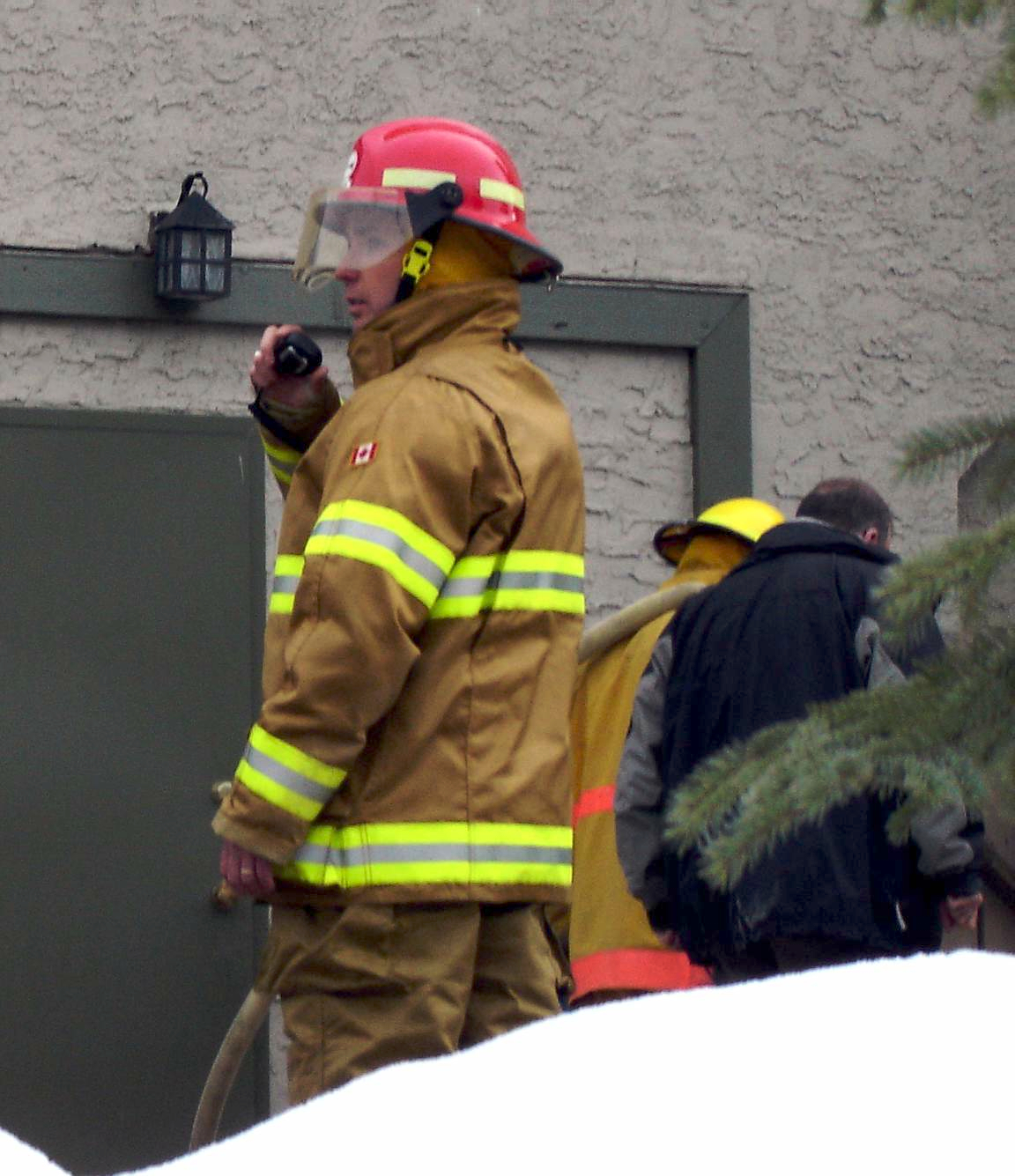
Billy on duty with the Panorama Fire Department - the years before Calgary

One family, two experts. #writetip I find myself writing a chapter about a woman having a baby while trapped by a forest fire. So what do I need? A new mom and a firefighter. Lucky for me Billy Stewart, Firefighter with the Calgary Fire Department and Adrienne Stewart, new mom to a handsome boy, Noah, not only answered my questions but are going to read the chapter and critique it.

Making a scene believable depends on the details a writer provides and experts help a writer get the details correct.

How could I know how firefighters puts on their uniforms or what gear they carry in different situations or what they worry about when surrounded by flames?

Only a new mom could tell what they might be thinking if they were trapped by a fire and having their baby.

These little details bring reality to a scene.

But when is the right time to ask for help? I wait until I have a scene written before I ask too many questions. This way, I’m as certain as I can be about the direction of the scene, I know where my knowledge is weak, and I won’t waste the experts time.

This is a big shout out to Billy and Adrienne for helping me create a better story.