Step Away From Your Novel

#writetip

How many times have you heard or read that when you finish your first draft, and I mean a serious draft, that you should put your novel in a drawer for a couple of weeks?

I never understood this until recently. I had three readers commenting on my updated version of The Final Gate.  While they were commenting, I decided to start work on my fourth novel, and leave The Final Gate alone.

Now that I am reviewing their comments and doing the final proofread, I finally get the importance of the advice.

I can see things I hadn’t seen before. Maybe it’s a passage of text that is too earnest, or maybe it’s narrative describing something I’ve already described. Without taking a break, I couldn’t see these things.

Even thought it’s hard to leave something alone that you are passionate about, I am now a believer in “Step Away From Your Novel.”

Dialogue Tags

#writetip

Who is talking? Do you always need a tag? Advice from how-to-write books say it should be clear from the dialogue, who is speaking. For the longest time, I interpreted this to mean that the character should have some unique way of speaking.

I don’t like to read dialogue where I get distracted with unique speech patterns, so I don’t like to write that way.

I finally understood what the advice means. The context and what the character has to say should give the reader enough information to know who is talking. If it doesn’t then a tag is needed.

If you need a tag, you could try using character movements or thoughts instead of a tag.

So back to my original thought. I now get the advice. So here’s an example.

A brother and sister are talking.

“What?” – can’t tell who’s speaking. Consider a dialogue tag or other method of indicating who is speaking.

“Mom loved you more because you’re a girl. She liked to dress you up and do your hair. I had nothing but scrapes and bruises to offer.”  – easy to tell the brother is speaking, so no dialogue tag needed.

Setting For A Novel

#writetip

How to choose a setting for your novel?  That depends on what your story is. But can your story depend on your setting? I think so.

I chose mine because I wanted to write a thriller. I wanted the novel to be tense, and I wanted the setting to have a lot to do with it.

For a mystery novel, choosing a location that isolates your characters, pummels them with bad weather, scares them with wildlife, and gives them nowhere to run, opens up the imagination.

I spent 6 years living in an isolated mountain ski resort, and that had a lot to do with my choice of setting, Even though I write about a fictitious resort, I know what it’s like to live in the depths of BC. Experience lends authenticity; my imagination can do the rest.

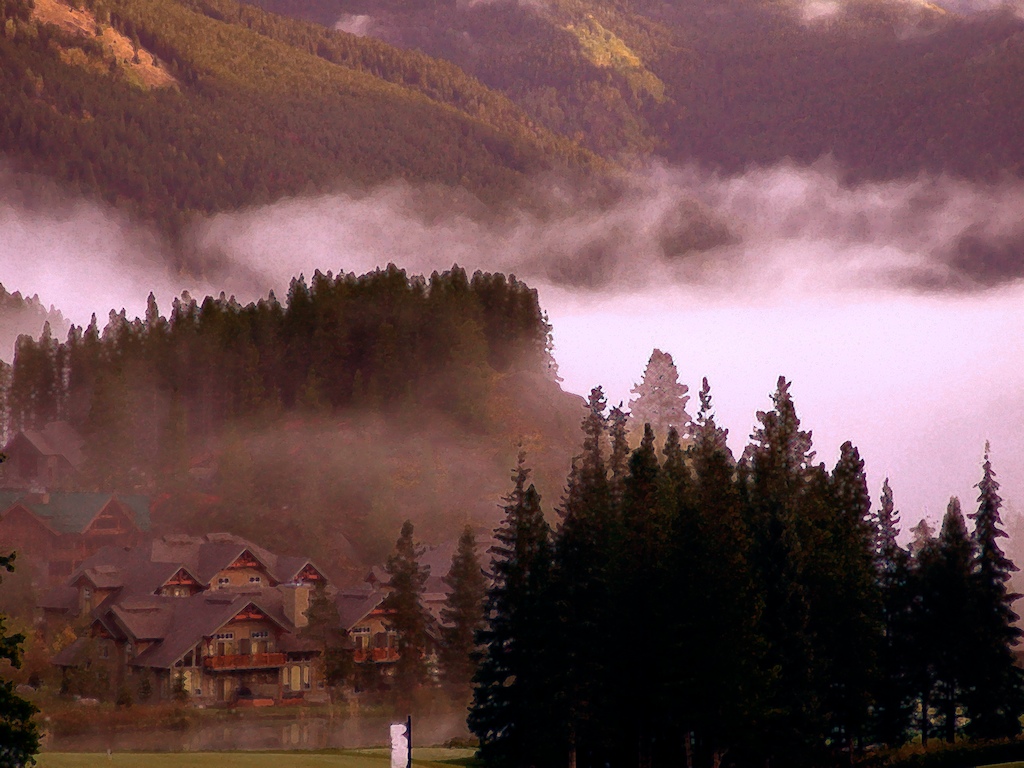
Tell me the photo doesn’t give you any ideas for choosing a scary setting.

Starting My Fourth Novel

#writing

Novel One, Novel Two, Novel Three . . . Now what?

I’ve eighteen pages of notes on my fourth novel, and it’s time to move location.  Three novels are set in the Purcell Mountains, BC, Canada.

The fourth novel (and I feel like I should play music here) is set in the Bahamas. It’s time for a sailing adventure.

It’s been quite the experience writing about the Purcell’s. A place I lived and loved. An isolated mountain resort provides a great setting for a romantic thriller.

But the winds are changing and pushing me in a new direction. This is not to say I won’t continue to write about BC, only that it’s time to try something new.

New characters, new location, new mystery. It’s all a bit overwhelming, but also fun.

Now to go back and read what I wrote about the writing process and make sure I remember it all.

Romantic Thriller

#writetip

How you see your work and how someone else sees your work can be quite a surprise.

Romantic Thriller? I thought I was writing a Suspense novel. Then, my agent commented that my second novel, The Final Gate, could be positioned as a Romantic Thriller if I added a little more romance.

Oh, Oh, I think. I like to read novels that are full of action, so that’s what I like to write. But Romance? Who knew?

Over the last couple of months, I’ve been reading Romantic Thrillers to get a feel for the genre and discovered my novel is not that far off. But . . .

I spent three months on rewrites, that’s the fun part, and now I’m back to proofreading. I’ve just sent The Final Gate to my favourite readers for comments, so I’ll see how they like the new romantic version.

This is a change for me, and I’m nervous about the feedback.  I guess I’ll have to wait and see . .

Maybe my husband will send me flowers for all the hard work I’ve done – that’s kinda romantic.


Capitalize your parents?

#writetip Should you capitalize parents? Proofreading is an endless task and here’s a mistake that’s easy to make.

Should you capitalize mom? (or dad, mother, father, aunt, uncle, you get the gist)

This short example shows you when you do and when you don’t.

“I don’t want to go, Mom. Really I don’t,” Ian said.

“You must,” Ian’s mom said.

Ian hesitated but obeyed his mom.

If you’re using mom as the name, then capitalize. If not, then don’t. Pretty easy, except when proofreading, one tiny letter is hard to see. I do a search for each mom, mother, dad, etc. and check to see if I’ve used them right.

Translating a Novel

#writetip

A friend of mine with a background in translation asked if she could translate my novel, Fracture Line, into German. I, of course, very quickly said yes.

It’s an interesting process to go through with a surprising benefit.

As she is translating, she it looking at every word. This means some great proofreading is being done. It also means she pushes me on word usage, questioning me on whether I’ve picked the best word or not.

My German isn’t bad, but it’s not great, and I must say it’s fun to read my novel in German. She’s sent me the first 10 chapters for review and I’m stretching my brain, trying to read in another language.

The process is improving my German, and we are having some fun discussions about when to use ‘Du’ and ‘Sie’, and how in the world do you translate bull wheel?

Naming A Novel

#writing

Do you struggle with naming your novel? I do.

My novels are Fracture Line, The Final Gate, and Burnt.

After submitting The Final Gate to my agent, Margaret Hart, I received feedback from her editor that I should change the title.

I think I’m on title 200, and I’m still working on it.

  • Should the title be a line from the novel?
  • Should it be a metaphor?

After picking a title, then comes the research.

  • It the title already used?
  • Does is have a meaning I’m are unaware of?

Then comes the test market. Sending the title out to the people who have read my novel should give me some feedback. But what is they all like different one.

There are so many things to consider.  I think I’m finding the harder than writing the novel, the blurb and the synopsis. Yikes!

How do decide what your title should be? And if you happen to read the blurb for The Final Gate, can you send me a title?

Surprised by Synopsis

#writetip The dreaded synopsis surprised me. We all know how hard it is to write but . . .

I discovered a hole in my plot during the process of writing the synopsis. I was having a difficult time getting the story described in under two pages of double spaced text.

Then I realized the novel wasn’t coming full circle and I couldn’t relate the ending to the beginning. Why? I didn’t close off one of the story lines. I don’t think I would have discovered this if I hadn’t written the synopsis.

My point? Maybe the synopsis is not just for your agent or publisher. Maybe it’s good for you too.

Thoughts?

Need Help Writing a Blurb?

#writetip Are you struggling with writing your blurb? Your novel is finished and you are getting ready to submit it, but the blurb just doesn’t sound right?

Why not ask a couple of your readers to write a blurb for you? A person that is not as close to the novel as you are might have an interesting take on what should be in your blurb.

You may get a whole blurb out of the exercise, you may only use one line, but it is sure to spark your imagination.