Introducing Write Better Fiction

Introducing Write Better Fiction- Give Yourself Feedback On Your Manuscript

Feedback is an important part of the writing process. There are some elements of your novel you’ll need human feedback for, but there are others you can analyze on your own. Today, I’m kicking off a series called WRITE BETTER FICTION. Every Wednesday, I’ll post on the topic of self-critiquing.

Whether you’re a panster or a plotter, the thrilling moment will arrive when you’ve written a first draft.

Are you ready for beta readers to see your work for the first time?

How do you know when it’s time for an editor and a proofreader?

Are you thinking of hitting the publish button?

If you’re anything like me, you don’t want to share your writing with anyone until you’ve done your best to perfect it. Maybe you’ve read hundreds of writing books, maybe you’ve taken courses and information is spinning in your head, but how do you keep track of the knowledge and ensure you’re using what you’ve learned? With a spreadsheet, of course.

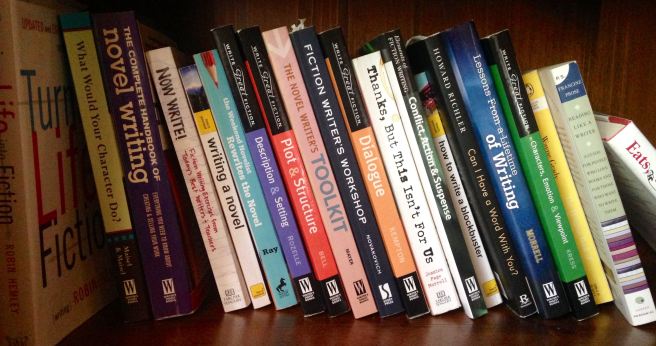
Writing Books
Some of my books


A novel is made of of scenes, and scenes are made up of elements. Over the years, I’ve created a spreadsheet, and every time I learned about a scene element, I added that element to my spreadsheet.

My spreadsheet consists of  65 columns. That may seem like a lot, but each element needs to be considered if you’re writing a scene for maximum reader engagement.

Screen Shot 2015-11-30 at 5.06.20 PM

To make analyzing easier, I’ve broken the spreadsheet into three categories.

  1. PLOT
  2. CHARACTER
  3. SETTING

To quote James Scott Bell in his book, PLOT & STRUCTURE, he says,“Plot happens.” To me that means it’s the action of the story. So every element not included under CHARACTER or SETTING is grouped under PLOT.

Each of these categories has a set of elements, meaning when I work on a scene I can work on more than one element at a time. Over the next 65 weeks or so, I’m going to explain how I use each element in the spreadsheet to strengthen scenes, and thereby strengthen the novel. Hence this is the first in a series of blogs I’ll tag, “Write Better Fiction.”

WHERE TO START WHEN THERE ARE 65 CHOICES

Once I have a completed draft, I look at the most important element of each category. Today I’ll start with PLOT.

The first element under PLOT I evaluate is the purpose of the scene. The purpose of the scene must relate to the overall story. If it’s not driving the story forward, then ask yourself what is the point of including the scene in your novel.

Here are some examples of the way the purpose of a scene can drive the story forward. You can choose one of these to define your purpose or come up with your own definitions.

  • Is the inciting incident
  • Introduces characters
  • Creates an emotional connection between characters and reader
  • Provides character development
  • Establishes setting
  • Introduces or intensifies conflict
  • Builds suspense
  • Establishes mood
  • Reveals a clue
  • Shows a red herring
  • Is the climax
  • Provides resolution

HOW PURPOSE OF A SCENE HELPS WITH THE OTHER ELEMENTS

I articulate the purpose of the scene first, so I can address other elements of the scene and test if they are in line with the purpose.

Let’s say you fill out the list of objects in a scene. You can weigh the objects against the purpose of the scene and see if there is a way to use them to further the purpose. This goes for revelations, tension, conflict, weather, etc. Basically, every scene element can be tested against the scene purpose.

After you whittle down the purpose of a scene to a few words, one of three things will happen.

  1. You’ve got the purpose nailed, and you understand why this scene is included in your novel.
  2. You have a weak purpose, but there is still some value in the scene.
  3. You have no idea what the purpose is.

Screen Shot 2015-11-30 at 4.56.40 PMIf you landed on number 1, give yourself a gold star and move on to the next scene.

Number 2:  consider rewriting the scene, keeping the parts in the scene that further the plot. Or take the important bits and place them in another scene which has a strong purpose. You could also take two scenes with a weak purpose and combine them into one scene to create stronger purpose.

Number 3: consider removing the scene. We all end of with scenes that seemed relevant when we wrote them, but might not work within the novel as a whole. However, don’t delete the scene. Remember to store it somewhere. You’re next novel might have a place for it.

WHAT I DON’T USE THE SPREADSHEET FOR

I don’t use my spreadsheet to evaluate voice, dialogue, balance, style, consistency, etc. For that, I think another human is the best source for feedback.

Using a spreadsheet to force yourself to critique your own writing and give yourself feedback will enable you to write better fiction.

Next week I’ll share with you the #1 question to ask yourself about CHARACTER.

Please comment below and let me know what you think of the advice. Do you agree, disagree or do something different for the purpose of a scene? Do you group elements of a scene in a different way?

Thanks for reading…


Facebook Launch Party: Voices from the Valleys

Let’s celebrate. Tomorrow afternoon…

Screen Shot 2015-09-22 at 7.33.47 AM
Short stories, bot fiction and non-fiction, and poems from BC authors.

Jodie Renner,   a sought-after freelance fiction editor and award-winning author of three craft-of-writing guides, has released Voices From the Valleys.

Now I must say I’m biased here. My story, Deirdre Hunting Season, is the first story in the anthology, so come and help us celebrate.

The party is SUNDAY, November 28th – tomorrow – from 12 to 5 PM  PST at:

https://www.facebook.com/events/1531096483856907/1532393717060517/

As usual there will be prizes, lots of authors to chat with and of course Jodie herself with be there.

I hope to see you too.

Thanks for reading.


Farley’s Friday: A Wheaten Goes Skiing

Farley here,

I’m exhausted. I spent the week nordic skiing with my human, Kristina. We covered miles and miles of terrain.

Every morning she says, “Let’s go.”

I run and hide. Why you ask? I don’t really like my booties. They are so NOT cool. Except without them ice sticks between my pads and hurts. So I have to deal with the boots.

Kristina is gentle and makes sure none of my hair gets stuck in the boots’ Velcro. I kiss her ear every time she get’s close enough, and she giggles.

Once we’re outside, she’s slow going uphill, but wow does she rip down hill. I have to run my fastest and can barely keep up. We live in mountainous terrain, so you’re either going up or down. There is no flat. And I love it.

Farley with skis
My nose is cold!

The best part. I get home and crash on the couch, where I’m not really allowed, but soft-hearted Kristina can never say no to me. Look how pooped I am. I really needed the pillow I’m never, ever supposed to sleep on.

Farley on couch

Woof Woof.

Mystery Mondays: Jayne Barnard on Spicing Up Secondary Characters

This week we welcome multi award winning author Jayne Barnard . First, let me tell you about Jayne’s latest release is Maddie Hatter and the Deadly Diamond, and then we’ll move on to Spicing Up Your Secondary Characters.

Maddie DD frontMiss Maddie Hatter, renegade daughter of a powerful Steamlord, is scraping a precarious living as a fashion reporter when the story of a lifetime falls into her lace-gloved hands.

Baron Bodmin, an adventurer with more failed quests than fingernails, has vanished in circumstances that are odd even for him.

While he is supposedly hunting the fabled Eye of Africa diamond in the Nubian desert, his expeditionary airship is found adrift off the coast of England. Maddie was the last reporter to see the potty peer alive. If she can locate the baron or the Eye of Africa, her career will be made.

Outraged investors and false friends complicate her quest, and a fiendish figure lurks in the shadows, ready to snatch the prize . . . at any price.

Spicing Up Secondary Characters by Jayne Barnard

A good character, we’re often told, is loyal, patient, loving… oh, wait! That’s a good dog. Our characters must be more interesting than our dogs, or readers – at least, those who don’t love dogs deeply – wouldn’t stay with them page after page. Received wisdom is that mystery characters (except the villain) should be likeable, relatable, engaging, dynamic, memorable, competent, fully fleshed-out, well-motivated, and a little unhappy.

Is it always true? How many fictional crime-solvers have been depressed loners who drink too much? Are they likeable? Not hardly. We forgive them, and keep reading, because they’re competent, well-motivated, and, on some level, relatable. Maybe they treat dogs well.

Then there are Inspectors Clouseau and Gadget, both likeable and memorable but failing the competence test. They succeed by the competence of secondary characters.

Good secondary characters are a challenge. They have at least some traits of a good lead character, and have to some degree an individualized appearance, personality, and skills. They fulfill vital plot functions. They never, ever become so interesting that they steal the sleuth’s limelight.

They also don’t burn up a lot of word count. A neophyte’s first chapter I once critiqued hit the right marks: a handful of characters individual in appearance, personality-rich, explicated in just a few sentences each. I was panting to see how they would all interact through the coming 250 pages. Tragically, all those well-drawn characters never appeared again. They were so many wasted words from a plot perspective and, worse, they made a promise to the reader that was never to be fulfilled.

Because Maddie Hatter and the Deadly Diamond is a humorous adventure rather a serious mystery, my answers won’t work for everyone. While some of my secondary characters are written as engaging humans, other characters’ appeal relies not on them seeming realistic but on the outright caricature of well-known characters or types.

Caricature is not to be confused with cliché. The latter, by definition, is a trope or trait so often copied that it has lost all meaning. Caricature, on the other hand, starts with a copy but exaggerates or twists familiar characteristics to create a desired effect.

Here’s Maddie’s first sight of one memorable secondary character:

Before the steam grate stood a rotund man in a camel-hair topcoat finished with both a shoulder cape and a wide astrakhan collar of some chocolate-hued fur. In the mirror above the mantle, he was admiring his extravagant moustaches, carefully waxed and shaped on either side of a small, pink mouth. Did he notice her beyond the doorway? No. He merely stroked a finger along one hairy arabesque with a satisfied smile.

Did you think of a certain Belgian detective made famous by Agatha Christie?

Hercule Hornblower has the recognizable features of waistline and facial hair, and also claims to be Britain’s greatest living detective. However, he’s also bombastic, endlessly self-promoting, cannot pass a mirror without grooming his handlebars, and he has a flaw that gives him more kinship to Inspector Clouseau than to Agatha Christie’s famously dapper sleuth. Hornblower is narcoleptic. He frequently falls asleep just when he might learn some fact that could crack the case.

As with any sound secondary character, Hornblower serves the main character and the story. His erroneous suspicions and conclusions help Maddie find correct ones. His incompetence highlights her competence. His bombast and lapses into slumber inject incongruities into otherwise serious scenes. In a novella featuring stolen idols, invisible airships, and eccentric adventurers, an intense conversation or introspection – which must sometimes occur in order for the real sleuth to solve the mystery – might mar the zany atmosphere. A caricatured secondary character like Hornblower is worth his considerable weight in light relief.

In a more serious mystery, a Hornblower would throw off the tone. A less intrusive secondary character might be the dog, who finds the victim’s bandanna just where it shouldn’t be, and then digs up the flowerbed of the one old man who might have answered the sleuth’s questions willingly if he hadn’t had to chase the dog.

Before you ask, there are no dogs in Maddie Hatter and the Deadly Diamond. Maddie’s pet is more suited to airship travel. He doesn’t dig up flowerbeds, either.

Bio:

Jayne launch headshotJayne is the author of author of the Steampunk Stories:
Maddie Hatter and the Deadly Diamond (Tyche Books, 2015)

The Evil Eye of Africa – a guess-the-murderer game in two acts

Parasol Dueling: An Epistle on the Infamous Hungarian Imperial Rules

Dueling Figures in Daily Life, in A Guidebook to Parasol Dueling – the Brandenburg Variation(Written by Kevin Jepson, with original artwork by Audra Balion)

***

Next week on Mystery Mondays we welcome Eileen Schuh, Canadian author of SciFi novellas and the young adult Backtracker series.

Thanks for reading…

Farley’s Friday: Love and Care of A Wheaten Terrier

Farley here.

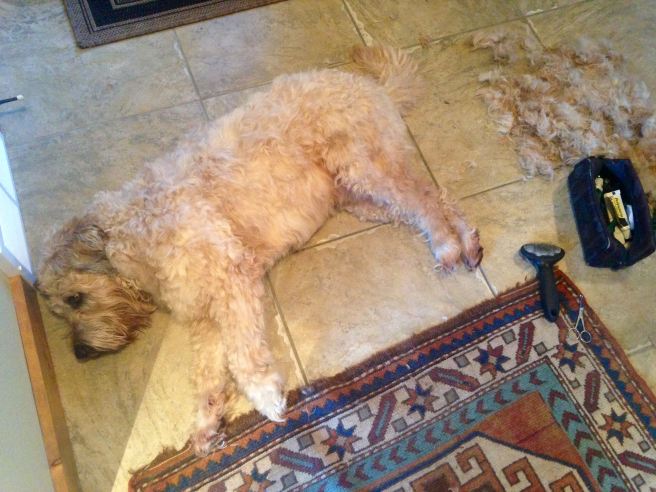
Grooming day. I love it. I get an hour of my human’s undivided attention. She brushes, and snips and massages me.

She makes a mess, and every time she comments, “Before I finish grooming, there’s another mat.” Like she thinks I’m matting on purpose just to get her to brush me. Wouldn’t that be good?

Farley groomed

But why is she cutting my hair when it -15 Celsius? Because if she doesn’t look what happens.

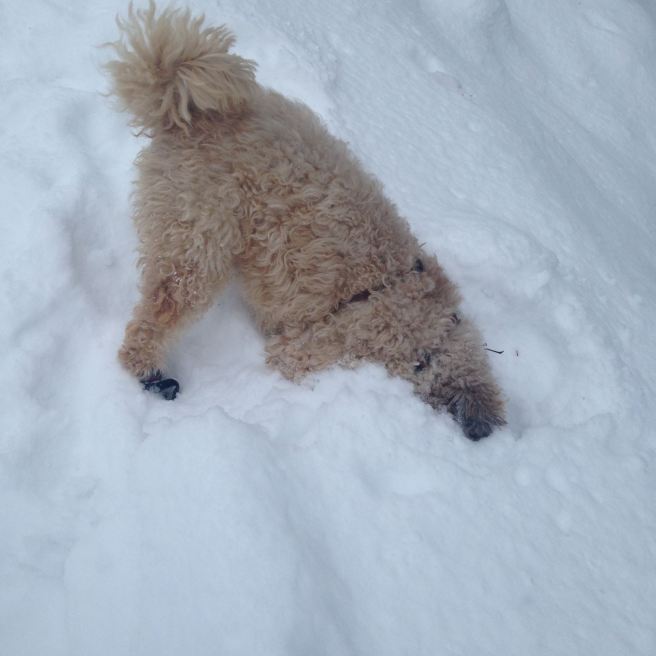
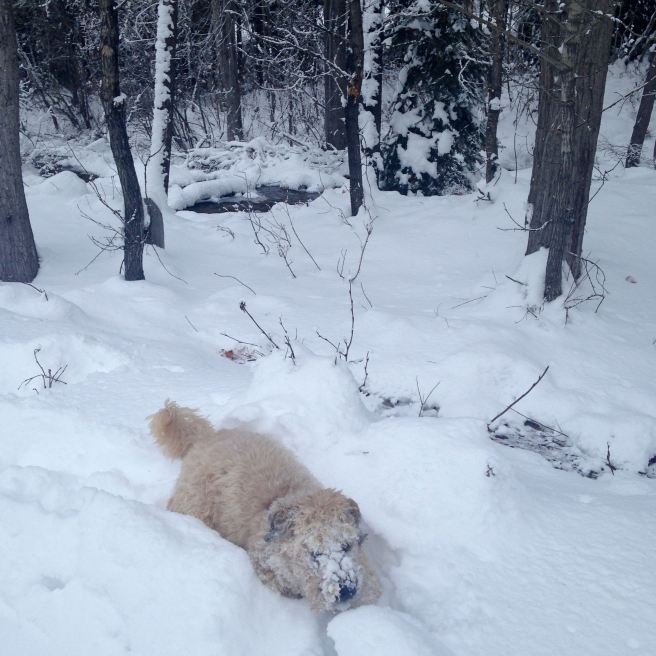
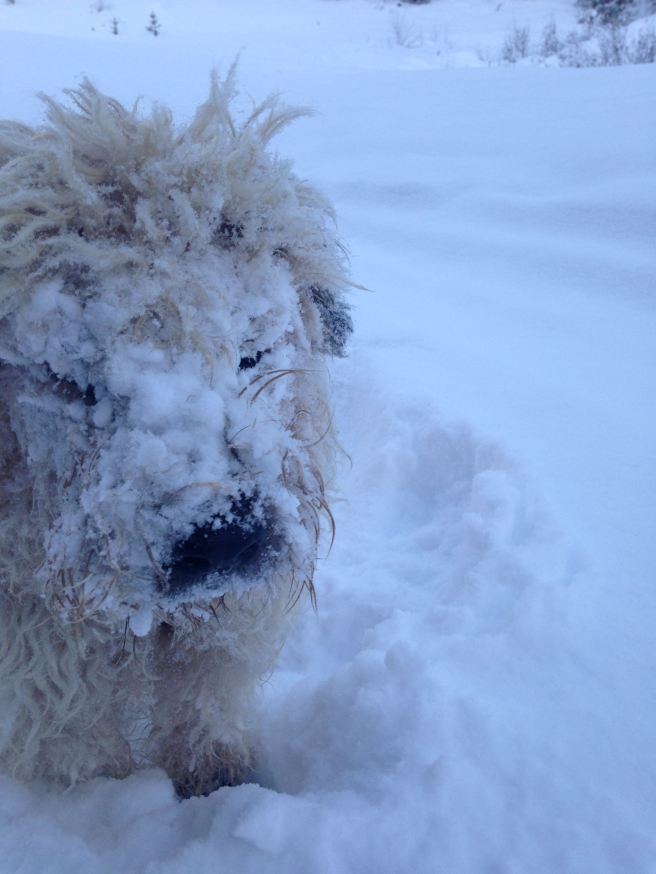
Farely in snow

Woof Woof

MYSTERY MONDAYS: Author Gloria Ferris with 5 Tips For Writing A Mystery Series

My honour this week is to host author Gloria Ferris. As an award winning author, Gloria has valued advice that she’s sharing with us today. But first, a bit about her books.

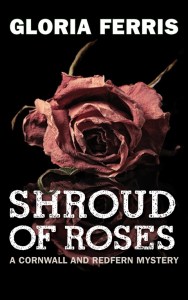
Shroud of Roses SHROUD OF ROSES: The Class of 2000 left behind a skeleton in its closet, and fifteen years later someone is coming for the rest of the graduates, including none other than Bliss Moonbeam Cornwall. Against their better judgment, Cornwall and Redfern team up to expose the killer before time — or Cornwall’s talent for stumbling into danger — gets the best of them.

HOT OFF THE PRESS (I’ve always wanted to say that):

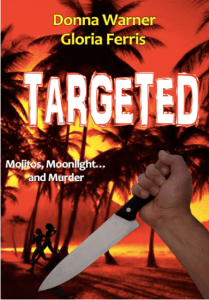
TARGETEDTargeted is available for pre-order now.

What could be better than a week of sipping mojitos, basking in the sun, and listening to waves lap against a Caribbean beach? Nothing, according to Jordan Blair and her friend, Ellie Cassidy. Until their vacation takes a sinister turn…

***

5 Tips for Writing a Mystery Series by Gloria Ferris

Every author who writes a series will have found her own truths and tips on what works for her storylines and characters (right, Kristina?). I don’t pretend that my list is comprehensive or will apply to everyone. But, they work for me and might help another writer just getting started on a series.

  1. Don’t info dump everything you know about your protagonist into the first book.

If you’ve planned a series, little secrets and heretofore unmentioned family members can be introduced when you need them. I plan to bring a badass gramma into book 4 of the Cornwall & Redfern series. So far, Gram hasn’t been mentioned and doesn’t need to be.

  1. Yes, your protagonist can be involved in more than one crime in his/her life.

Even murder. What are chances that a young woman in a small town will run across a homicide or other serious crime more than once? Slim to fat, but this is fiction. Readers suspend reality to enjoy the story. When they pick up a sequel, they expect mayhem to rampage through the pages, just like book 1. How many of us think when we pick up the latest episode of our favourite series, Oh no! Another murder? More crime and mystery! Not again!

Me neither. So, throw in another homicide or bank robbery and let ‘er rip.

  1. The love life of your protagonist doesn’t have to be all doom and gloom, or consume her every waking moment. (Be careful of rhyming prose as well, but that’s for another set of tips.)

Watching the mating dance of your favourite cop or sleuth is exciting. It should be incidental to the plotline, a slow blossoming of character development that can be nurtured over the course of several books. But, come on! After book 23 in the series, if our heroine is grappling with relationship issues with the same boyfriend she’s had for 15 years, or still can’t decide between Carlos and Brad, I’m losing interest and even an intriguing mystery won’t pull me back. Move on and show conflict with another character.

  1. You can and should rotate your secondary characters.

Some authors kill off their supporting cast with nary a smidge of regret. How bloodthirsty! And, unnecessary. I love my characters, even the mean, snotty ones with no obvious redeeming qualities. To keep readers from tiring of one of these individuals, I can send him out of town, demote him temporarily to spear bearer, or just mention him in passing. Or not at all. But, he can return for a future episode. When I need suspects or doomed victims, I create them just for that purpose. I don’t mess with my regulars.

  1. Each book in a series should be a separate entity.

A reader should be able to pick up Book 2, or Book 12, in a series and not be lost in time and space. It’s okay for the reader to realize she isn’t reading the first book in a series, but play fair. The ending of each book should resolve the mystery before the next one begins. If you’re writing a serial, state this on the front or back cover.

On a related note, repeat readers will not be offended by brief reminders of the setting and descriptions of the returning characters. This information will firmly anchor new readers in the world you have created for them.

Thanks for having me as your guest, Kristina. I’m honoured to take part in Mystery Monday!

BIO – Gloria Ferris

Gloria Ferris
Gloria Ferris

Gloria Ferris is the author of the darkly humorous Cornwall & Redfern Mysteries. The first in the series, Corpse Flower, won the Crime Writers of Canada Unhanged Arthur Award. The second, Shroud of Roses, was released in July, 2015. Her first paranormal mystery novel, Cheat the Hangman, won the 2012 Bony Blithe Award. Gloria’s mystery suspense novella, Targeted, co-authored with Donna Warner, will be released on November 21st. Targeted takes place in Roatan, Honduras and was planned as the first in a series. The next episode will follow cop/PI duo, Blair and Piermont, as they solve a murder in Old Quebec City.

Gloria began her writing career as a technical procedure writer at a nuclear power plant on Lake Huron’s rocky shores. It was an exciting job, but opportunities for plot and character development were limited. So she turned to crime fiction and found it to be a lot more fun. Now, she has returned to her roots in southwestern Ontario to work on both series, and to dream of finishing the sequel to Cheat the Hangman.

***

Next week on Mystery Mondays: Jayne Baynard.

Thanks for reading…

Mystery Mondays: C.S. Lakin on Showing Through Your Characters’ Senses

This week I have the pleasure of hosting C.S. Lakin.

C. S. Lakin is a novelist and writing coach who spends her time divided between developing new book ideas and helping writers polish theirs. She is the author of fourteen novels – six contemporary novels, seven in the fantasy/sci-fi genre, and one in historical Western romance. Whether she is exploring the depths of the human psyche and pushing her characters to the edge of desperation, or embellishing an imaginary world replete with talking pigs and ancient magical curses, she is doing what she loves best – using her creativity and skills to inspire and affect her readers.

I was first introduced to C.S. Lakin through her novel Time Sniffers and have been a fan ever since.

Today’s she’s sharing an excerpt from her latest non-fiction book. Just another indication of her willingness to help other authors.

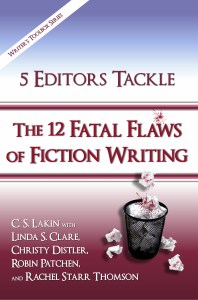
Excerpt from the newest release in the Writer’s Toolbox Series: 5 Editors Tackle the 12 Fatal Flaws of Fiction Writing.

 Fatal Flaws FINAL ebook coverShowing through Your Characters’ Senses

 One of the reasons readers willingly immerse themselves in a story is to be transported. Whether it’s to another planet, another era—past or future—or just into a character’s daily life, readers want to be swept away from their world and into another—the world of the writer’s imagination.

It’s challenging for writers to know how much detail to put in scenes to effectively transport a reader. Too much can dump info, drag the pacing of the story, and bore or overwhelm. Conversely, too little detail can create confusion or fail to evoke a place enough to rivet the reader.

In addition to knowing how much detail to show, writers have to decide what kind of details to use. I often read scenes in the manuscripts I critique, for example, that have characters engaging in lots of gestures, such as rubbing a neck, bringing a hand to a cheek, pushing fingertips together, turning or moving toward something—all for no clear reason.

Showing body movement, gestures, and expressions can be an effective way to indicate a character’s emotional state, but this needs thoughtful consideration so that the gesture or expression packs the punch desired.

It also important to show setting—and not just show it any old way. What is key to creating a powerful setting is to show it through your character’s POV and in a way that feels significant.

Showing Significant Settings

 When is setting significant to the reader? When it’s significant to the character.

That’s not to say every place you put your character has to evoke some strong emotion. A character who goes around gushing, crying, or jumping in excitement over every locale will appear to be missing some marbles.

But just as in real life, places affect us—some more than others. Each of us can think of numerous places in our past that bring a flood of emotionally charged memories. Showing setting colored by a character’s emotions is not only effective and powerful, it also captures real life.

But let’s talk about those other settings. The ones that aren’t emotionally charged. The many places in which you set your characters to play out your scenes. Some of those places are merely backdrops, places your character traverses daily or on occasion. They’re not important, right?

Let me just pose this possibility: even though you’ve thought a bit about the locales for your scenes, it may be that you aren’t truly tapping into the power of setting. In the rest of this chapter, we’ll look at ways to fix that.

Bring the Setting to Life

 You may need to write a scene that shows a tense discussion between two characters. So you stick them in the coffee shop, since it doesn’t matter where you put them. And, hey, a coffee shop makes sense. Everyone goes to them. It shows the characters doing ordinary things.

Sure, put your characters there (but please not twenty times in a novel). Or do something more interesting. I encourage writers to try to think up original, unique settings that bring a character’s bigger world—town, city, region—alive. But even if a writer thinks up fresh and creative locales in which to place her characters, those settings might still come across in a boring, ineffectual way.

But it’s the conversation that matters, the writer argues. That’s what I want readers to pay attention to. The setting is just a backdrop.

In many scenes, that may be true. But if a writer wants to transport her reader, she’ll think about bringing the setting to life via sensory details—which are observed by the POV character.

 Go through your scenes and look for these indications of flawed” telling” instead of showing:

  • Summarizing important moments instead of playing them out in real time
  • Lack of sensory details to bring the scene alive: sights, smells, sounds, and textures, brought out through the POV character’s senses
  • Detailing insignificant actions that aren’t important to the plot or don’t reveal anything helpful about the characters (showing too much)
  • Not starting in the middle of something happening in real time; instead, setting up a scene by explaining and filling in with information
  • Showing characters moving (driving, walking, etc.) from one location to another when those actions are not useful to the story
  • Numerous paragraphs of narrative that summarize interaction between characters and lack actual dialogue, gestures, and/or body language
  • Excessive use of gestures, body language, and “body feelings” to show emotion instead of alternating or replacing with internal thoughts that imply the emotion
  • Showing setting not presented through the POV character and void of sensory detail

Setting is so often overlooked, but it can be a powerful element in your story, so don’t neglect it.

Author C.S. Latin
Author C.S. Latin

S. Lakin is a multipublished novelist and writing coach. She works full-time as a copyeditor and critiques about two hundred manuscripts a year. She teaches writing workshops and gives instruction on her award-winning blog Live Write Thrive.

The latest book in The Writer’s Toolbox Series is now available for sale on Amazon: 5 Editors Tackle the 12 Fatal Flaws of Fiction Writing. Get yours here.

***

Next week on Mystery Mondays we welcome Gloria FerrisWinner of the 2012 Bony Blithe Award forCheat the Hangman” and Winner of the 2010 Unhanged Arthur for “Corpse Flower

BLAZE Available At The General Store, Panorama, BC

Locally owned businesses love to support local artists. The General Store in Panorama is now selling both DESCENT and BLAZE.

General Store Sign

The wonderful employees placed both books right at the register where every person who enters the store sees them.

BLAZE Geneal Store 2
DESCENT and BLAZE at the register.

Billy, the manager, listened to my blurb about the books and what he might say to customers who ask about them, and he put up sign in case more was needed to drive a customer’s eyes to the books .

The General Store and Panorama Mountain Resort Rock!

Skiers and snowboarders: check out the snow. My gear is ready. My warm woolies are out. Lifts open December 11th. It’s going to be an awesome season.

Snow Falling at Panorama

Thanks for reading.

DESCENT Now Available at Books On Beechwood in Ottawa

Books on Beechwood is an independent, locally owned, bookstore in Ottawa, Canada. And I owe them a great big thank you for placing DESCENT on their shelves.

Descent On the Shelves at Books On Beechwood

Being born in Ottawa and spending many years there, I consider the city one of my homes, and having DESCENT selling in one of my towns is exciting.

OLYMPUS DIGITAL CAMERA
Inside Books On Beechwood
OLYMPUS DIGITAL CAMERA
How to Find Books On Beechwood

BLAZE will make its debut on the shelves within the next couple of weeks.

If you’re thinking of gifts to buy for Christmas presents, why not a book from an independent bookstore? DESCENT and BLAZE will be waiting to meet you.

DESCENT: When Kalin Thompson is promoted to Director of Security at Stone Mountain Resort, she soon becomes entangled in the high-profile murder investigation of an up-and-coming Olympic-caliber skier. There are more suspects with motives than there are gates on the super-G course, and danger mounts with every turn.

BLAZE: Instead of exchanging vows, Kalin Thompson spends her wedding day running from a forest fire near Stone Mountain Resort, and the pregnant friend trapped with her has just gone into labor. Meanwhile, Kalin’s fiancé, Ben Timlin, hangs from the rafters of a burning building, fighting for his life. Can the situation get any hotter?

Please share this post with your friends in Ottawa.

Thanks for reading…

Farley’s Friday: Gonna get that squirrel – Not

Farley here,

And Max too. Max is my neighbour, and on a good day, Kristina brings him along for a walk. Notice – no leashes – the bears must be hibernating. Or Kristina is getting braver – ha ha.

“Farley,” Max barks. “Come here. I’ve got a squirrel.”

“Where’d he go?” I bark.

Farley Max 1

Max points at the tree with his nose. “He was here a second ago.”

I scramble close. “I can smell him. He’s not far.”

Max whips around the tree, but the squirrel isn’t on the other side. “Up! Go up.”

“Jump higher.” I’m a short fluff ball. Max is sleek and athletic, so maybe he can reach the chattering rodent.

Farley Max 2

“What if we catch him?”

“I don’t know,” Max barks. “I’ve never caught one.”

Anyone know what to do with a squirrel if you catch one? I think we need instructions.

Woof Woof