Mystery Mondays: Call For Guest Blogs

Promoting Reading – Promoting Authors: Take Two

Yesterday, the little computer demon got the better of me. Somehow this post went out and then disappeared. My apologies to anyone who tried the link and it didn’t work 🙂

So, one more time…

Promoting Reading – Promoting Authors

Mystery Mondays began in July 2015. Authors from many genres who write with a hint of mystery have told you about their books, answered your questions about writing and shared their thoughts with you. Every Monday, you’ve be introduced to another author and maybe discovered someone you’re not familiar with.

Are you interested in guest blogging?

I am now accepting guest blog requests for the remainder of 2016 starting on October 24th so if you’re interested contact me here.

If you’d like to participate, here’s what you need to qualify:

  • you are a published author – traditional or Indie or any other way that I don’t know about,
  • you are about to publish and have a launch date within a week of blog post,
  • you want to promote other authors and spread success,
  • you write novels with a hint of mystery,
  • you are willing to engage in the comments section when readers comment on your post.

All I ask from you is that your post is family friendly, you follow my blog, comment on author’s posts and help share via Twitter and Facebook.  If you’re interested send me a message via my contact page.

The Guidelines:

You’ll have to send me your bio, back text of your novel, author photo and book cover. I’d like you to write something about yourself, your novel, your research, a writing tip or a publishing tip. Please keep in mind I am a family friendly blog. I do reserve the right to edit anything I think might be inappropriate for my audience, which I will discuss with you first. I think anything under 700 words is great, but it’s your book so up to you.

I’m looking forward to hearing from you and sharing your novel with the Internet world.

Mystery Mondays: Garry Ryan on Being There

Today on Mystery Mondays we welcome award-winning author Garry Ryan of the Detective Lane Mysteries and Blackbird Trilogy. This is Garry’s second time on Mystery Mondays sharing advice.

Being There by Garry Ryan

Nearly everything we experience can become research. This July we drove just over two thousand kilometres to a wedding in Yorkton, Saskatchewan. The driving time became a luxury of boredom. After a while, the imagination gets starved, begins scanning for stimulation.

It gave me time to think about this character (Lauren) I’ve been working on. What makes her tick? As I was driving to ­– then walking around – Yorkton, it got me wondering where Lauren comes from, seeing the world through her eyes.

I found the house she grew up in.

GR1.jpg

There were the railway tracks running through town. The sound of the train horn, the pounding of the locomotives rumbled through her life.

GR2

I sat in a park out back of the RCMP detachment …

GR4


… and was able to see the place through her eyes.

GR5


In the alley, behind a brick building, I spotted chrome exhaust pipes. A quick walk revealed this barbecue/smoker. Lauren’s character began to form. In some inexplicable way I understood why she is tied to this place, and why she leaves.

When we stopped for gas at the Co-Op on a Friday evening, a young man pulled up in a green Dodge diesel pickup. He revved the engine, creating a noxious black cloud of smoke. Lauren had a strong reaction to his rolling coal. Now I think it might be possible to get back to the novel and react to events as she would.

Over and over again, travel becomes a rich environment for ideas.

GR6

It provides opportunities to breathe life into characters and settings. If you’re sensitive to that kind of thing, Saskatchewan has a definite `feel’. That fact became obvious when I saw these clouds gathering into a storm, it created a real sense for the way the air cools just before, and the way it smells just after. You can only write a scene like that when you’ve been there.

WHO IS Garry Ryan?

Garry  PhotooSince 2004 Garry Ryan has published nine novels with NeWest Press. The second, The Lucky Elephant Restaurant, won a 2007 Lambda Literary Award. In 2009, Ryan was awarded Calgary’s Freedom of Expression Award.

http://www.garryryan.ca

Screen Shot 2015-07-30 at 10.05.53 AM

Mystery Mondays: Dan Alatorre on Great Dialogue

Today on Mystery Mondays we have Dan Alatorre. I asked Dan to join us because I read his novel THE NAVIGATORS and was very impressed by how he handled multiple characters.

Over to Dan, and then I’ll tell you more about him and where you can find his work.

10 Tips To Writing GREAT Dialogs Between Multiple Characters

Most new authors find writing dialog difficult. Not every reader knows how to describe a beautiful sunset but they all know how to talk. If we get our dialog right – as in, if it’s snappy and poignant and occasionally witty (not like most conversations in real life) – readers LOVE it.

If we don’t, well… they hate it. Chuck Wendig referred to dialog as candy. I tend to go the diabetic route. My characters talk a lot.

But since they’re also witty and snappy and occasionally argumentative, it works.

It’s even harder to write dialog when there are lots of people conversing. In the movie Amadeus, Tom Hulce’s Beethoven explains that many voices singing at the same time is perfect harmony – but many voices talking at the same time is noise.

Noise? I’m pretty sure we don’t want Ammy reviewers saying that about my scenes.

Balance the urgency of getting our conversation going – witty, snappy – versus moving too fast and confusing readers – noise – versus MAKING BAD WRITING.

Crap, I’m not sure I want to do this post now.

Oh, but wait; I already did.

In my novel The Navigators, I had to quickly introduce five characters in the opening scene. I used dialog to do it.

Why five? Barry plans on taking his team of grad students to a dangerous, remote Florida mine site. For security reasons, five is the minimum he needs but they don’t want to go.

Why do we need to introduce them in the opening scene? Grabbing the reader’s attention in a story is important, and the opening lines show we are in the middle of an argument – so we are in the middle of a dialog. That gets the reader’s attention. If you are in Target and you hear two people arguing, you notice. Barry has apparently laid out his case before the story starts, but Roger actually opens the story – with an adamant rejection of Barry’s idea. As in, F-word adamant. (College kids swear. Shocker.) Make a note of Roger’s profanity; we’ll come back to it later.

Why start this way at all? Aha, grasshopper: pace. My novel is a page turner, and yours should be, too. The Navigators moves fast on purpose, creating the necessary tension to keep readers glued to the page. Each chapter ends with a cliffhanger and the opening of the next chapter grabs the reader again.

THAT’s why we need dialog that works.

Ready? Here’s how I started. FIVE characters in five (very short) paragraphs:

“No way.” Roger shook his head and left the kitchen. “You fuckers are crazy.”

Barry jumped up from behind his desk. “Come on. A paleontology dig at a mine in central Florida is practically like going to the beach.”

“Only hotter.” I set my plate on the coffee table and leaned back, folding my arms.

Melissa carried her hamburger to the kitchen. “It’s smellier, too. Yuck.” She leaned on the counter, taking her free hand and sweeping her long brown locks behind her ear.

Riff sat in the far chair with his elbows on his knees. Even when relaxed, his massive arms looked like they were flexing. He twirled his car keys with his thick fingers. “A mine is a beach without a personality. Digging for fossils in a big open sand pit with a hot little spillway pond in the middle.” He faced me. “I’m not sure that’s where I want to spend my summer.”

That was a lot! And if I kept going like that, I’d lose every reader. But the paragraphs that follow these allow each character to be described a little, or to speak in their pre-determined style. (That’s #1.)

In 156 words, I introduced five characters, started giving the reader an indication of their personalities (make another note of that), and explained what the story was about.

Barry is intellectual and already defending his plan.

Roger is angry; he swears

Melissa has a cute line. She says “smellier” and “yuck.”

Riff is quiet.

And the narrator, I, (“Peeky”) mostly observes it all. Passive.

  1. It may be confusing to some readers, but not to most readers. Assume your reader is smart. They’ll figure it out quickly and keep everyone straight as you add layers to the characters.

Because Roger swears and pouts, it sticks. Barry talks a lot in chapter one, so he establishes himself as articulate and intelligent. Melissa and the narrator, Peeky, joke back and forth with each other, which makes them memorable.

All that is stuff you need to have in mind when you start writing, so paint it in a little at a time as each character speaks or acts. Readers will collect these tidbits in the character buckets in their heads, and pretty soon they’re good to go.

  1. I don’t try to give all five major roles right away, either. For example, Riff is almost a bystander in chapter one – but he has a major scene in chapter two. After that, you know him pretty well.

So let’s look at the dialog again. Roger swears initially, so he is angry throughout the scene. Make that obvious every time he speaks – for this scene. Then readers subconsciously know him as the angry character. Melissa is the only female, but she is playful and cute. She speaks that way. Emphasize the character’s personality a little each time they speak. (If Roger has to get a glass of water, think of an angry way to ask for it. See?) Roger’s not always a jerk, but if there’s a reaction to paint, that’s his main color.

  1. Next, we have the issue of identifying who is speaking without constantly saying so with the dreaded dialog tags (writing “Melissa said” and Barry asked.”) Said doesn’t add much information, so try not to use it. Instead, when you have a character speak, have them do something (called a beat) before or after their line.

Throughout the opening scene, Melissa:

  • finishes eating,
  • takes her plate to the sink,
  • rests on the counter,
  • pushes her hair behind her ear.

Each time she has to speak, we show her doing something too. We know it’s her AND we add to her character bucket.

  1. When your character speaks, have them say something worth saying! My characters joke around with each other – that endears them to the reader and we understand them as friends and not just teammates. But when they speak, important information is conveyed. Think about the points you need to make, boil it down to the fewest words possible, decide which character is best to make them, and then have the character deliver the information in that character’s unique style. The balance of beats and condensed word information carries the day, even in a wordy tome like mine.
  1. I like to say it’s not math, it’s jazz. What works for me will be different for you. Embrace the differences and write in your own style:
  • Add segments of description when a thoughtful pause is needed. (See Riff’s opening lines, above.)
  • In real life, we might interrupt or crack a joke. Let your characters do it, too.
  • Have them disagree. TOOOOO often authors have one character say, “Let’s go to the mine!” and everyone else says “Okay!” Yawn. My characters say, “No way! We are definitely not going!” Conflict is interesting. Use it.
  1. Mix up the rhythm of the sentences and the beats. Have the main conversation go off on tangents between two characters for a while and drop in background information:

Then I turned back to Roger, who had remained uncharacteristically quiet this entire time. “And there won’t be any pretty girls at the mine.”

“Hey.” Melissa swatted me from over the counter.

“Well, you know what I mean. Pretty girls that I don’t know… that I can ogle.”

“Why, Tomàs Pequant.” She turned her head in mock indignance. “You’re a married man.”

I shrugged. “Married, not dead.”

“You little Middle Eastern snake.” She wagged a finger at me, flashing her brilliant smile. “I’m going to have to keep my eye on you.”

See? They’re still talking about the mine, but they’re obviously all been to the beach together, and Peeky (Thomas Pequant) might have eyes for Melissa. That implies she’s pretty. We also learn where Peeky’s from.

All that, without a “he said” or “she asked.”

  1. Tags are a last resort, but they aren’t illegal. Use them when nothing else works.
  1. When it’s only two people speaking, just have them trade lines.

Remember, characters move, so use beats to identify them and give us information. Have conversations get to the point quickly.

  1. If you can’t get there quickly, at least make it an interesting ride.

It’s a story, after all; not a textbook.

Who is Dan Alatorre?

headshot bwDan is author of numerous best sellers, host of the YouTube video show Writers Off Task With Friends, blogger… and father to a hilarious and precocious daughter, “Savvy” of the bestselling book series Savvy Stories. His novels, short stories, illustrated children’s books and cookbooks have been translated into 12 different languages and are enjoyed around the world.

Dan and his family live in the Tampa Bay area of Florida. (If it’s Friday, he’s making pizza, including making the dough and sauce from scratch. Who does that?)

Check out Dan’s Amazon page HERE and see all his books that are currently for sale!

And a little about THE NAVIGATORS

TheNavigatorsFinal.jpgA freak landslide at a remote mine site uncovers a strange machine to Barry’s group of paleontology students. Wary of corrupt school officials, his team takes the machine home to study it in secret, reaching only one realistic – and unbelievable – conclusion: It was designed to bridge the time-space continuum. It’s a time machine.

Testing delivers disastrous results, sending one team member to the hospital and nearly killing another. When word leaks about the discovery, the ultimate power struggle ensues: the university wants it for funding, the power company wants its energy regenerating abilities kept under wraps, and a rival group wants to steal it for themselves. No one cares if Barry’s team comes out alive.

Fleeing for their lives, the students must fight the school, the police, and each other if they want to learn the truth about what they’ve discovered – a truth with more severe consequences than any of them can predict.

Mystery Mondays:Ryan Aldred on Humour in Writing

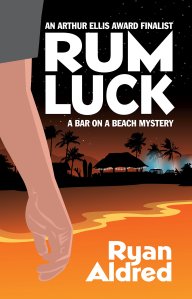
 Today we’re we have the pleasure, and fun, of hearing from Ryan Aldred on humour in writing. Ryan is the Author of Rum Luck,  published June 22, 2016. Ryan loves a beach, so it’s no surprise RUM LUCK takes place on a beach in Costa Rica. But more on that later. First, let’s hear from Ryan on Humour in Writing. 9781432831899
Ryan Aldred on Humour in Writing – The Spice, not the Supper
 

Writing Humour – The Spice, Not the Supper

I am sitting in a curling club that is nearing 40 degrees, behind a folding table that is equal parts rust and lead-based paint. In front of me, a fairgoer’s brow furrows as she examines the back of my book’s jacket whilst I mull the futility of selling a novel set in the tropics on one of the hottest days of the year.

“Is it… is it funny?” she asks suspiciously.

I take a deep breath, unfurling the mental toolkit needed to disarm this verbal landmine. With three friends trying to control an out-of-control bongo drummer and tangled up in the murder of the bar’s former owner, Rum Luck is a funny book – but I rarely describe it that way.

“It’s fun,” I say, trying not to quote my sell sheet verbatim. “And fast-paced.”

She nods, doubtful.

Humour books can be a tough sell. If you don’t believe me, check out the humour category on Amazon. Watch out for tumbleweeds while you’re at it. Readers might enjoy funny books, but they rarely seek them out. Yet authors like Donna Andrews and Kyra Davis do a great job with their humorous novels – and have the sales figures to prove it.

The problem is that readers have vastly different senses of humour. So when you describe a book as humorous, readers don’t quite know whether to expect Eddie Murphy or a string of eye-rolling puns.

“It’s the kind of funny you get when you take people with a sense of humour and put them in a near-impossible situation,” I explain. “Amusing, but not silly.” I segue into the other aspects of the book – the tropical setting, the Canadian characters, the owner-for-a-week series premise and Rum Luck’s spot on the Arthur Ellis shortlist.

She buys a copy, which I happily sign.

Despite her initial reluctance, this reader may well end up using terms like “laugh out loud” and “perfect vacation novel” to describe the book – phrases that seem to appear regularly in early reviews, and are likely part of why Rum Luck is already well into the second half of its initial print run.

Humour can work in mysteries, if it’s done right. So, what’s the right way?

No idea. But I can share my own views on what readers – and writers – can look for in a humorous mystery.

The Plot Still Comes First –

Antonio died well. Will you?

Ben shivered.

“Seriously? Letters cut from a magazine?” Victoria asked, peering over his shoulder. “Do criminals even still do that?”

Ana shot her a glare. “Not everyone in Tamarindo has a fancy office with a printing laser.”

“Laser printer,” Victoria corrected.

“Have you ever seen anything like this before, Victoria?” Ben interrupted.

When the banter is flowing, it’s easy to let the characters prattle on at one another – but I try to bring the dialogue back to the plot as soon as possible. Otherwise, you risk losing the narrative. And if there are other jokes that leap to mind? I keep a separate document for just that purpose. If it’s gold, I’ll find a way to use it later – and if it’s not, I won’t miss it when it’s gone.

Another test of plot is to look at the back-of-jacket summary. If there are more than five jokes in that little tiny column, then you might be dealing with a funny book, not a mystery that also happens to be funny. See The Martian as a key example – a laugh-out-loud book without a single joke on its jacket.


Humour Serves a Purpose –

“The photo. It’s the deed to the bar. It’s in your name.”

“Bar? Which bar?”

The bar. Your bar.”

My bar?” The thought slapped Ben. “The murder bar?”

“Don’t call it the murder bar. It’s bad for business.”

I’ve been told that every sentence in a novel should serve one of three purposes – to advance the plot, develop a character, or create a sense of place. I will occasionally bend that rule to add a fourth purpose – to make a joke – but wherever possible I try to serve another purpose at the same time.

In this case, the ‘murder bar’ dialogue hints that Victoria puts her friend’s business ahead of a stranger’s murder – a key bit of her character. And as funny as a book might be, if the setting and character development are missing, it’s unlikely to have a compelling story.


Tone Matters –

Ben Cooper had had his share of hangovers over the years, but this one deserved to be immortalized in poetry. Where lesser ones faded with time, this one was still returning on a winged tequila worm to take him to Hangover Valhalla. Unfortunately, his other senses were now coming into focus, including his sense of smell. His cell reeked of hot sweat, stale beer, and bitter disappointment.

Rum Luck is a humorous mystery, but the emphasis is on the mystery. Jokes aside, I still have to put my characters through an equal measure of hardship and intrigue. Sometimes, that means the humour is sometimes self-deprecating or dark – but if everything is a joke to them, then there’s no tension. No tension means no stakes, and no stakes means no story.

As you’re flipping through, ask yourself: Do I genuinely believe that something bad could happen to these characters, or is it all just slapstick?


Humour That Stands its Ground –

“Tara was cheating on me.” He took a deep breath. “With some clown.”

“I’m so sorry, Ben. Was he someone you knew?”

“No. Not a friend,” he spat. “A real clown. You know, the guys with creepy face paint who make bloody balloon animals at kids’ parties? Tara has a . . . a . . . thing for clowns.”

He waited for Victoria to make a snide remark. When none was forthcoming, he continued, “I came home early the night of my bachelor party. I walked into the bedroom in time to see Beeboo the Clown step out of the bathroom wearing nothing but face paint, a red nose, and a smile.” And a profoundly disturbing balloon animal. “Tara screamed when she saw me. I froze. Beeboo grabbed his floppy shoes and a bathrobe—my bathrobe—and was halfway to his van before I even knew what had happened…”

There are many books out there that are written to a formula with the hopes that it’ll lead to a massive bestseller. In that process, these books lose the unique elements that would let them stand out from the herd. The solution: Don’t be afraid of a book that is different.

I’ll admit, I had my doubts regarding the whole Ben-catches-his-fiancée-with-a-clown plot point. I wondered if I was shooting myself in the foot while querying agents. That went double for publishers.

But this was part of Ben’s story from the earliest days of Rum Luck’s outline, and I wanted to keep it there. And when Five Star sent back the edits with nary a word about the clown romance, I knew Rum Luck had found the right home.


Parting Thoughts –

All of these rules boil down to one simple question: Is the humour in the mystery treated as the spice, or the supper? And if it’s the supper – well, we know how the Cinnamon Challenge turned out.*

*If this is the first you’ve heard of the Cinnamon Challenge – 1.) Look it up on YouTube for an evening’s entertainment and 2.) Where on earth did you spend 2012?

Rum Luck

9781432831899Ben Cooper wakes up in a Costa Rican jail cell with a crushing hangover, arrested for murder.

Worse, Ben had bought a bar on the beach from the victim, hours before the man’s death. With his ex-fiancée’s life savings. So much for parting on good terms.

With foreclosure looming and death threats piling up on the rum-soaked bar, Ben and his friends turn to the wild idea that got them into this mess — building a business around those who’ve always wanted the experience of having their own bar on a beach somewhere, even for just a week.

Rum Luck is the first book in the Bar on a Beach Mystery series, and was a finalist for the 2015 Unhanged Arthur Award from Crime Writers of Canada.

This novel was inspired by Ryan Aldred’s travels to Costa Rica, which involved three-alarm fires, monkey vandals, late-night visits to underground repair shops run by Nicaraguan illegals and a real estate agent desperate to hack Interpol to clear up a ‘misunderstanding’ regarding some cocaine.

Rum Luck was published June 2016 by Five Star, part of Gale Cengage.

Who is Ryan Aldred?

ryan_headshot_largeWhen not writing, Ryan Aldred runs a small Canadian charity that supports education in Afghanistan, Tanzania, Uganda, and other at-risk regions.

Ryan previously worked as a defense analyst and continues to serve as a Sergeant in the Canadian Forces Reserve. Ryan and his family live in beautiful Prince Edward County. He’s never met a beach he doesn’t like.

To learn more visit http://www.ryanaldred.com.

Or find him on…

Goodreads 

Facebook 

Twitter 

Amazon 
Mystery Mondays: Kathleen Burkinshaw

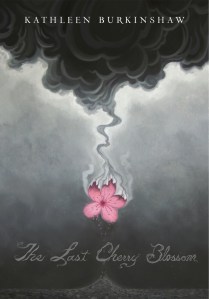
Today, I have the pleasure of welcoming author, Kathleen Burkinshaw to Mystery Mondays. It’s a special week for Kathleen. Her novel, The Last Cherry Blossom, is being released in one week. But don’t worry, you can pre-order it now on amazon. Let’s help her celebrate, by welcoming her in the comments below.

Following the seventieth anniversary of the atomic bombing of Hiroshima, this is a new, very personal story to join Sadako and the Thousand Paper Cranes.

Last Cherry Blossom_cover (2)Yuriko was happy growing up in Hiroshima when it was just her and Papa. But her aunt Kimiko and her cousin Genji are living with them now, and the family is only getting bigger with talk of a double marriage! And while things are changing at home, the world beyond their doors is even more unpredictable. World War II is coming to an end, and Japan’s fate is not entirely clear, with any battle losses being hidden from its people. Yuriko is used to the sirens and the air-raid drills, but things start to feel more real when the neighbors who have left to fight stop coming home. When the bomb hits Hiroshima, it’s through Yuriko’s twelve-year-old eyes that we witness the devastation and horror.

This is a story that offers young readers insight into how children lived during the war, while also introducing them to Japanese culture. Based loosely on author Kathleen Burkinshaw’s mother’s firsthand experience surviving the atomic bombing of Hiroshima, The Last Cherry Blossom hopes to warn readers of the immense damage nuclear war can bring, while reminding them that the “enemy” in any war is often not so different from ourselves.

My Personal History Behind The Last Cherry Blossom by Kathleen  Burkinshaw

Growing up I remember an 8 x 10 elegantly framed black and white photo of my mom sitting with her Papa. She was about 4 years old and dressed in a kimono while her Papa was wearing a yukata (casual summer kimono). My mother treasured that picture. It was one of only a handful she had from her childhood. Those photos were also taken when she was about 4. She didn’t have any of her older than that. Other family pictures were all destroyed, along with her home, the day the atomic bomb was dropped on Hiroshima. She only had these few pictures because they were at a cottage they vacationed at in the country. That picture is what inspired me to write about the relationship and love my mom had with/for her Papa.

During my daughter’s elementary school years, I went to her class each year, read a picture book about Japanese culture, and we would do a Japanese craft related to the book I read.

When my daughter was in seventh grade, she told me that her class’ section on WWII would be ending that week, and she overheard some students talking about seeing that ‘cool picture of the mushroom cloud’. She asked me if I could talk about her grandmother and all of the people who were under the now famous mushroom cloud. That question inspired me to present my mother’s experience on August 6th to middle/high school students.

When I was younger, my mother told me what she lost that day in August. But she never gave me any specific details of this event. Her memories were still too painful to discuss.

After my daughter’s request, my mother decided she was ready to tell me more of what had actually happened on the most horrific day of her life. She hoped by sharing her experience, students would realize that the use of nuclear weapons against any country or people, for any reason, is unacceptable.

The following year, my daughter’s previous teacher requested that I present to her history class and to the entire 7th grade at the school. I phoned my mom and asked more questions about her life at home during the war before August 6th. A week later a copy of her favorite picture with her Papa arrived in the mail. That’s when I knew there’s a story here, not just of horror and loss, but of love, and joyful family memories.

My daughter is about to begin her second year of college, and I continue to visit that seventh grade class at her old school. Over the past six years I have added other local middle schools to visit. Each year the students who have heard my non-political presentation, expressed their gratitude to my mother for sharing such a personal, traumatizing memory. Teachers included my presentation in their history curriculum because they felt that the lecture gave students new insight into how children lived during the war. And more importantly, students learned that the Japanese children had the same hopes and fears as the children in the Allied countries.

Teachers, friends, my family, and most importantly my mother encouraged me to finish writing The Last Cherry Blossom. I wanted to write this book not just to honor my mother and her family, but to honor all the people that suffered or died from the effects of pika don. I want readers to know that the victims were all someone’s mother, father, brother, sister, or child.

Originally, scientists said nothing would grow again in Hiroshima for many years after the bomb was dropped. Yet the cherry blossoms bloomed again the following spring. The cherry blossoms endured much like the spirit of the people affected by the bombing in Hiroshima, much like my mother.

The Last Cherry Blossom publishes one week after this post! It’s a bittersweet time. My mom passed away in January 2015. However, she did read the latest draft (at that time) of the manuscript and knew it was going to be published. Her elegantly framed, treasured photo now has a prominent place in my home.

Last summer my family visited Hiroshima to honor my mother at the Hiroshima National Peace Memorial Hall for Atomic Bomb Victims. Standing on the same ground where she experienced so much loss and destruction when she was only twelve years old, broke my heart.

My mother lost so much that fateful day, yet she gained an inner strength she never thought possible. Whenever I look at the picture of my mom with her Papa, and when I think of all the love she had given my daughter and myself, I’m reminded that love prevails over fear.


WHO IS Kathleen Burkinshaw?

Burkinshaw, Kathleen wnbaKathleen Burkinshaw resides in Charlotte, NC. She’s a wife, mom to a daughter in college (dreading the reality of being an empty nester-most of the time), and owns a dog who is a kitchen ninja.  Kathleen enjoyed a 10+ year career in HealthCare Management unfortunately cut short by the onset of Reflex Sympathetic Dystrophy (RSD). Writing gives her an outlet for her daily struggle with chronic pain. She has carried her mother’s story her whole life and feels privileged to now share it with the world. Writing historical fiction also satisfies her obsessive love of researching anything and everything.

You can connect with Kathleen on twitter @klburkinshaw1

or find her on her website or at other fun sites…

Mystery Mondays: James Osborne

Today, it’s my pleasure to welcome award-winning author James Osborne to Mystery Monday. Welcome, James. For something a little different, I’m interviewing James. Hope you enjoy our chat.

JO: Thank you for the invitation, Kristina. It’s a privilege to join you.

KS: To begin, can you tell us what motivated you to become a writer?

JO: I suppose it started one winter when I was a kid; I read a 2,000-page encyclopedia.

KS: Really? You’re not kidding, are you?

JO: Not at all. At the time, my parents owned a wilderness farm. We had little money. I was about eight one cold winter and wanted something to read in the evenings. The choice was between my mother’s romance novels and a huge Columbia Encyclopedia. As you might imagine, romantic stories don’t interest a pre-pubescent boy. So I spent the winter thumbing through that enormous, illustrated encyclopedia. I learned a lot of interesting things. But most of all, I gained a lasting thirst for learning and an attraction to reading.

KS: So how did you go from that unusual literary beginning to writing three books that won international awards?

JO: I must confess that early in my working career, writing was not the goal, but rather a means to an end.

KS: How so?

JO: I was an investigative journalist. My motivation was informing the public about important issues. Writing was just a means to that end. But I soon came to enjoy creating images that the magic of the English language makes possible. So journalism served me in two ways: instilling a love for writing, and providing me with learning experiences that became resources for my books.

KS: I understand your debut novel last year grabbed quite a bit of attention on Amazon.

Screen Shot 2016-07-16 at 9.10.34 AMJO: Yes, I was delighted and a bit overwhelmed. Within a few days of its release in June 2015, ‘The Ultimate Threat’ became an Amazon best seller. Perhaps it’s the novel’s premise that grabbed everyone’s attention. The plot anticipates what could happen if ISIS was ever to establish a foothold in North America.

KS: I saw some stories in the news media recently about your books winning those international awards, in fact, I believe it was a hat trick of awards. Please tell us about that.

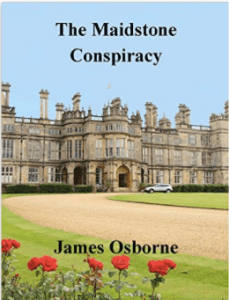
Screen Shot 2016-07-16 at 9.11.52 AMJO: It was extremely flattering to have my books win a first, a second and a third place in that competition. It’s one where readers from around the world vote on their favorite books. The poll is run by a non-profit organization called Preditors & Editors, so they have no hidden agendas. The group’s primary role is to provide resources for readers and to support writers. The readers chose ‘Encounters With Life’ as the Best Short Story Collection of 2015. ‘The Maidstone Conspiracy’, won second as Best Mystery Novel of 2015, and ‘The Ultimate Threat’ came third as Best Thriller of 2015.

KS: That competition also delivered you an added surprise, is that right?

JO: Yes indeed! Without asking, someone nominated me in the Best Author category. Evidently, there were thousands of authors nominated. I was hugely surprised and deeply honored to be awarded second place. First place went to an author from the US, and third was awarded to a British author.

KS: What other experiences have influenced your writing.

JO: Quite a few actually, and I’m grateful for them. My working life was varied. I’ve served as an army officer, a teacher, worked in product promotion and marketing, was a corporate executive and for 10 years owned my own business. Those various careers provided many valuable experiences, both for my novels and my short stories.

KS: Short stories seem to be outside the mainstream of your primary genre, yet they’ve won you some major awards.

JO: True. As much as I love writing novels, I have to admit that writing short stories is a form of recreation for me. Seriously. I’ve written somewhere around 110 short stories. I’m not sure. I’ve lost count. Writing short stories gives me a rest from working on novels yet it helps to stimulate my thinking about them. And yes, I’m pleased that some of my short stories have received awards. Several of them have appeared in anthologies, both in print and online. Samples are posted on my blog, http://www.JamesOsborneNovels.com.

KS: What’s next? Can you tell us what you’re working on now?

JO: Sure. Readers of both ‘The Maidstone Conspiracy’ and ‘The Ultimate Threat’ have been enquiring about sequels to both. As you know, Kristina, from your own exceptional bestseller getting responses like those from readers is very encouraging and at the same time, humbling. So, I’m pleased to tell you that sequels for both are in process. I enjoy working on simultaneous projects—it’s stimulating. And perhaps that’s why I’m also finishing up work on a second volume of short stories. The plan is, when finished it will become volume two of ‘Encounters With Life: Tales of Living, Loving & Laughter’.

KS: Before we close, would you tell us what writers have influenced you most in your writing career?

JO: Dozens of them. It’s a very long list, Kristina. I’ve read thousands of books over the years. Writing styles and plots designs are what I find most attractive. Perhaps that’s why my tastes cross many genres. A partial list of authors from the near and distant past that I admire would have to include: Charles Dickens, Leo Tolstoy, James Michener, Ernest Hemingway, Ian Fleming, Zane Grey and John Steinbeck. More recent authors on my hit parade include Dan Brown, Clive Cussler, Robert Ludlum, Nelson De Mille, Len Deighton, Jeffrey Archer, John Grisham, Tom Clancy and Michael Creighton. I could add at least a dozen more names to each list.

KS: Thank you, James, for taking the time to join us on Mystery Monday’s.

JO: It’s been a pleasure, Kristina. Thank you so much!

WHO IS James Osborne?
March 2005.JPGJames’s working career began in journalism and then teaching journalism, after which he took a detour through the corporate world before returning to writing. That detour included becoming vice-president of a Fortune 500 company — a mixed blessing — and then president of a management consulting firm for 10 years. Those experiences made clear that a varied life, filled with a diversity of good and occasional not-so-good experiences, provides a huge resource for creative writing.

You can find out more about James’s novels at https://jamesosbornenovels.com


Mystery Mondays: Laurel S. Peterson on The Tension Of Believing

To kick of the 206-2017 season of Mystery Mondays, we have Laurel S. Peterson joining us today. We’re celebrating her new release, SHADOW NOTES, published by Barking Rain Press, and she’s going tell us about…

THE TENSION OF BELIEVING—AND NOT 

by Laurel S. Peterson

Thanks for having me on your blog, Kristina. I’m honored to be here.

Part of the core of my novel Shadow Notes is my own wrestling over the validity of intuitive or “psychic” powers. I have friends who tell me they “know” things, that they are connected with aspects of experience that are unseen by most people. I have had moments in my life where I also have had experiences like this. One vivid moment was when I was a teenager, sitting on a park bench somewhere in Europe waiting for my parents. I had a sudden flash where I understood that I could have been, could be, any of the people walking by me. We were all the same, while at the same time we had ended up in different bodies. It was a moment of profound oneness with all that was around me.

Another time, I was waiting for a response from a literary agent. Two days before I got the letter, I became absolutely certain that she had rejected me. (Of course, we all carry some of this around, I imagine!) It was the kind of certainty I’ve experienced on one or two other occasions, one of which was an acceptance. Where did that certainty come from? Where did that awareness of one-ness come from? I don’t have an explanation for it, and the rational, scientific skeptic in me says those kinds of moments are explainable if I understood brains better—or if I would just allow myself to believe. Believing isn’t something I’m so good at.

My protagonist, Clara Montague, has dreams and gets visions of things through touching. In one instance, she foresees a character’s death when she grabs that person’s hand; in her dreams, she sees a wave of blood falling toward her and her mother. The dreams repeat and intensify until Clara can figure out what’s causing them.

Because I’m not sure how I feel about this, or because I don’t know how to resolve the tension between my friends’ assertions about their very real experiences and my own secret belief that there is no such thing (not so secret anymore!), the only place for me to tackle it is in my fiction. I love my friends. I believe them. I worry about them. I don’t see my way clear to one point of view or the other; I have to hold both in tension within me all the time. Clara herself maintains this kind of tension; she doesn’t want her gift. She believes her mother has the same gift, but Constance refuses to discuss it with her. She doesn’t want to act on her gift, but if she doesn’t, she is physically and psychologically damaged by her attempts to suppress it. Early in the book, we learn she spent some time in a Swiss psychiatric hospital.

I think one of the hardest things we do as human beings is to learn to accept that there are things we can’t resolve, that opposite things can both be true at the same time. The simple example I give my students is that we can love and hate the same person at the same time. The fun part, the part that makes us interesting, is that complexity. Accepting it isn’t easy, but it’s much more interesting than if it weren’t there at all.

What do you think about intuition? Do psychic phenomena exist? Is this something you’ve experienced? What kinds of opposites you find hard to resolve? Thanks for reading, and I look forward to hearing your comments.

WHO IS Laurel S. Peterson?

www.utechristinphotography.com
http://www.utechristinphotography.com

Laurel S. Peterson is an English professor at Norwalk Community College. Her mystery novel, Shadow Notes, was just released by Barking Rain Press. She has published two poetry chapbooks, That’s the Way the Music Sounds, (Finishing Line Press, 2009) and Talking to the Mirror (Last Automat Press, 2010); a full length collection, “Do You Expect Your Art to Answer You?” will be released by Futurecycle Press in 2017. In 2016 – 2017, she is serving as the town of Norwalk’s Poet Laureate. She also co-edited a collection of essays on women’s justice titled (Re)Interpretations: The Shapes of Justice in Women’s Experience (Cambridge Scholars Publishing, 2009). You can find her at www.laurelpeterson.com, on Facebook at https://www.facebook.com/LaurelPetersonWriter/, and on Twitter: @laurelwriter49.


Shadow Notes Cover compressedSHADOW NOTES:  Clara Montague didn’t even want to come home. Her mother, Constance Montague, never liked her—or listened to her—but now they have to get along or they will both end up in jail or dead.

Clara always suspected she and Constance share intuitive powers, but Constance always denied it. When Clara is twenty, she dreams her beloved father dies of a heart attack, and Constance claims she is being hysterical. Then he dies.

Furious and betrayed, Clara leaves for fifteen years to tour the world, but when she dreams Constance is in danger, she can’t ignore it, no matter how she feels. Shortly after Clara returns home, Constance’s therapist Hugh Woodward is murdered and Constance is jailed for the crime.

Since her mother refuses to tell her anything, Clara enlists the aid of brother and sister Andrew and Mary Ellen Winters, Constance’s enemies, to dig out Constance’s secrets. First, however, she must determine whether the Winters, wealthy socialites with political ambitions, are lying and what their motivations are for helping her. In addition, why does the mere fifteen year age difference between Clara and her mother make them nervous?

Starting to explore Constance’s past, Clara discovers a closet full of books on trauma and gets a midnight visit from a hooded intruder wielding a knife, who tries to scare her off her investigation. But her dreams become more demanding and there’s a second murder. Realizing she can’t run back to Paris as she wishes, she works with the town’s sexy new police chief to find the truth about Hugh’s murder and its connection to her mother’s past. Only in finding the connection will she be able to figure out how those secrets have shaped both Constance’s life and her own. Only in finding the connection will they finally be able to heal their relationship.


Mystery Mondays: A Gift For You

Today is the one year anniversary of Mystery Mondays.

Screen Shot 2016-05-05 at 2.24.17 PMI’m very excited to announce Mystery Mondays: 2015-2016 Writing Tips From Over 30 Contributing Authors.

So many of the authors who contributed to Mystery Mondays agreed to have their posts included in this free book. If you’d like a free copy, just sign up for my newsletter. Assuming I’ve done everything right, you should be emailed a PDF version. I’m working on a mobi version to be released later.

Being a author and promoting ones’s books means living in an endless journey of learning something new. This is my first time using MailChimp, so please let me know if something doesn’t work or is inconvenient to use.

The contributing authors in alphabetical order are:

Cathy Ace, Judy Alter, Catherine Astolfo, Carol Balawyder, M.H. Callway, Melodie Campbell, Brenda Chapman, Viv Drewa, Ann Farnsworth, Gloria Ferris, Kat Flannery, Elinor Florence, Darlene Foster, Barbara Fradkin, Patricia Fry, Donna Galanti, Teagan Riordain Geneviene, Jesse Giles Christiansen, R.J. Harlick, J.D. Hawkins, James M. Jackson, Debra Purdy Kong, C.S. Lakin, Rosemary McCracken, Luke, Murphy, Lisa de Nikolits, Jessica Norrie, Michael Phillips, Katherine Prairie, Amy M. Reade, Garry Ryan, Laurence St. John, Judy Penz Sheluk, Eileen Schuh, Janice Spina, Cheryl Kaye Tardif, Susan Toy, and  Tracy L. Ward.

Thank you to all who contributed to the book and to everyone who has been reading, commenting and sharing the posts.

To all contributing authors, I will send you a copy of the book, too!

And you know me, I can’t help but mention AVALANCHE, A Stone Mountain Mystery #3 is being released Saturday. You can pre-order for $0.99 USD for a limited time. The trade paperback is also now available on Amazon.com and will be released soon on the remaining Amazon sites.


Mystery Mondays: Cathy Ace on Editing and Multiple Series

Today is a bit of an occasion. It’s the final post in the 2015-1016 Mystery Mondays series, and next week, I’ll have something special for you.

So to celebrate, Cathy Ace is joining us today.

Screen Shot 2016-06-07 at 7.03.23 AM

Editing and Writing Multiple Series (aka soot-juggling) by Cathy Ace

I’m a lucky girl (apparently it’s okay to call myself a “girl” if you go by the plethora of books with “girl” in the title…when the subject is anything but “girl-aged”!). Yes, I’m truly fortunate. I’m in the enviable position of having two publishers, each allowing me to write a series of books, with contracts stretching a couple of years into the future. So I have it a lot better than many authors, let alone writers searching for that elusive first contract. (Keep going, by the way!)

I’m writing this on June 3rd 2016. I’ve just returned to my home near Vancouver, BC, Canada from a trip that took me to CrimeFest UK (a large UK crime convention) where the likes of Ian Rankin were guests of honor, and then Toronto where I attended the Arthur Ellis Awards and the Bony Blithe Awards. Thus, for the past couple of weeks, I’ve been surrounded by people intensely focused on crime fiction, and those who’ve been nominated for, and won, the top prizes in their field. It’s been a wonderful trip – the sort of thing that makes me realize how many people are out there who share my passion for creating crime fiction. But now it’s back to just me, my laptop, all the people in my head…and my dogs at my feet.

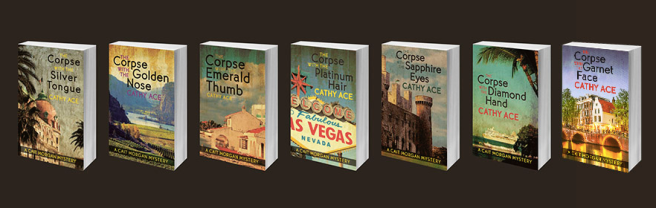
As I mentioned, I write two series of books: The Cait Morgan Mysteries are published by TouchWood Editions based in Canada, The WISE Enquiries Agency Mysteries by Severn House Publishers in the UK. The series differ from each other in many ways, yet are similar in that they are both “traditional”: no foul language, no sex on the page, no gore or “unnecessary” violence. Yes, they’re murder mysteries, but I stick to the more palatable types of murders…the sort I first encountered in the books of Agatha Christie and Ngaio Marsh.

Right now I have two manuscripts on the go – one for each series. That’s not unusual, but the specific timing is. And not in a good way. I think of writing a novel as being akin to Three-Day Eventing: day one sees horses galloping over fences and across fields, day two forces more discipline as the show-jumping takes place and day three requires deftly controlled exercises in the dressage. First drafts, editing and copy-editing follow much the same formula for me; the joy of the gallop, the challenge of refining, the excruciating attention to detail.

Book #3 in the WISE Enquiries Agency Mysteries (currently entitled The Murdered Miniaturist, but that could change) is at the stage where it’s contracted for, and I have a deadline of June 20th to get the manuscript to my publisher with agreed structural changes having been made to what is currently the fifth draft. This will mean I have to, essentially, pull the book apart, delete one sub-plot and insert another plotline, with new characters that then have to be woven through the entire work. It sounds scary, but (having done this before) I know it won’t be as bad as it feels right now, before I begin. It will then go to my editor (who works for Severn House) who’ll go through the manuscript with a fine-toothed comb and get back to me with notes, which I will work through. We’ll finally agree it’s ready for proof-checking, and then I’ll go through notes on that part of the process. I’m looking forward to it – I enjoy being with “The WISE Women” as I call my characters in this series.

The slight “challenge” I face is that I expect to receive notes from my editor at TouchWood Editions about Cait Morgan Mystery #8 (entitled The Corpse with the Ruby Lips – that’s set) any day now. I’m one stage further along with this book than the WISE book, but a bit of a problem with scheduling means I’m going to have to do what sounds a bit like brain-mashing, by working on both manuscripts at the “same time”. How will I handle this? One during the day, one at night. That’s the best I can do.

Usually, when I am writing and working through my own editing and redrafting, I give up most of my daytime work hours to organizing events, writing guest blogs, writing for the two blogs where I’m a regular contributor (7 Criminal Minds every other Wednesday and Killer Characters on the 22nd of each month) as well as prepping for Blog Tours for book launches (I had four books published last year) and the work and various committee meetings I undertake for Crime Writers of Canada (I am Chair for the next two years). That, plus using Facebook and Twitter to promote my work and build and maintain relationships with readers I meet in the digital world (and having six grandchildren, five acres, two dogs and a husband to tend to – yes, I thought about the order!) takes up a good deal of time, so I write when everyone’s gone to bed – from about 9.30pm until I realize I’m typing what looks like a poor hand at Scrabble…maybe 1-2am.

But for the rest of this June, it’ll be a bit different; I’ll have to switch from the Welsh stately home of Chellingworth Hall and the nearby village of Anwen-by-Wye, where the four women of the WISE Enquiries Agency run their business, to Budapest – where Cait Morgan is having a challenging time trying to work out whether a cold case back in Canada is connected to the Cold War, or whether being so far from her Canadian home without her retired-cop husband is addling her thought process. Cait’s stories are told in the first person, the WISE women each have their own point of view chapters. It’ll be a blast (I hope!). My plan is to work with the WISE women during the day, and Cait at night. With a break to make and eat dinner with my husband in between the two, that should give me enough head-space to shift location, storytelling style and voice.

Yes, I’m giving the impression I don’t know how it will go, and that’s true; I’ve never done this before. I’ve worked on the two series for a couple of years, but with only one book on the go at a time, thanks to some canny scheduling. Now the planets have aligned to no longer allow that to be the case, I plan to cope. I have to cope. Somehow.

That’s the thing, you see; there are always new challenges in this writing life. Last year was the first time I’d written four books in a year, but I know I won’t do that again. I managed it, but my family and home life suffered because of it, and that’s not fair on anyone. I have agreed to write three books this calendar year; one’s the WISE #3 I mentioned above, one will be Cait #9, the third will be WISE #4. Two books have been launched in the US/Canada this year so far (WISE #2 and Cait #7) and Cait #8 and WISE #3 will be published before it’s 2017. It’ll still be a busy time, but I am (I think/hope) becoming a smarter worker. I’m a detailed outliner, and I don’t use any programs to schedule characters/timelines; I found the use of technology took too much time in itself. Nope, it’s good, old-fashioned pencil and paper for me (and the frequent use of an eraser!).

I’m fortunate to have the deals and the deadlines I do. And I know it. My parents always taught me the harder you work, the luckier you get. Like I said, I’m a lucky girl, so I’d better keep my head down, and get back to this manuscript!

***

1610884_639339149521629_3791092845543988135_nCathy Ace was born and raised in Swansea, South Wales, worked for decades in marketing communications, and migrated to Canada in 2000. Having traveled the world for work and pleasure for many years, Cathy put her knowledge of the cultures, history, art and food she encountered to good use in The Cait Morgan Mysteries – a series of traditional closed-circle murder mysteries featuring a globetrotting professor of criminal psychology. Ace’s other series is set in her native Wales: The WISE Enquiries Agency Mysteries feature four female professional investigators, one of whom is Welsh, one Irish, one Scottish and one English, aided and abetted by a sleuthing dowager duchess. They tackle quirky British cases from their base at a Welsh stately home – the ancient seat of the Twyst family, the Dukes of Chellingworth, set in the rolling countryside of the Wye Valley in Powys, near the picturesque village of Anwen-by-Wye. Cathy lives in beautiful British Columbia, where her ever-supportive husband and two chocolate Labradors make sure she’s able to work full-time as an author, and enjoy her other passion – gardening. Bestselling author Ace is the 2015 winner of the Bony Blithe Award for Best Canadian Light Mystery (for Cait Morgan Mystery #4, The Corpse with the Platinum Hair).
Web: http://cathyace.com/

Facebook: https://www.facebook.com/Cathy-Ace-Author-318388861616661/

Twitter: @AceCathy


Mystery Mondays: J.D. Hawkins on Setting Up Suspects

Today on Mystery Mondays we welcome, J.D. Hawkins would be lion tamer turned authors.

Setting Up Suspects by J.D. Hawkins

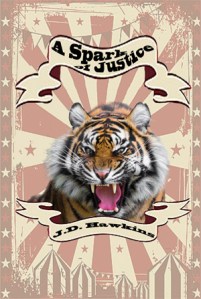
Front300In mystery and suspense writing, the last thing a writer wants to do is to make it obvious who committed a murder or perpetrated whatever crime or event that is at the heart of the story.

There are different ways to lead the reader through a labyrinth of clues in a way that will provide plenty of the mental exercise of working it out that most mystery readers crave. One method is to have the perpetrator hide in plain sight; someone close to the main protagonist who appears to be above suspicion until a sequence of clues slowly begins to reveal that all is not how it seems.

Another approach is to single out an innocent character and make them look like the guilty party, diverting attention away from the real culprit until the very end. Sometimes these two techniques are used in combination to good effect.

My own favorite process, however, is to set up several suspects, each with a possible means and motive, so that the reader is kept guessing until the very end. This scenario has been used by some of the most famous and popular mystery writers of all time; Agatha Christie and Arthur Conan Doyle to name two. Especially in the realm of murder mysteries, the story quickly becomes a whirlpool of clues and diversions that lead the reader (and the protagonist) on a merry chase to sort out what is relevant and what might be a decoy or distraction from the real solution.

In A Spark of Justice, my protagonist is an insurance investigator who has to determine whether the death of a lion tamer was an accident or a premeditated murder. This gave me a lot of scope for presenting alternative possibilities. Like many writers, I drew from my own past experience that made me aware of life within the circus environment to depict a closed society of people who would make the investigator’s job more difficult.

I also set up several possible suspects; the jealous and possibly unfaithful wife, the mistress who might have discovered that her lover had led her along with false promises, various co-workers within the circus environment who might have carried their own grudges and not least of all, the possibility that it had actually been an accident. Investigator John Nieves has plenty of motive and opportunity to sift through, while also confronting questions of his own identity and desires for his future.

A good mystery story has multiple levels so that the reader gets to know not just the protagonist, but also all the main suspects. They become familiar, like people known in real life. Whether they would be capable of murder provides food for thought and speculation.

In the circus world I chose for my story, the deadly predators; the big cats, provided an additional level of familiarity with a non-human form of character as well as an alternative possibility; was it just a fluke of circumstance in a high risk profession where a wild animal was only doing what came naturally? As a cat lover myself, I have to confess that including the big cats among the characters my readers get to know was a pleasurable indulgence, as well as a source for comedy value. The pranks played on the investigator by the circus people add a sense of fun and adventure to what would otherwise be a very serious situation. Bringing the Circys (circus people) under suspicion also added conspiracy to the list of possible solutions.

The art of mystery writing is in setting someone up. Whether the antagonist appears to be an innocent party, one of a collection of suspects or a bystander who the reader doesn’t give a second thought until the big reveal in the final conclusion, someone gets set up to take the fall. Half the fun of reading in this genre is to try to work out who and why. The writer’s job is to answer those questions before the end, as well as providing a stimulating story and memorable characters to love, hate or fear along the way.

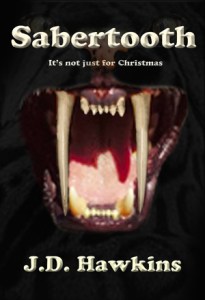
In my next book, Sabertooth, it is my characters who face the mystery. Are the murders in Los Angeles being committed by a serial killer or by an animal? The readers may think they know the obvious answer all along, but in the end, they just might be wrong.

WHO IS J.D Hawkins?

Front300-1J.D. Hawkins is a native of Los Angeles where most of his stories are set, but has also lived in Hawaii and the Midwest States. He spent part of his youth traveling with a carnival and has lived through many real life adventures that include hitchhiking cross country and living through one of L.A.’s more famous earthquakes.

He began writing stories in high school and has turned his hand to writing Mystery and Thriller novels, intentionally devising more original themes than the usual police procedurals and standard murder mysteries.

He once seriously considered becoming a lion tamer and fantasized owning a zoo as a child. He still gives regular thought to becoming involved with a Big Cat sanctuary and this love of wild felines may come out in the plots of some of his stories.

https://jdhawkinsmysteries.wordpress.com/

https://www.facebook.com/JohnDeanetteHawkins

A Spark of Justice:

The Great Rollo had enemies and dirty family secrets. Investigator John Nieves enters the surreal world of the circus, determined to learn if the lion tamer’s death was an accident or foul play, but a series of mishaps suggests that the Cirkys are desperately trying to hide the truth. In his struggle to overcome a childhood fear of clowns and to come to grips with his own search for his Latino identity in a hostile world, even attempts on Nieves’ life cannot thwart him from his obsession to learn who killed the lion tamer.

Buy A Spark of Justice at http://www.amazon.com/Spark-Justice-J-D-Hawkins-ebook/dp/B014AB4BYU