Complicated Character Relationships

#writetip Should you drip out information on complicated relationships or get the info out early?

Here’s the advice I got from an acquiring editor: If the relationships are key to the  motivation of the crime, then it’s better to define them early. You can do this and still keep the reader intrigued.

Now to go do this…

I’m writing from Norman’s Cay in the Bahamas and the nearest cell tower is 7 miles away. I’m amazed I have a connection today.

I have to keep the posts short, and it may be slow, but at least it’s working.


Narrative: It’s all in the details

Do you have too much detail? #writetip I received a very insightful comment on my second novel from an acquiring editor. Here’s what I got out of it.

When describing “something” in a novel, that “something” should be related to the story. For instance, it is the murder weapon? Then perhaps it deserves a lot of attention.

It is “something” used during the novel, but not key to the plot? Then perhaps a little less detail.

It is “something” not related to the story? Then perhaps remove it.

There is so much to remember when editing a novel. Maybe it’s time I started another spreadsheet.

The Mentorship Begins . . .

Yesterday I got my first feedback from Garry Ryan. #writetip Garry is an author from Calgary, Alberta. He writes the Detective Lane series. For those of you who have been reading my blog for a while, I wrote about the Crime Writer’s of Canada mentorship program. I didn’t end of partnering with David Cole, but all has worked out and the program is underway. Garry has volunteered his time to help my make my novel better.

I won’t bore you with the details, but I want to mention one highlight in his comments. There has been talk about series writing this week on some of the writing blogs. Well, my novels aren’t a series, but I do have characters that are in all three novels.

Garry pointed out to me that I don’t describe my characters in the opening scene. Seems obvious, but for me, I’ve lived with them through three novels, so I know what they look like. I just forgot to tell the reader.

Garry is the first person to read my third novel who hasn’t read the first two. I’m not sure my readers who read the first two would have picked up on this omission. I guess it’s good to find readers that haven’t read all your work. You never know what improvement you might be able to make. Thanks Garry.

Does Every Character Deserve a Name?

How do you know if you should name your character? #writetip There are loads of writing books that tell you not to name a character unless that character has a significant part in your novel. Well, how to you know?

I name all characters in the first draft. I don’t always understand what role a character might play until I’ve finished the novel.

At the first draft stage, I review each scene for characters that appear only once. For example, I might need a lift attendant at a ski lift for a given scene to work. If that attendant only shows up once, I remove their name. I call them by their title at work, function in the scene, whatever works to identify them.

This is also the stage where I discover who I thought might be a minor character, a walk-on, is really someone significant to the story. Since I’ve already named them, I don’t have to change anything.

I’m sure there are many ways to accomplish this, but this method works for me.

The Beginning: The End

How important is it to come full circle in your novel? #writetip

I find myself at the first draft stage of my third novel. This is a good opportunity for me to check that the ending fits with the first chapter.

Here are some important questions you can ask:

1. Do you close off on any problems you created for your protagonist or other main characters?

2. Do you answer any questions you left hanging in the first chapter?

3. What reasons did you give the reader to keep reading after chapter one? There must be closure to these issues.

4. Do the first and last chapter have something in common?

I like a novel to feel rounded. I want to know there was a point to the first chapter and that the author wrote it as part of a story and not a gimmick to get me reading.  The questions help me ensure my novel offers the reader the same courtesy.

Guest Blogging

If you want guest bloggers, can you make it easier for them to write  for your blog? #writetip

I’ve been asked twice now and feeling very flattered. Blogging keeps me writing daily. Yup – great practice. Now I’m thinking about what to write for other blogs.

One of the bloggers sent me a list of questions, specified length of article, and asked for photos. I found this helpful in focusing what I wrote.

The other blog asked if I would guest blog. To get an idea of what they want,  I’ve been reading for a while and getting a feel for what is appropriate for the site.

I found receiving a list of questions made writing the blog much easier and less time consuming. Even though I was asked later, I got that blog written first.

One Chapter, Two Experts

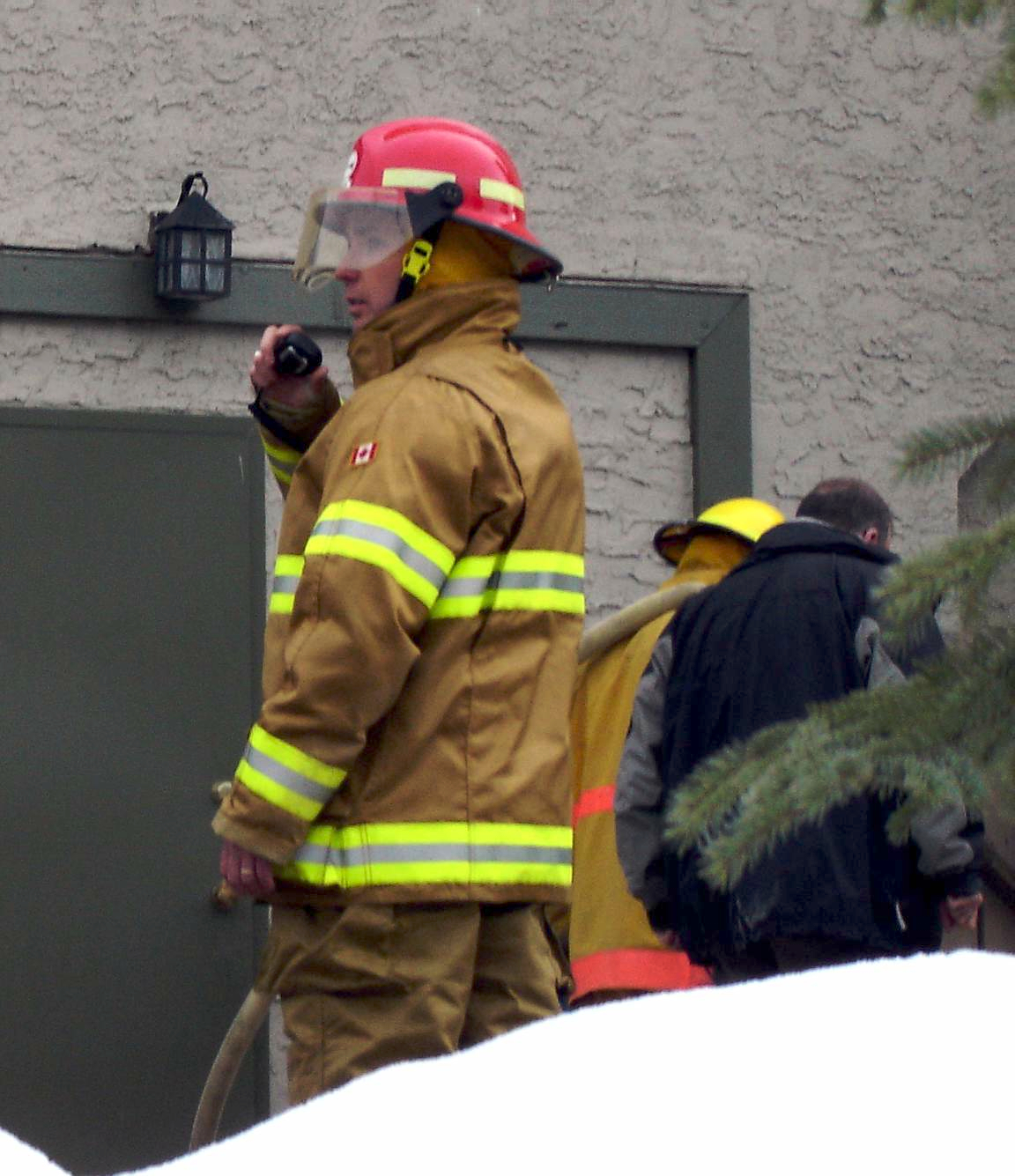
Billy on duty with the Panorama Fire Department - the years before Calgary

One family, two experts. #writetip I find myself writing a chapter about a woman having a baby while trapped by a forest fire. So what do I need? A new mom and a firefighter. Lucky for me Billy Stewart, Firefighter with the Calgary Fire Department and Adrienne Stewart, new mom to a handsome boy, Noah, not only answered my questions but are going to read the chapter and critique it.

Making a scene believable depends on the details a writer provides and experts help a writer get the details correct.

How could I know how firefighters puts on their uniforms or what gear they carry in different situations or what they worry about when surrounded by flames?

Only a new mom could tell what they might be thinking if they were trapped by a fire and having their baby.

These little details bring reality to a scene.

But when is the right time to ask for help? I wait until I have a scene written before I ask too many questions. This way, I’m as certain as I can be about the direction of the scene, I know where my knowledge is weak, and I won’t waste the experts time.

This is a big shout out to Billy and Adrienne for helping me create a better story.

Animals as characters?

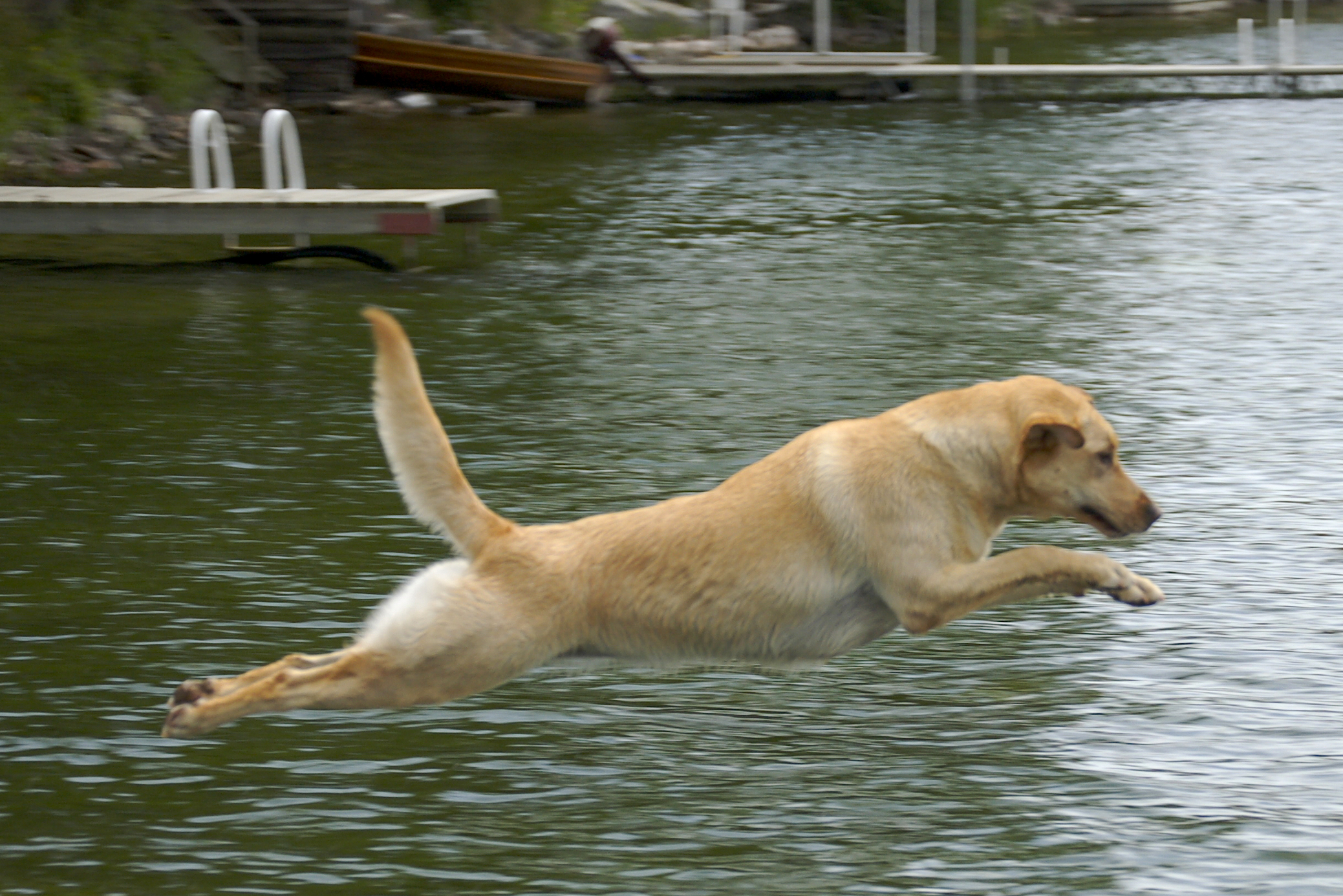
Chica - The Diving Dog

The great part about having an animal in your novel is you don’t have to worry that you will insult them. #writetip. I became interested in including a dog in my novels when I read a Dean Koontz novel. I think it was Tick Tock. A scary novel where the dog provided comic relief. I thought is was a good way to break tension in a scene when it was needed.

Dogs can provide an infinite source of distractions and difficulties for any of your characters. If you need a situation to be unpredictable, add a dog to the scene.

Chica – my yellow lab – has a place in my first novel Fracture Line. Chica is no longer with us, but she still provides me with story ideas.

Farley – my wheaten terrier, has a place in my third novel (yet to be named).

Preparation for Writing

Farley - safe on deck

Writing, like cruising, takes a lot of preparation. #writetip  It took me many hours to install the netting behind Farley on my catamaran. First I had to research the product, then order it, figure out how to install it, and finally install the netting. Was it worth the effort? You bet. Farley is safe when we are underway.

To me writing a good novel is similar. It takes a lot of preparation too. I wanted to mention Mary Lou Dickinson’s blog about “So you want to write: Some questions to ask yourself.” Mary Lou gives you a good list of questions to ask yourself if you are thinking of writing a novel.

Writing my first novel was the hardest. I had to figure out what my story was, what genre I was writing in, figure out the rules of the genre, and then take the big leap and start writing. The first words on the page were the most intimidating. Hard work will get you a long way. Just keep at it.

Was it worth the effort? You bet. I have two completed manuscripts and a third one at the first draft stage. I have an agent willing to represent me. And best of all, I have the satisfaction of working hard at something and being proud of it.

Chapter Headings

There are many formats for chapter headings, but one thing that can’t be wrong is the numbering. #writetip If you’re self editing, and I would guess lots of authors are, at least before submitting to an agent or publisher, check your numbers carefully.

By the time an author completes a novel, I suspect scenes, if not whole chapters, have been reorganized. You might move a scene to an earlier spot in your novel. You might remove a chapter. Infinite changes are possible.

In the end, don’t forget to check the chapter numbers are in right. It’s easy to re-use a chapter number or skip one all together. I print my manuscript and spread is chapter by chapter across the floor.

Other small things I check:

– Are the headings a consistent font and character size?

– Are the headings positioned at the same spot on the page? By this I mean, check the number of lines before  and after the chapter heading. Are all the heading centred, left aligned, or right aligned?

– Do the headings start on a new page?

This many seem small, but it will enhance the professionalism of your submission.