Writing tools to keep you productive

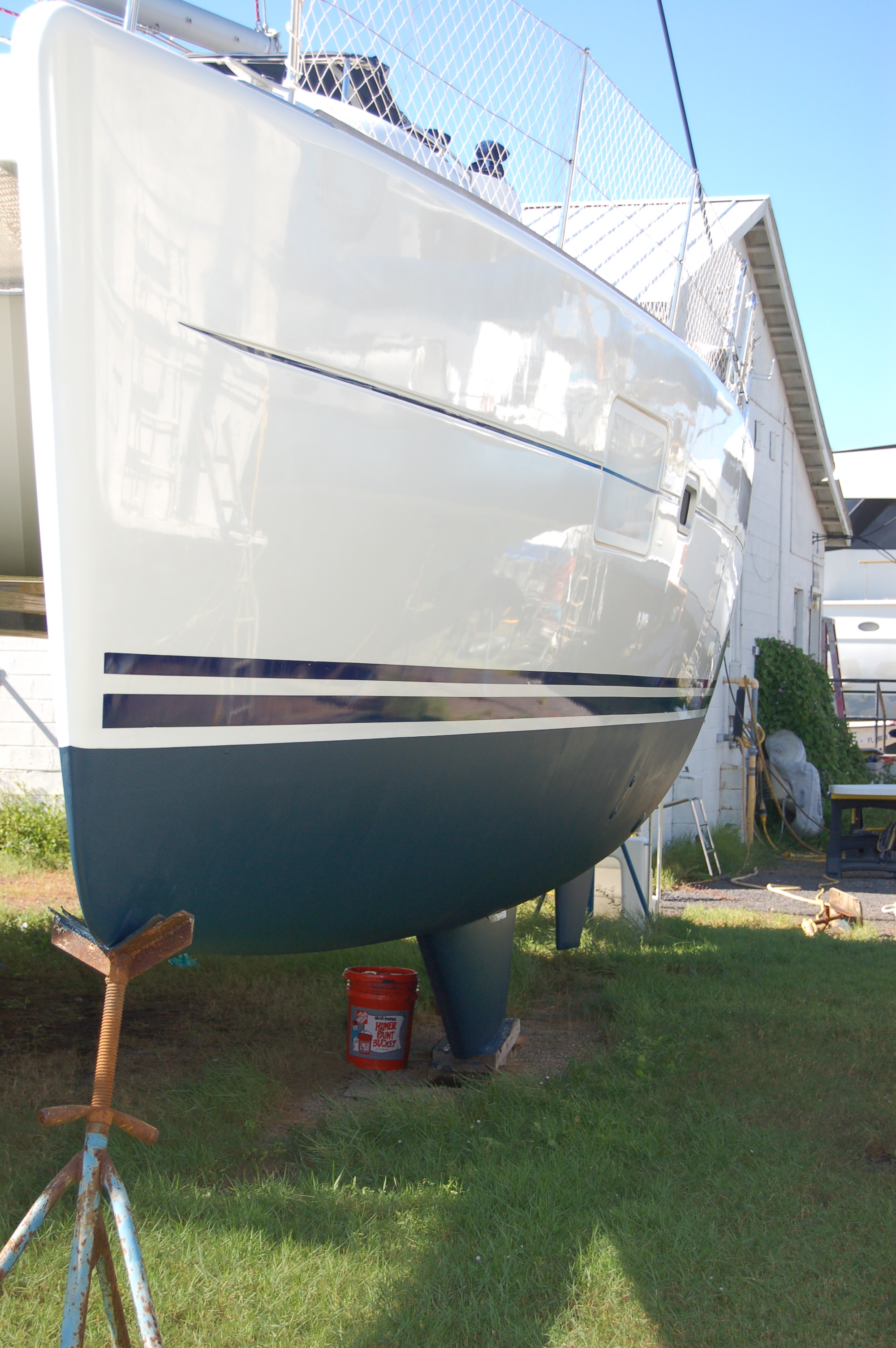
A digital recorder is the solution for me. #writetip I happen to be getting my Lagoon 380 ready for the winter season. My recorder is small enough to keep in a pocket. As I shine up Mattina (her hull is pictured here), I often think of plot ideas. It’s amazing how often a plot issue gets solved while working on something other than writing, especially physical labour.

I used to think I’d remember ideas, but I rarely do if I don’t write it down. Sometimes it’s not convenient having a pen a paper handy, so I use the recorder.

I also use the recorder while jogging or walking my dog. I hate to lose a good idea just because I thought of it when I was doing something other than writing.


The Oxford Comma


Should you use it or not? #writetip That depends on how you write. I’m a believer in consistency. I do believe a writer should learn how to use a comma properly.  Wasn’t I surprised when I took the correspondence course at Humber School for Writers and my mentor, Joan Barfoot, pointed out numerous comma errors.


So what did I do? I read the entire grammar section in the Chicago Manual of Style and made sure I knew not only how to use the comma but the rest of the punctuation marks. Sound like a lot of work? It was but worth it. When my work is edited now, I rarely get commented on a misuse of a comma. I can focus on writing instead of the fundamentals.


Back to the Oxford Comma. Up to you, but be consistent.


On a side note. Today is the day I get to see my Lagoon 380 for the first time this season. She’s up on the hard and waiting for us to get her ready. This has nothing to do with a comma, but she’ll be my writing platform for the upcoming months.


Writing and the Cruising Lifestyle

The cruising part of my life has begun in full force. #writetip It’s been a whirlwind of travel through the north-east of the United States, and today I’m writing from Severna Park, MD. I’m looking at the Chesapeake and feeling rather spoiled. It’s only two days now until we reach our sailboat. She’s up on the hard and we’re about to begin our preseason maintenance on our Lagoon 380. Somewhere in the midst of that, I have to find time to write.

So my question today is: what’s the difference between a journalist and a fiction writer? A novelist is not restricted by facts. I think a journalist can report and still keep themselves separate from the person they are writing about. It might be hard to do sometimes, but possible.

To me, when writing a novel, the author must put themselves in another person’s place. Understanding a character’s motivation can only be done, if you as the writer can switch places with the character. A scene comes to life when the writer controls the events, decides what will happen when, who it will happen to and so on. Sometimes writing a scene is an emotional roller coaster for the writer, but then, I think , it’s probably an emotional scene that’s worth reading.

How much of you is in your character?

I was asked this question last night and it got me thinking. #writetip

A character comes from your imagination or your life experience. To me, that means anywhere from none to 100% of the writer is in the character. Since a novel is fiction and not journalism or a biography, I like to think not much of me is in there. Especially when the character is nasty.

A character’s origins may come from the writer, but I bet it’s more interesting to write and read if he/she grows into someone else; although, a person could have a very exciting life, and then maybe a memoir is the way to go.

I can’t imagine doing or saying some of the things my characters do or say. My biases must influence how I describe a character, but in the end they are who they are and not me.

If too much of the writer is in the character, then I think too many restrictions on what the character can or can’t do come into play. Let the character breathe and see what exciting things happen.

Should a writer blog?

There are many reasons blogging will help you improve your writing. #writetip While driving through Quebec, Vermont, New Hampshire and Maine the other day, I had plenty of time to muse, and what I thought about was blogging.

I try to blog 5 days a week and doing this forces me to focus on grammar and syntax. It lets me work in my prose, making it clear and precise.

Blogging connects me to other writers. There are so many generous authors out there that share their secrets on how to write.  It seems the more I share, the more I get back.

There is a view that blogging takes the author away from writing their novel and maybe even dampens the creative ideas. I don’t subscribe to this. Blogging keeps me motivated and connected.

Sentence Structure

Variety  in sentences can reduce choppiness and smooth the narrative. #writetip

Early in my writing, one of my mentors (Joan Barfoot) suggested I work on variety in sentence structures. I decided to be methodical, about it and here is a method I use to check for variety.

Randomly choose a page of your novel.

Hit return after each sentence. Basically, you form a new paragraph with each line.

Run through the following checklist:

– Are the sentence lengths different? If not, you might want to vary the lengths.

– Do you ever use introductory phrases or clauses. If not, why not try it and see if it changes the sound of your writing.

– Do you use sentences that contain conjunctions? Are they different or do you repeat the same ones?

–  Short declarative sentences can be powerful, but if used to often can lose their power.

Where Ideas Come From

The hair salon? #writetip I went out for a hair cut and came back with a plot solution. The man who cuts my hair is chatty. He talked about his life, current events, etc. He’s funny, and I was enjoying his stories, and then it occurred to me he’d given me a solution for a plot problem I was having.

My problem: I still haven’t figured out how to politely pull out my notebook in the middle of someone’s sentence and write down what they’re saying.

Being a writer means you’re always working. Is there ever a time when you don’t think about your novel? When you are not hearing what others say and playing with it, altering it, and seeing where it might fit  in a story?

I guess it pays to  listen, no matter where you are.

Manuscript Feedback

How do you take high level comments and use them  to improve work? #writetip Early on, I received feedback from my agent, Margaret Hart, telling me the pacing near the end of my first novel slowed down. I hadn’t been able to see it until she pointed it out. Afterward, it was obvious.

So how was I going to fix it?

I reviewed each scene and asked myself, did I really (and I mean REALLY) need the scene. Just because I liked it was not a good enough reason. If it didn’t move the plot forward, reveal something, develop a character, I deleted it. That was hard. By then end my novel went for 86,000 works to 80,000, but the story is tighter.

For the remaining scenes, I reviewed first and last lines. Get in late, leave early.

I studied the narrative. Did I need the description? Was the place I described important to the story. If yes, I kept the details. If no, I either removed them or shortened them.

If you have thoughts on how to ” pick up the pace”, I’d love to hear them.

Writing While Traveling

How to write when your routine explodes? #writetip As the season changes from summer to fall, I think we all go through changes in routine.

I’m preparing to head south on my catamaran, Mattina, for a winter of sailing. This is a difficult time to write. Somewhere in the middle of the million items on my to-do list, I have to find the time.  While, I’m on the  move here are some things I do.

Print my novel to edit while driving (not while I’m at the wheel).

Read books on writing, so I feel like I’m working.

Have my notebook ready. If I’m not in a place where I can use my computer, I still remember how to use a pen.

Write something each day, even if it’s only one sentence, it’s still an accomplishment.

Is your protagonist likable?

How do you know? #writetip I ask four or five early readers. On my first novel, my husband was my first reader. I expected him to tell me I was fabulous, my writing was great, and he’d never read anything better. Well, that’s what husbands are for. Right?

So after he did all the above, he said he didn’t like my protagonist. Wasn’t I surprised. She was whiny and negative. Not a great personality if you’re going to spend 300 pages with her. We had a detailed discussion about why he thought this and it was back to work for me. I liked her, but I had to think hard about why others might not.

Now, I ask all my early readers to tell me what they do and don’t like about my main characters. This helps me gain perspective on the characters and think about who I want them to be.

If you’ve read a few of my posts, you’ll know I depend on my early readers. I can’t thank them enough for helping me, spending their time reading my drafts, and being willing to comment. The conversations after they’d read my work are often invigorating. Who said writing was lonely?