Mystery Mondays: Carol Balawyder on Subplots

Welcome once again to Mystery Mondays.

I first connected with Carol Balawyder when she graciously agreed to have me guest blog on her series HOW I GOT PUBLISHED.  DESCENT had been published less than a month previously, and I was nervous about guest blogging. Carol’s generous nature made it easy for me, and now I feel very lucky to have her guest blogging on my series.

Carol writes the The Getting To Mr. Right series.

Screen Shot 2016-03-20 at 8.14.27 AM

THE PURPOSE OF SUBPLOTS by Carol Balawyder

Thank you so much Kristina for inviting me as a guest on your Mystery Monday series. It’s a true honor for me to be in the midst of so many flourishing writers.

In my writing, whether it is women’s contemporary fiction or crime genre they both have in common a subplot which deals with the complexity of domestic relationships – specifically, relationships between an adult and his/her parent and the dysfunctional behaviors they can get tied up in.

For example, Getting To Mr. Right looks at how a daughter’s relationship as an adult is influenced by an emotionally or physically absent father. While researching this subplot I found a number of clinical studies to be of a valuable resource on the consequences of an absent daddy which I have used as foundation for the subplot.

Adding a subplot to the main plot gives depth to the character; the reader gets to know him/her more intimately.

This, I found to be especially true for a series. How many of us have wanted to read book 2, 3 or 8 of a series not only for the thrill of the story or mystery but also for wanting to know more about the protagonist’s personal life? Through the intricacies of the subplot readers become hooked on a series.

Subplots can enrich a novel and add tension. They give insight into a character’s personality and value system. They propose ground upon which a reader begins to build trust and sympathy for the character because s/he has a deeper understanding of him/her.

Subplots create a link from one series to the next and, as readers learn more about the characters’ personal life they begin to care more about them. To treat them as literary friends and sometimes even become their fans.

In some cases subplots help speed up the pace while in other cases they might serve to provide a breather to the action of the main plot.

Perhaps most importantly, subplots add to the suspension of disbelief.

I’ll give you an example drawn from my crime novel in progress. The protagonist, a nineteen year old girl, develops an intense and obsessive relationship with a man she meets on a train; she is ready to do anything to keep him even if it means leaving her distressed mother, turning her back on a career opportunity and murder.

Not such a nice girl, you might think, and rightfully so. But the subplot of addiction and its effects on the entourage supplies a different outlook.

Our nineteen year old protagonist, since very young, has been forced into the role of being caretaker to her heroin addicted mother. Research has shown that children who are flung into this kind of role grow up with a warped sense of self, lack of confidence and mounting frustration. Thus, the subplot adds credibility to the protagonist’s actions and irrational behavior. Although we might not condone some of her behavior we can understand. We believe that the protagonist is capable of doing what she does because of the world she lives in. We willingly suspend our disbelief.

Finally, as writers we need to make our characters come alive on the pages of our novels. Subplots are perfect opportunities to do just that.

My Getting To Mr. Right Series:

Carol Books

Carol’s BIO
CarolCarol Balawyder has taught criminology in both Police Technology and Corrections Programs for 18 years. Her area of expertise is in drug addiction and she worked in a methadone clinic with heroin addicts. She is very much interested in the link between drugs and crime and the devastating effects addiction has on the addict’s entourage. She has published short stories in The Anthology of Canadian Authors Association, Room Magazine, Entre Les Lignes, Mindful.org. and Carte Blanche. She regularly writes book reviews on Amazon and Goodreads.

LINKS:

Amazon – http://www.amazon.com/Carol-Balawyder/e/B00HVETKWM

Goodreads – http://www.goodreads.com/author/show/7704883.Carol_Balawyder

Smashwords – https://www.smashwords.com/profile/view/cbala

Website – http://carolbalawyder.com/

Blog- http://carolbalawyder.com/blog/


Farley’s Friday: I’ve Got a Girlfriend

Farley here,

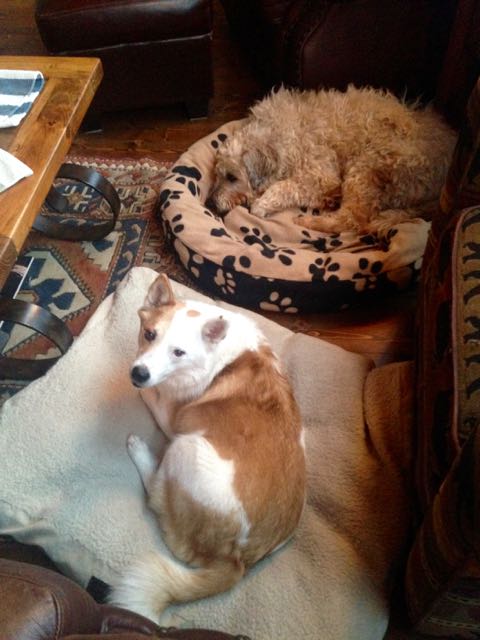
Let me introduce Piper. She’s my girl. She’s a border terrier, was born one week after me, and has been visiting us this week.

Here we are the day we came home to our humans.

Farley and Piper Day 1

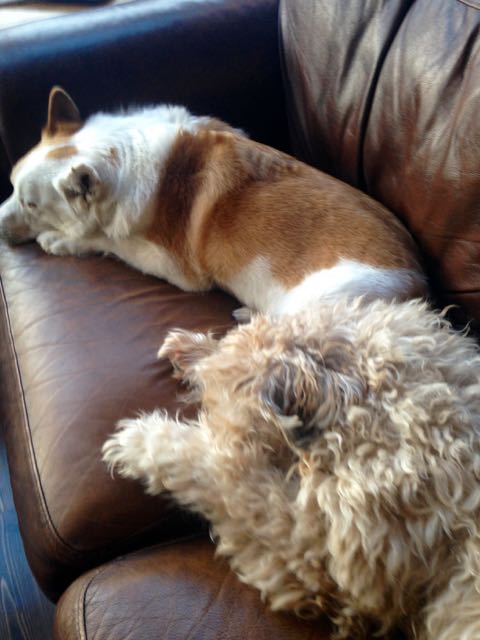
And here we are on the couch seven years later.

Farley Piper

I may look aloof, but I’ve got a huge crush on her, and I’m trying to look cool.

Woof Woof

EASTER EGG HUNT for 3 Free Novellas

Would you like three free novellas for the price of one book?

Imajin Books has a gift for you.

If you read DESCENT and receive your free novellas, let me know. I’d be thrilled to find out which ones you win. Imajin Books loves a mystery, and even I don’t know which novellas are hidden in DESCENT.

easter brunch party

Enjoy.

Write Better Fiction: Point of View Goal and Plot

Today on Write Better Fiction we’ll cover How the Point of View Scene Goal Relates to Overall Plot. Write Better Fiction is a process to help you critique your own manuscript and give yourself feedback. This will help you improve your novel, so you’re ready to submit it to an editor. Check the bottom of this post for links to previous Write Better Fiction articles.

The column in the spreadsheet has long title, and if you can think of a better one let me know.

This is column where I analyze both the internal and external goal of the point of view character.

Each scene has a point of view character. This character must have a goal for the scene. If there is no goal, then what is the character doing?

Let’s deal with the external goal first. This is the goal the reader is aware of.

Finding a murderer is Kalin’s main goal throughout DESCENT. She also has goals within each scene where she holds the point of view. In the opening scene her external goal is to go skiing. Her internal goal is to be good at her job.

The reader is shown Kalin wants to go skiing. She doesn’t achieve this goal because a skier falls and is terribly hurt. She has to put her own wants aside and deal with the situation. This is the start of Kalin’s journey of searching for a murderer. At the time she doesn’t know she is witness to a crime, she’s only thinking of taking care of the skier. The external goal of skiing places her on the hill at the time the skier falls.

Kalin’s internal goal is to be good at her job. In the opening scene, she doesn’t know yet this will involve chasing a murderer.

For each scene, think about how the POV character’s goal is related to the plot of the novel. If you don’t know the answer, perhaps the scene isn’t relevant to the story, or perhaps another character should have the POV for that scene.

Your scene may just need some updating. Can you strengthen the character’s goal? Is there a way to add a goal to the scene so it relates to the novel’s plot?

You can also use this column to check for consistency. Let’s say your character is a tea drinker, and you put the character’s scene goal as finding a cup of coffee. That should trigger you’ve made a mistake.

When you’ve finished the spreadsheet for each scene, you should be able to scan this column and find any entries that are weak.

Your challenge this week is to check the previous column for internal and external character goal and determine if that goal relates to the overall plot.

I critiqued DESCENT and BLAZE using the techniques I’m sharing in Write Better Fiction, and I believe this helped me sign with a publisher.

Descent & Blaze

Please me know in the comments below if you found this exercise challenging. Did it help you write a tighter scene?

Thanks for reading…


Mystery Mondays: Jessica Norrie on Friends in your Novel

KONICA MINOLTA DIGITAL CAMERA

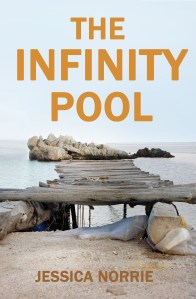
Mystery Mondays has been a fascinating experience for me. This week, our guest is Jessica Norrie, author of THE INFINITY POOL. I met Jessica through other author’s I’ve met on line, and now I have another book to read that I might not have heard about.

THE INFINITY POOL is Jessica’s debut novel. So let’s give Jessica a warm welcome.

Here is what she has to share with us.


“Your friends should know they’re fair game if you’re a writer.” By Jessica Norrie

So says a more established writer friend, with plays on the West End stage and on exam syllabuses, who runs workshops and appears on BBC culture programmes. I haven’t yet heard her comments on “The Infinity Pool”, which means she may not have recognised the at best quirky and at worst nasty detail that I shamelessly plucked from my first encounter with her. I hope that what seemed funny at the time, and has been commented on by many readers, will not spoil a friendship.

No such problem with the yoga teacher in my novel, “The Infinity Pool”. He’s everything a yoga teacher should be, wise, relaxed, humorous, fit and athletic, sympathetic, adaptable to different levels, sensible, stable, demanding to the point of stimulus but not stress, in command but without notions of hierarchy. Michael Stewart, who appears as Satnam in the book, I salute you! And anyone looking for a yoga teacher (although he gets around, last heard of in Mexico) should Google him. I thought I couldn’t have given a better testimonial – but then someone said he was “creepy”.

But what of the hero/antihero/semi hero? At the start of the story he’s attacked and left for dead; the mystery concerns how his disappearance affects others, why it happened, whodunnit, and whether that’s the end of him. He WAS based, to some extent, on someone I knew. Someone I didn’t think I liked, because I disapproved of him. I thought he manipulated people, dangerously, leading them to disclose inner thoughts and feelings too quickly for safe processing. Where a therapist might allocate months or even years, this guy had people unburdening themselves in two weeks, often getting very upset along the way. I changed his age, his appearance and manner, but it was essentially him and when  I thought I’d kill him, it may have come from my anger.                                                                                                                                                                                                                                                    Strangely, as I progressed, I began to like him. I took his part, tried to present his actions more sympathetically – in fact I fell for him. I chose his shirts more carefully and paid attention to his footwear. I even came to agree with some of his ideas, though I still took my debunking responsibility seriously. He began to stand a chance of survival.

It’s surprising how far back one can go in selecting people on whom to model characters. Aged eighteen, I was in a class with two ravishing girls of Greek Cypriot origin, best friends who turned heads everywhere, but who, though attractively and sexily dressed, were always correct and traditional in their behaviour. I hardly knew these girls; they were pleasant but we moved in different circles and I was too in awe of their perfect looks to approach them much. One of them became Maria in the book, and yet I’m sure I hadn’t thought of her for thirty years until she turned up in my story.

Few people are all good or bad, in life or in good fiction. Ruby, Bernard, Megan and Chris are all composites of people I’ve known. I should apologise to “Ruby” for giving her an unattractive drink problem as well as generosity of spirit and an intriguing wardrobe; in the spirit of remorse I did try and redeem her. Bernard has origins in a man I once dated for a short while: grumpy, and superior but highly intelligent and actually quite warm and vulnerable under a pompous exterior. It’s quite fun to improve such characters as you go along, teaching them and yourself a lesson in the process.

I’m told I write a good location and the setting is of course itself a character. And this one IS a composite –loosely based on a place I holidayed in but with details changed and huge liberties taken. As soon as I arrived, I thought, what a great setting for a whodunit. But if it was really as poorly run, as ramshackle, as un health and safety conscious, as turbulent as I paint it, there would have been no story and they would not still be running highly praised “holistic breaks”. I’m keeping mum about the exact location, although anyone who’s been there will recognise it straight away. That’s just another small mystery for the other readers to solve.

The Infinity Pool:

“Adrian Hartman is the charismatic director of the Serendipity holiday community, set among pine trees on a sun-baked island. His job is to ensure the perfect mindful break, with personal growth and inner peace guaranteed. His guests return year after year to bare their souls. For some, Adrian IS Serendipity.

But this year Adrian isn’t there, and nobody knows the reason why. Things have changed: staff and guests are bewildered without their leader and the simmering hostility of the local villagers is beginning to boil over. Is the atmosphere of menace connected with Adrian’s absence? And will life on the island ever be the same again?

As romance turns sour and conflict threatens the stability of both communities, everyone has to find their own way to survive. This evocative novel explores the effect of well-intentioned tourism on a traditional community, and questions the real meaning of getting away from it all.”

Jessica’s Profile:

6x4 (3 of 8)Jessica Norrie was born in London and studied French Literature at the University of Sussex and Education at the University of Sheffield. She taught in Paris and Dijon, and in the UK has taught English, French and Spanish to age groups from 5 to 80 in almost every educational setting possible.

She took a break from teaching when her two children were small, to study for and work as a freelance translator. She has also published occasional journalism and collaborated on a Primary French textbook (“Célébrons les Fêtes”, with Jan Lewandowski, Scholastic 2009).


Jessica sings soprano with the Hackney Singers, and wherever else she gets the chance in the UK and abroad. Less publicly, she plays the piano – slow pieces suit her best as she needs lots of time to figure out the chords.

She is fascinated by languages and has worked hard to make language learning approachable and fun even for the most nervous students. But having always read voraciously, she would now prefer to concentrate on writing. “The Infinity Pool” is her first novel, drawing on many years of travel and encounters, and she already has several ideas for another.

Everything you need to know about Jessica you can find out below:

Amazon Canada (no Canadian reviews yet but for rather more go to Amazon.ukAmazon.comAudible.uk or for less favourable ones in the land where it sold best (?!) Amazon.au. I would LOVE some reviews in Canada or more in the US where it’s fair to say I haven’t yet made much impression on the market. However the Audible narrator, although Welsh, lives in Canada. In Australia II went to no 1 in Literary Fiction when on promo in September, but unfortunately Amazon classified it as Crime and I think readers were disappointed by the lack of psychopaths and general gore. It’s now been moved to Literary Fiction. If anyone would like to review it please contact me via my Facebook author page or witter Jessica Norrie – author:
https://www.facebook.com/Jessica-Norrie-1617940365158063/?ref=hl or by direct message on Twitter: @jessica_norrie.
Amazon Canada
Amazon Australia
Amazon India


Announcing The Author’s Guide To Selling Books To Non-Bookstores

Are you a published author and looking for ways to expand the distribution of your book? Well, I’ve written a book just for you.

Non-Fiction Announcement 2

The success in selling and distributing DESCENT and BLAZE came from implementing what I learned by trial-and-error, by talking with other authors and store owners about the process, and from guidance from my publisher. I’ve taken everything I’ve learned and put it into a book.

In THE AUTHOR’S GUIDE TO SELLING BOOKS TO NON-BOOKSTORES I explain how an author should plan, prepare and execute getting books into stores and actually making money from it. It doesn’t matter whether you’re an Indie author or traditionally published, all that matters is you have a printed edition of your fiction or nonfiction book and you want to get that book out into the world.

Publication is set for this spring. For now, the book goes to the editor and then the proofreader. The cover has to be designed. All major milestones, but all part of the journey.

Thanks for reading…

Farley’s Friday: Can a Wheaten Terrier Cry?

Farley here,

The answer to Can a Wheaten Terrier Cry is yes.

My friend for life, Finn, spent two and a half weeks living with me. Every night we snuggled side-by-side in our beds, reminiscing about the day. Okay, I’m sleeping and Finn is looking for something mischievous to do, but you get my point. He’s my bud. He’s an Icelandic sheepdog and very smart.

Dog BEds

Then the day comes when he has to go home. We curl up on the couch – ’cause Matt isn’t home – and I put my paw over my eyes and hide my tears. I know I’m going to miss him.

Farley Crying

Why can’t he live with us? I know he has his own humans, but mine are nice too. I think he should move in.

Woof Woof

Mystery Mondays: Call For Authors

Promoting Reading – Promoting Authors

Mystery Mondays began in July 2015. Authors from many genres who write with a hint of mystery have told you about their books, answered your questions about writing and shared their thoughts with you. Every Monday, you’ve be introduced to another author and maybe discovered someone you’re not familiar with.

Are you interested in guest blogging?

I am now accepting guest blog requests for the remainder of 2016 starting on April 18th so if you’re interested contact me here.

If you’d like to participate, here’s what you need to qualify:

  • you are a published author – traditional or Indie or any other way that I don’t know about,
  • you are about to publish and have a launch date within a week of blog post,
  • you want to promote other authors and spread success,
  • you write novels with a hint of mystery,
  • you are willing to engage in the comments section when readers comment on your post.

All I ask from you is that you follow my blog, comment on author’s posts and help share via Twitter and Facebook.  If you’re interested send me a message via my contact page.

The guidelines:

You’ll have to send me your bio, back text of your novel, author photo and book cover. I’d like you to write something about yourself, your novel, your research, a writing tip or a publishing tip. Please keep in mind I am a family friendly blog. I do reserve the right to edit anything I think might be inappropriate for my audience, which I will discuss with you first. I think anything under 700 words is great, but it’s your book so up to you.

I’m looking forward to hearing from you and sharing your novel with the Internet world.

Write Better Fiction: Characters Mentioned In A Scene

Feedback iconToday on Write Better Fiction we’ll cover the Characters Mentioned in a Scene. Write Better Fiction is a process to help you critique your own manuscript and give yourself feedback. This will help you improve your novel, so you’re ready to submit it to an editor. Check the bottom of this post for links to previous Write Better Fiction articles.

Sometimes a character does not have a role in a scene but is referred to by another character. This could be in dialogue, thought, dream, an eMail or phone conversation.

Why would you do this?

  • To remind the reader of a character if you haven’t written about them for a few scenes or chapters
  • To show the character through the eyes of an other character
  • To foreshadow an event that will affect the character
  • To give the reader a clue or red herring
  • To show the POV character’s goal, personality trait, or attitude
  • To keep the antagonist in the readers mind if the antagonist doesn’t have any POV scenes.

This is a column that I fill out when I review each scene. Once the spreadsheet is complete review the column and plot how often characters are referred to. This is similar to a first character appearance diagram.

Once I’ve finished, I review the column for each character. I’m looking for:

  • Big blocks of time where a character disappears
  • Sections where a character is mentioned repeatedly but then not for a while
  • Mentioning an unimportant character too often

Your challenge this week is fill out this column with the characters mentioned.  Then review you major characters and see how often they are mentioned. Too often? Too Little? Too much time passed between being in a scene or being mentioned?

I critiqued DESCENT and BLAZE using the techniques I’m sharing in Write Better Fiction, and I believe this helped me sign with a publisher.

Please me know in the comments below if you found this exercise challenging. Did it help you improve your character arcs?

Thanks for reading…

Other blogs on the topic…

Write Better Fiction: A Character Enters A Scene

Write Better Fiction: Characters in a Scene – too few/too many?

Write Better Fiction: #1 Question To Ask About Characters In A Scene.

Mystery Mondays: Kathleen Duhamel with An Unconventional Approach to Romance

Pageflex Persona [document: PRS0000040_00070]Kathleen Duhamel and I have a special connection. We both signed with Imajin Books for the publication of our first novels last summer.

Kathleen’s second book, DEEPER, is set to be released this spring. Her first book, DEEP BLUE, explores the theme Love Is the Most Addictive Drug of All. 

Read to the end and you’ll find a surprise for Kathleen’s launch party.

So let’s hear what Kathleen has to say about romance…

Going Deeper: Kathleen Duhamel’s Unconventional Approach to Romance (by Kathleen Duhamel)

I’m a contemporary romance writer, author of Deep Blue and Deeper (Books One and Two in the Deep Blue Trilogy) so what am I doing on Monday Mystery? The truth is my books aren’t conventional romances. When I began developing Deep Blue, I deliberately set out to write a love story that wasn’t typical in any way (except my characters do have mind-blowing sex). I wanted to weave a tale that combined romance with suspenseful elements, a book that read more like a thriller than a Harlequin novel. You’ll have to judge for yourself whether I’ve succeeded.

No shrinking violets

When we’re first introduced to Claire Martin, she’s a 58-year-old struggling landscape painter and cancer-survivor who’s all but given up on finding love again at her age. She’s also fiercely independent. After she meets Robert Silver and gets swept up into his overblown celebrity life, she refuses his gifts of a new car and money to pay off her debt to a loathesome ex-husband, because she doesn’t want to be pegged as a gold-digger. It was crucial to the book’s plot and her character that Claire find a solution to her problems without having to be rescued by a man. (Although Rob was more than willing to be her rescuer.)

Similarly, her BFF and single mother Denise Hrivnak searches for a way to plan her financial future, with or without a boyfriend in the picture. In her mind, having a man in her life is a luxury, not a necessity. She will find a way to make her dream a reality, maybe at the expense of having a personal life.

Men who truly love women

In many of the romance novels I’ve read, the alpha male is an arrogant, sometimes cruel jerk who is ultimately redeemed by the love of a good woman. I’m not saying this could never happen, but it’s highly unlikely in reality. In Deep Blue, Rob is a rock star idolized by millions of fans, but he’s also a 62-year-old lonely soul, still grieving the death of his wife three years earlier. He has issues (panic attacks, stage fright and a history of substance abuse), yet he never bullies or disrespects Claire because he genuinely loves her, and he’s a lot more needy than he lets on. By the end of Book One, Claire has rescued him.

Interesting flaws make memorable characters

No one gets to be 50 or 60 years old without accumulating some emotional baggage that affects every aspect of life, and my characters all reflect this idea. I’ve already mentioned Rob’s various problems, including his ongoing struggle with sobriety. His musical partner, Artie Hoffman, has his own set of issues. He’s an impoverished foster child turned millionaire rock guitarist, lauded as a genius, with a train wreck relationship history. Artie hides his softer side under a cloak of sarcasm so he never has to let anyone get too close. Fame has made him distrustful of almost everyone.

Even though they’re older, these characters retain their youthful personalities. Claire says she’s still surprised to look in her mirror and see someone old enough to be a grandmother, when she feels so young.

Inside, we all remain the best younger version of ourselves, despite our outward appearance. And our desire for love, sex and companionship does not diminish. As Rob tells Claire, “We can’t help getting older, but we don’t have to get old.”

Deeper (Book Two of the Deep Blue Trilogy) picks up where Deep Blue left off, but it also works a stand-alone novel. The band Deep Blue plans its future, while Claire and Rob’s relationship is rocked by an unexpected development that threatens to rip his family apart. Meanwhile, Denise and Artie embark on a somewhat humorous, prickly relationship of their own. Deeper probes into the psychology of these characters while combining elements of suspense, drama and hot romance.

Pre-orders are available now on Amazon, and the book comes out March 20. I’m having a book launch party on Facebook, March 20, 7 p.m. to 9 p.m. Eastern Time. You can find me on Facebook. Message me or email me at kathleenduhamel@gmail.com if you’d like to attend. My friend Kristina will be giving away a copy of Blaze! (Surprise 🙂 )

Kathleen’s Bio:

kathleen-duhamel  croppedKathleen Duhamel wrote and illustrated her first short story at the age of eight, and has never stopped writing. Her love of the written word continued throughout her varied career as a newspaper journalist and editor, public relations executive, freelance travel writer and owner/operator of two small businesses. A native of Texas, she spent most of her adult life in Colorado before relocating to Virginia in 2014, where she lives with her husband, a standard poodle and a geriatric cat. She is a lifelong devotee of rock and soul music, contemporary art and pop culture. https://kathleenduhamel.wordpress.com/

Thanks for reading…