Complicated Character Relationships

#writetip Should you drip out information on complicated relationships or get the info out early?

Here’s the advice I got from an acquiring editor: If the relationships are key to the  motivation of the crime, then it’s better to define them early. You can do this and still keep the reader intrigued.

Now to go do this…

I’m writing from Norman’s Cay in the Bahamas and the nearest cell tower is 7 miles away. I’m amazed I have a connection today.

I have to keep the posts short, and it may be slow, but at least it’s working.


Eye Colour and Your Characters

How many ways are there to describe eye colour? #writetip So My handy spreadsheet tells me I like brown eyes.  A character’s eye colour is important and there are only so many different colour of eyes out there.

Here’s what I discovered. Paint companies love to name their paints all kinds of fascinating things. Go to a paint store, pick up a whole bunch of cards  that show colours similar to eye colour, and bring them home. When you need to describe a new character here is your pool of colours.

Cats and Dogs

Farley believes all cats should adore him.

Should all characters get along? #writetip. Definitely not. But why not spice up a scene by forcing two characters who don’t get along into a situation where they must.

Put their lives in danger. Make them rely on each other. But the whole time, they really can’t stand each other.

Then give a character a life altering decision. Character A must risk their lives to save Character B. Do they do it? Or do they leave the person to die. This will say volumes about your character, and maybe scare your reader at the same time.

Farley playing with the cat made me think about odd pairings and how sometimes life surprises you, but also how fiction should surprise you.

The Mentorship Begins . . .

Yesterday I got my first feedback from Garry Ryan. #writetip Garry is an author from Calgary, Alberta. He writes the Detective Lane series. For those of you who have been reading my blog for a while, I wrote about the Crime Writer’s of Canada mentorship program. I didn’t end of partnering with David Cole, but all has worked out and the program is underway. Garry has volunteered his time to help my make my novel better.

I won’t bore you with the details, but I want to mention one highlight in his comments. There has been talk about series writing this week on some of the writing blogs. Well, my novels aren’t a series, but I do have characters that are in all three novels.

Garry pointed out to me that I don’t describe my characters in the opening scene. Seems obvious, but for me, I’ve lived with them through three novels, so I know what they look like. I just forgot to tell the reader.

Garry is the first person to read my third novel who hasn’t read the first two. I’m not sure my readers who read the first two would have picked up on this omission. I guess it’s good to find readers that haven’t read all your work. You never know what improvement you might be able to make. Thanks Garry.

Does Every Character Deserve a Name?

How do you know if you should name your character? #writetip There are loads of writing books that tell you not to name a character unless that character has a significant part in your novel. Well, how to you know?

I name all characters in the first draft. I don’t always understand what role a character might play until I’ve finished the novel.

At the first draft stage, I review each scene for characters that appear only once. For example, I might need a lift attendant at a ski lift for a given scene to work. If that attendant only shows up once, I remove their name. I call them by their title at work, function in the scene, whatever works to identify them.

This is also the stage where I discover who I thought might be a minor character, a walk-on, is really someone significant to the story. Since I’ve already named them, I don’t have to change anything.

I’m sure there are many ways to accomplish this, but this method works for me.

Animals as characters?

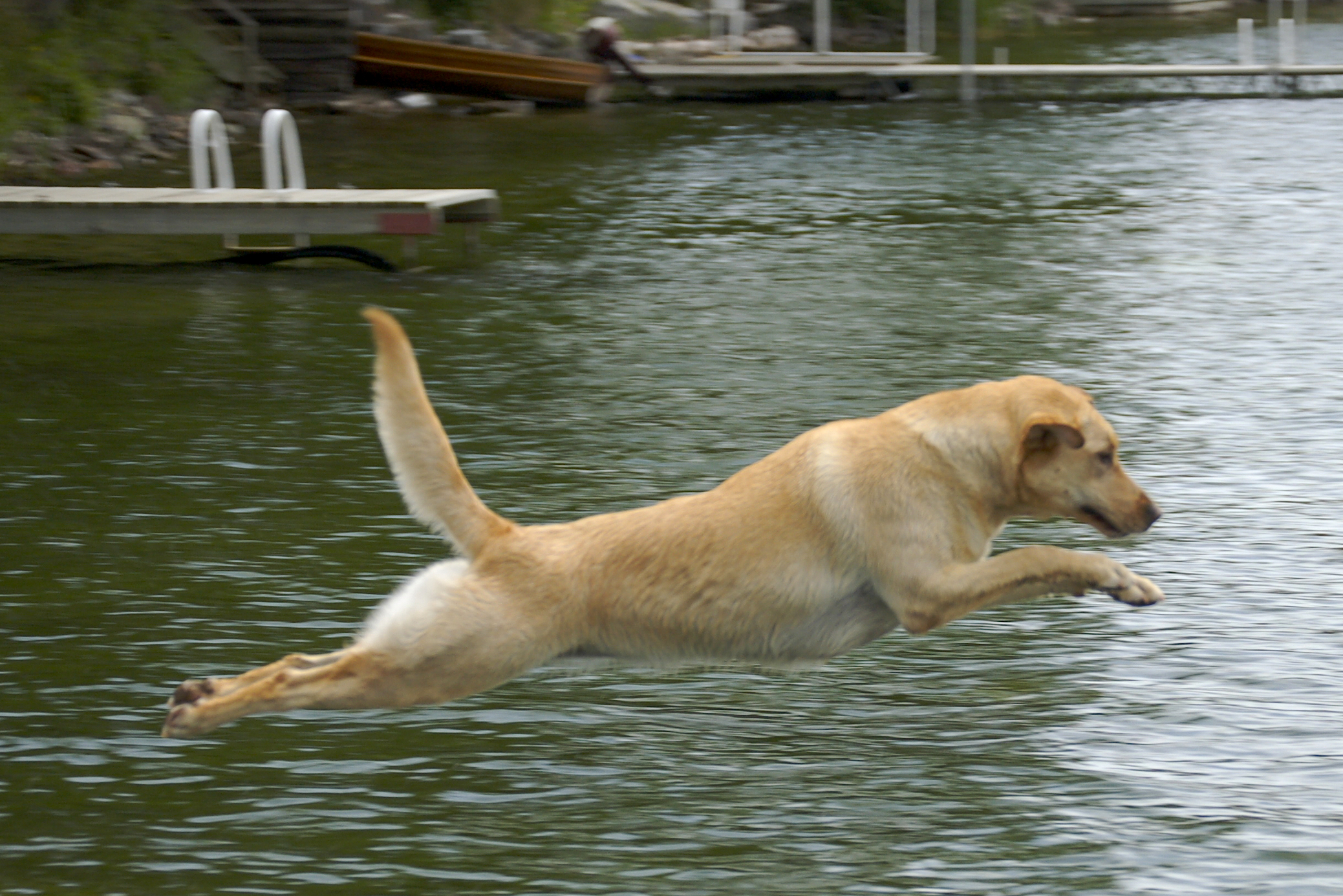
Chica - The Diving Dog

The great part about having an animal in your novel is you don’t have to worry that you will insult them. #writetip. I became interested in including a dog in my novels when I read a Dean Koontz novel. I think it was Tick Tock. A scary novel where the dog provided comic relief. I thought is was a good way to break tension in a scene when it was needed.

Dogs can provide an infinite source of distractions and difficulties for any of your characters. If you need a situation to be unpredictable, add a dog to the scene.

Chica – my yellow lab – has a place in my first novel Fracture Line. Chica is no longer with us, but she still provides me with story ideas.

Farley – my wheaten terrier, has a place in my third novel (yet to be named).

Writing and the Cruising Lifestyle

The cruising part of my life has begun in full force. #writetip It’s been a whirlwind of travel through the north-east of the United States, and today I’m writing from Severna Park, MD. I’m looking at the Chesapeake and feeling rather spoiled. It’s only two days now until we reach our sailboat. She’s up on the hard and we’re about to begin our preseason maintenance on our Lagoon 380. Somewhere in the midst of that, I have to find time to write.

So my question today is: what’s the difference between a journalist and a fiction writer? A novelist is not restricted by facts. I think a journalist can report and still keep themselves separate from the person they are writing about. It might be hard to do sometimes, but possible.

To me, when writing a novel, the author must put themselves in another person’s place. Understanding a character’s motivation can only be done, if you as the writer can switch places with the character. A scene comes to life when the writer controls the events, decides what will happen when, who it will happen to and so on. Sometimes writing a scene is an emotional roller coaster for the writer, but then, I think , it’s probably an emotional scene that’s worth reading.

How much of you is in your character?

I was asked this question last night and it got me thinking. #writetip

A character comes from your imagination or your life experience. To me, that means anywhere from none to 100% of the writer is in the character. Since a novel is fiction and not journalism or a biography, I like to think not much of me is in there. Especially when the character is nasty.

A character’s origins may come from the writer, but I bet it’s more interesting to write and read if he/she grows into someone else; although, a person could have a very exciting life, and then maybe a memoir is the way to go.

I can’t imagine doing or saying some of the things my characters do or say. My biases must influence how I describe a character, but in the end they are who they are and not me.

If too much of the writer is in the character, then I think too many restrictions on what the character can or can’t do come into play. Let the character breathe and see what exciting things happen.

Manuscript Feedback

How do you take high level comments and use them  to improve work? #writetip Early on, I received feedback from my agent, Margaret Hart, telling me the pacing near the end of my first novel slowed down. I hadn’t been able to see it until she pointed it out. Afterward, it was obvious.

So how was I going to fix it?

I reviewed each scene and asked myself, did I really (and I mean REALLY) need the scene. Just because I liked it was not a good enough reason. If it didn’t move the plot forward, reveal something, develop a character, I deleted it. That was hard. By then end my novel went for 86,000 works to 80,000, but the story is tighter.

For the remaining scenes, I reviewed first and last lines. Get in late, leave early.

I studied the narrative. Did I need the description? Was the place I described important to the story. If yes, I kept the details. If no, I either removed them or shortened them.

If you have thoughts on how to ” pick up the pace”, I’d love to hear them.

Is your protagonist likable?

How do you know? #writetip I ask four or five early readers. On my first novel, my husband was my first reader. I expected him to tell me I was fabulous, my writing was great, and he’d never read anything better. Well, that’s what husbands are for. Right?

So after he did all the above, he said he didn’t like my protagonist. Wasn’t I surprised. She was whiny and negative. Not a great personality if you’re going to spend 300 pages with her. We had a detailed discussion about why he thought this and it was back to work for me. I liked her, but I had to think hard about why others might not.

Now, I ask all my early readers to tell me what they do and don’t like about my main characters. This helps me gain perspective on the characters and think about who I want them to be.

If you’ve read a few of my posts, you’ll know I depend on my early readers. I can’t thank them enough for helping me, spending their time reading my drafts, and being willing to comment. The conversations after they’d read my work are often invigorating. Who said writing was lonely?