Mystery Mondays: Cathy Ace on Editing and Multiple Series

Today is a bit of an occasion. It’s the final post in the 2015-1016 Mystery Mondays series, and next week, I’ll have something special for you.

So to celebrate, Cathy Ace is joining us today.
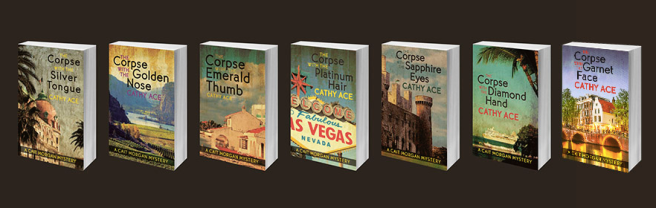
Screen Shot 2016-06-07 at 7.03.23 AM

Editing and Writing Multiple Series (aka soot-juggling) by Cathy Ace

I’m a lucky girl (apparently it’s okay to call myself a “girl” if you go by the plethora of books with “girl” in the title…when the subject is anything but “girl-aged”!). Yes, I’m truly fortunate. I’m in the enviable position of having two publishers, each allowing me to write a series of books, with contracts stretching a couple of years into the future. So I have it a lot better than many authors, let alone writers searching for that elusive first contract. (Keep going, by the way!)

I’m writing this on June 3rd 2016. I’ve just returned to my home near Vancouver, BC, Canada from a trip that took me to CrimeFest UK (a large UK crime convention) where the likes of Ian Rankin were guests of honor, and then Toronto where I attended the Arthur Ellis Awards and the Bony Blithe Awards. Thus, for the past couple of weeks, I’ve been surrounded by people intensely focused on crime fiction, and those who’ve been nominated for, and won, the top prizes in their field. It’s been a wonderful trip – the sort of thing that makes me realize how many people are out there who share my passion for creating crime fiction. But now it’s back to just me, my laptop, all the people in my head…and my dogs at my feet.

As I mentioned, I write two series of books: The Cait Morgan Mysteries are published by TouchWood Editions based in Canada, The WISE Enquiries Agency Mysteries by Severn House Publishers in the UK. The series differ from each other in many ways, yet are similar in that they are both “traditional”: no foul language, no sex on the page, no gore or “unnecessary” violence. Yes, they’re murder mysteries, but I stick to the more palatable types of murders…the sort I first encountered in the books of Agatha Christie and Ngaio Marsh.

Right now I have two manuscripts on the go – one for each series. That’s not unusual, but the specific timing is. And not in a good way. I think of writing a novel as being akin to Three-Day Eventing: day one sees horses galloping over fences and across fields, day two forces more discipline as the show-jumping takes place and day three requires deftly controlled exercises in the dressage. First drafts, editing and copy-editing follow much the same formula for me; the joy of the gallop, the challenge of refining, the excruciating attention to detail.

Book #3 in the WISE Enquiries Agency Mysteries (currently entitled The Murdered Miniaturist, but that could change) is at the stage where it’s contracted for, and I have a deadline of June 20th to get the manuscript to my publisher with agreed structural changes having been made to what is currently the fifth draft. This will mean I have to, essentially, pull the book apart, delete one sub-plot and insert another plotline, with new characters that then have to be woven through the entire work. It sounds scary, but (having done this before) I know it won’t be as bad as it feels right now, before I begin. It will then go to my editor (who works for Severn House) who’ll go through the manuscript with a fine-toothed comb and get back to me with notes, which I will work through. We’ll finally agree it’s ready for proof-checking, and then I’ll go through notes on that part of the process. I’m looking forward to it – I enjoy being with “The WISE Women” as I call my characters in this series.

The slight “challenge” I face is that I expect to receive notes from my editor at TouchWood Editions about Cait Morgan Mystery #8 (entitled The Corpse with the Ruby Lips – that’s set) any day now. I’m one stage further along with this book than the WISE book, but a bit of a problem with scheduling means I’m going to have to do what sounds a bit like brain-mashing, by working on both manuscripts at the “same time”. How will I handle this? One during the day, one at night. That’s the best I can do.

Usually, when I am writing and working through my own editing and redrafting, I give up most of my daytime work hours to organizing events, writing guest blogs, writing for the two blogs where I’m a regular contributor (7 Criminal Minds every other Wednesday and Killer Characters on the 22nd of each month) as well as prepping for Blog Tours for book launches (I had four books published last year) and the work and various committee meetings I undertake for Crime Writers of Canada (I am Chair for the next two years). That, plus using Facebook and Twitter to promote my work and build and maintain relationships with readers I meet in the digital world (and having six grandchildren, five acres, two dogs and a husband to tend to – yes, I thought about the order!) takes up a good deal of time, so I write when everyone’s gone to bed – from about 9.30pm until I realize I’m typing what looks like a poor hand at Scrabble…maybe 1-2am.

But for the rest of this June, it’ll be a bit different; I’ll have to switch from the Welsh stately home of Chellingworth Hall and the nearby village of Anwen-by-Wye, where the four women of the WISE Enquiries Agency run their business, to Budapest – where Cait Morgan is having a challenging time trying to work out whether a cold case back in Canada is connected to the Cold War, or whether being so far from her Canadian home without her retired-cop husband is addling her thought process. Cait’s stories are told in the first person, the WISE women each have their own point of view chapters. It’ll be a blast (I hope!). My plan is to work with the WISE women during the day, and Cait at night. With a break to make and eat dinner with my husband in between the two, that should give me enough head-space to shift location, storytelling style and voice.

Yes, I’m giving the impression I don’t know how it will go, and that’s true; I’ve never done this before. I’ve worked on the two series for a couple of years, but with only one book on the go at a time, thanks to some canny scheduling. Now the planets have aligned to no longer allow that to be the case, I plan to cope. I have to cope. Somehow.

That’s the thing, you see; there are always new challenges in this writing life. Last year was the first time I’d written four books in a year, but I know I won’t do that again. I managed it, but my family and home life suffered because of it, and that’s not fair on anyone. I have agreed to write three books this calendar year; one’s the WISE #3 I mentioned above, one will be Cait #9, the third will be WISE #4. Two books have been launched in the US/Canada this year so far (WISE #2 and Cait #7) and Cait #8 and WISE #3 will be published before it’s 2017. It’ll still be a busy time, but I am (I think/hope) becoming a smarter worker. I’m a detailed outliner, and I don’t use any programs to schedule characters/timelines; I found the use of technology took too much time in itself. Nope, it’s good, old-fashioned pencil and paper for me (and the frequent use of an eraser!).

I’m fortunate to have the deals and the deadlines I do. And I know it. My parents always taught me the harder you work, the luckier you get. Like I said, I’m a lucky girl, so I’d better keep my head down, and get back to this manuscript!

***

1610884_639339149521629_3791092845543988135_nCathy Ace was born and raised in Swansea, South Wales, worked for decades in marketing communications, and migrated to Canada in 2000. Having traveled the world for work and pleasure for many years, Cathy put her knowledge of the cultures, history, art and food she encountered to good use in The Cait Morgan Mysteries – a series of traditional closed-circle murder mysteries featuring a globetrotting professor of criminal psychology. Ace’s other series is set in her native Wales: The WISE Enquiries Agency Mysteries feature four female professional investigators, one of whom is Welsh, one Irish, one Scottish and one English, aided and abetted by a sleuthing dowager duchess. They tackle quirky British cases from their base at a Welsh stately home – the ancient seat of the Twyst family, the Dukes of Chellingworth, set in the rolling countryside of the Wye Valley in Powys, near the picturesque village of Anwen-by-Wye. Cathy lives in beautiful British Columbia, where her ever-supportive husband and two chocolate Labradors make sure she’s able to work full-time as an author, and enjoy her other passion – gardening. Bestselling author Ace is the 2015 winner of the Bony Blithe Award for Best Canadian Light Mystery (for Cait Morgan Mystery #4, The Corpse with the Platinum Hair).

Web: http://cathyace.com/

Facebook: https://www.facebook.com/Cathy-Ace-Author-318388861616661/

Twitter: @AceCathy


Mystery Mondays: J.D. Hawkins on Setting Up Suspects

Today on Mystery Mondays we welcome, J.D. Hawkins would be lion tamer turned authors.

Setting Up Suspects by J.D. Hawkins

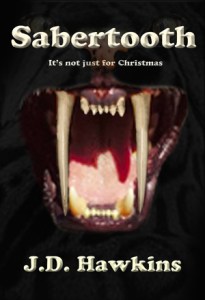
Front300In mystery and suspense writing, the last thing a writer wants to do is to make it obvious who committed a murder or perpetrated whatever crime or event that is at the heart of the story.

There are different ways to lead the reader through a labyrinth of clues in a way that will provide plenty of the mental exercise of working it out that most mystery readers crave. One method is to have the perpetrator hide in plain sight; someone close to the main protagonist who appears to be above suspicion until a sequence of clues slowly begins to reveal that all is not how it seems.

Another approach is to single out an innocent character and make them look like the guilty party, diverting attention away from the real culprit until the very end. Sometimes these two techniques are used in combination to good effect.

My own favorite process, however, is to set up several suspects, each with a possible means and motive, so that the reader is kept guessing until the very end. This scenario has been used by some of the most famous and popular mystery writers of all time; Agatha Christie and Arthur Conan Doyle to name two. Especially in the realm of murder mysteries, the story quickly becomes a whirlpool of clues and diversions that lead the reader (and the protagonist) on a merry chase to sort out what is relevant and what might be a decoy or distraction from the real solution.

In A Spark of Justice, my protagonist is an insurance investigator who has to determine whether the death of a lion tamer was an accident or a premeditated murder. This gave me a lot of scope for presenting alternative possibilities. Like many writers, I drew from my own past experience that made me aware of life within the circus environment to depict a closed society of people who would make the investigator’s job more difficult.

I also set up several possible suspects; the jealous and possibly unfaithful wife, the mistress who might have discovered that her lover had led her along with false promises, various co-workers within the circus environment who might have carried their own grudges and not least of all, the possibility that it had actually been an accident. Investigator John Nieves has plenty of motive and opportunity to sift through, while also confronting questions of his own identity and desires for his future.

A good mystery story has multiple levels so that the reader gets to know not just the protagonist, but also all the main suspects. They become familiar, like people known in real life. Whether they would be capable of murder provides food for thought and speculation.

In the circus world I chose for my story, the deadly predators; the big cats, provided an additional level of familiarity with a non-human form of character as well as an alternative possibility; was it just a fluke of circumstance in a high risk profession where a wild animal was only doing what came naturally? As a cat lover myself, I have to confess that including the big cats among the characters my readers get to know was a pleasurable indulgence, as well as a source for comedy value. The pranks played on the investigator by the circus people add a sense of fun and adventure to what would otherwise be a very serious situation. Bringing the Circys (circus people) under suspicion also added conspiracy to the list of possible solutions.

The art of mystery writing is in setting someone up. Whether the antagonist appears to be an innocent party, one of a collection of suspects or a bystander who the reader doesn’t give a second thought until the big reveal in the final conclusion, someone gets set up to take the fall. Half the fun of reading in this genre is to try to work out who and why. The writer’s job is to answer those questions before the end, as well as providing a stimulating story and memorable characters to love, hate or fear along the way.

In my next book, Sabertooth, it is my characters who face the mystery. Are the murders in Los Angeles being committed by a serial killer or by an animal? The readers may think they know the obvious answer all along, but in the end, they just might be wrong.

WHO IS J.D Hawkins?

Front300-1J.D. Hawkins is a native of Los Angeles where most of his stories are set, but has also lived in Hawaii and the Midwest States. He spent part of his youth traveling with a carnival and has lived through many real life adventures that include hitchhiking cross country and living through one of L.A.’s more famous earthquakes.

He began writing stories in high school and has turned his hand to writing Mystery and Thriller novels, intentionally devising more original themes than the usual police procedurals and standard murder mysteries.

He once seriously considered becoming a lion tamer and fantasized owning a zoo as a child. He still gives regular thought to becoming involved with a Big Cat sanctuary and this love of wild felines may come out in the plots of some of his stories.

https://jdhawkinsmysteries.wordpress.com/

https://www.facebook.com/JohnDeanetteHawkins

A Spark of Justice:

The Great Rollo had enemies and dirty family secrets. Investigator John Nieves enters the surreal world of the circus, determined to learn if the lion tamer’s death was an accident or foul play, but a series of mishaps suggests that the Cirkys are desperately trying to hide the truth. In his struggle to overcome a childhood fear of clowns and to come to grips with his own search for his Latino identity in a hostile world, even attempts on Nieves’ life cannot thwart him from his obsession to learn who killed the lion tamer.

Buy A Spark of Justice at http://www.amazon.com/Spark-Justice-J-D-Hawkins-ebook/dp/B014AB4BYU


Mystery Mondays: A Year of Advice

I can’t believe one year is coming up since the first Mystery Monday post.

It’s been a year of collecting great writing advice. So as a thank you to all my readers, I’ve created a book containing the advice from more than 30 of the author that I’ll give away starting June 20th, 2016.

The contributing authors have all given consent that their advice can be included in the book. They will retain all rights to their work. But they have generously allowed me to compile it into a book.

It’s with great excitement that I show you the cover today.

Screen Shot 2016-05-05 at 2.24.17 PM

I’ll be starting a newsletter, and for those who sign up the book is yours. I plan to create both a PDF and Mobi format. This is a learning experience, so bear with me as I try this out. All contributing authors will receive a copy directly from me.

Next, I just have to  figure out how to use  MailChimp and how to create a newsletter…

Thank you to all how have been reading and commenting, and thank you to the contributing authors.

Mystery Mondays: Susan Toy on Dancing the Sophomore Slump Two-Step

I “met” Susan Toy  when she agreed to host me on ReadingRecommendations. I was nervous approaching her and requesting a guest spot. But she generously welcomed me and showed me the ropes for guest blogging. Today, I finally get to return the favour by having Susan on Mystery Mondays.

Dancing the Sophomore Slump Two-Step

by Susan M. Toy

… or I’m Writing as Fast as I Can!!It’s been four years since I published my first novel in the Bequia Perspectives series. Four long years. I began writing Island in the Clouds in 2001 with the intention of eventually writing and publishing a quartet of novels all set on the Caribbean island of Bequia and involving murder and mystery of some sort or another. So I gave the first novel that sub-title, suggesting the books that followed would be written from various perspectives of people living on the island. My cover designer, Jenny Ryan, further sealed the deal by adding a “1” to the top of the spine of the print edition. There was no going back on my word.

cover susan full colour jan2012 - large - Copy

In 2004, I completed the first draft of One Woman’s Island. 2006 saw the major completion of Number Three, Tropical Paradox (I wrote this for the Humber School of Creative Writing program). Number Four in the quartet (working title: Menopausal Mamas) began as a NaNoWriMo project, but it quickly developed into another novel set on Bequia. 2007 was when I wrote the bulk of that novel.

I tell you all this, because it’s not for lack of material I haven’t yet published another novel in this Bequia series.

I just happen to be the Queen of the Procrastinators. Heck! Writing this guest blog post is another means of procrastinating!! Procrastination is not my only problem, however. It’s what leads me to procrastinate that I want to address here. After all, it’s not like I’ve just been too lazy to get that second novel prepared and published. (Well, I have been sort of lazy, but there have been other mitigating circumstances.)

Over the past four years (I ePublished Island in the Clouds in Feb. 2012) I have promoted myself and my book, continued promoting other authors through Alberta Books Canada, looked for and developed new ways for all authors to promote themselves and their books; moved from Canada back to Bequia; developed the idea behind IslandShorts and ePublished (Oct. 2013) several short stories by J. Michael Fay and my own novella, That Last Summer.

I created the blog Reading Recommendations https://readingrecommendations.wordpress.com/ (Nov. 2013) and have promoted close to 300 authors from around the world (including Kristina Stanley!

https://readingrecommendations.wordpress.com/2015/08/19/kristina-stanley/) through that site. I have beta-read a number of author-friends’ manuscripts and helped them prepare for publication. I’ve been working with a new writer who will be ePublishing a full-length non-fiction book with photographs through IslandEditions. Bought a trailer in Ontario where I will now spend my summer months. I contributed a short story to Tim Baker’s https://readingrecommendations.wordpress.com/2015/04/24/tim-baker-2/ collection, Path of a Bullet, and I’ve written a number of guest blog posts as well as series of posts on my own blog that have proved to be very successful. I even took part in a discussion on self-publishing held at the

I even took part in a discussion on self-publishing held at the Calgary Public Library when I was visiting the city last October. Oh, yeah – and I read A LOT of books! Drank buckets of coffee. (AND WAS SUCKED INTO THE FACEBOOK VORTEX FROM TIME TO TIME, OF WHICH I AM SORELY ASHAMED.)

So cut me some slack!

Truth told, though, I’m not being entirely honest with you about the real problem of what’s held me back from rewriting and publishing that second novel, and I’m here now to confess my sins. Much of what I mentioned above that has kept me busy during the past four years is indeed busy-work … and an excuse on my part. (Whoa! I just went into the kitchen to begin washing dishes in order to avoid writing about this problem of mine! Housework signifies serious work avoidance.)

The real problem lies in this being my second book – my sophomore novel. Let’s face it, I have been extremely lucky and blessed with the response to Island in the Clouds. Really, only a couple … okay, three, reviews that were less than stellar. The rest, and many written by readers I didn’t know before publishing, were nothing short of excellent and praising, and so many of those readers have been asking for another novel about Bequia, because they enjoyed the first that much. An author can’t ask for anything more!

Jenny Ryan has already designed a cover and it’s been sitting on my desktop ever since – for inspiration. That was the reason I placed it there, anyway.

onewomanisland-cover-draft-3


I did receive some feedback about a few aspects of the first novel that have helped me make changes to the second. I had always intended the second to be written from the perspective of a different character than Geoff, the narrator in the first, but I’ve also decided to change a number of the secondary characters who were in the first novel and introduce new ones that are solely figments of my imagination. (No more “Is this so-and-so?” from readers who know Bequia.) I spent a lot of time, especially during this past year, recreating characters and adding new material to the story line. I’m just about finished with that, am finally working on the last chapter, and will send the entire manuscript on to my editor Rachel Small http://rachelsmallediting.com/ to have at it. I know there will be necessary rewrites after that, so my dream date of May 1st for publication has already faded away. I’ve decided not to make any more promises. This novel will be finished and published when it’s good and ready!

But all this does not explain my real reason for taking my time. In all honesty, I am downright scared of the dreaded …

Sophomore Slump!!!

You know, the second novel not living up to the enthusiastic reception of the first, that it’s all wrong and readers are going to hate it. My fear has kept me from the keyboard, has caused me to find other things to do – anything at all! – to avoid finishing and publishing, actually proving that my fears are true!

So that’s what it’s all about, Alfie. (And Tim and Rachel.) And the more often well-meaning friends ask, “When will your next novel be published?” the more I dig in my heels on my way to the computer, do an about-face, and find something else to spend my time on instead. Oh, look! Another author who needs to be promoted!

This guest blog post for Kristina’s Mystery Mondays was originally intended to be a little shove in the right direction, to encourage me to finish, because I now had a deadline to meet. When we discussed my writing something for her blog, I really did believe I’d have One Woman’s Island published by this date, so my post should have acted as a promotion of the book. Instead, I’m leaving you, Kristina’s readers, with a link to the first novel (in case they haven’t read it yet) and a promise that the second novel will be finished and published … soon. I hope. But not before it’s time.

Reminds me of this old Orson Welles commercial …

https://www.youtube.com/watch?v=oSs6DcA6dFI

But right now I do believe it’s time to make another pot of coffee.

SusanToy-1Susan M. Toy has been a bookseller, an award-winning publishers’ sales rep, and is a promoter of books, authors and reading. You may learn more about Susan here. https://islandeditions.wordpress.com/about-susan-m-toy/

For more information about her published books, click here for Island in the Clouds https://islandeditions.wordpress.com/island-in-the-clouds-a-bequia-novel/ and here for That Last Summer. https://islandeditions.wordpress.com/islandshorts/


Mystery Mondays: The Best Time To Start Promoting Your Novel

It is my pleasure to welcome Amy M. Reade to Mystery Mondays. Amy is an author and another of my “internet friends” who has generously agreed to share her advice.

The Best Time To Promote Yourself by Amy M. Reade

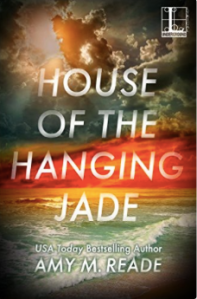
Screen Shot 2016-04-21 at 8.18.23 AMWhen Kristina asked me to write a guest post about my novel, my research, or a writing/publishing tip, my first inclination was to write something about the research I did for my new release. But then I changed my mind. I wanted to write the most helpful post I could think of, and research, while I love it and find it endlessly fascinating, is not a terribly enlightening subject for a blog post.
Instead, I’m going to share the best advice I ever received about marketing books.

Ready?

The best time to start promoting yourself is the day you decide to write a book, not the day you decide to shop it around to publishers or self-publish.

That was tough advice for me to hear, since it came from an acquisitions editor to whom I had sent my first novel. She liked the book, but when my manuscript came across her desk she did an online search for my name.

Know what she found?

Nothing. Not even a Facebook page, because I had sworn to myself never to enter the realm of social media.

She had to turn down my book, she said, because her press simply didn’t have the money to take a chance on a writer with zero followers.

That very day, I set up a Facebook page. Then, a few days later, a blog.

Fast forward three years. I’m still on Facebook with both a personal page and an author page. I still write a weekly blog. But you’ll also find me on my website, Twitter, Pinterest, Tumblr, Instagram, and author pages on Amazon and Goodreads. I also have a quarterly newsletter. I have embraced social media in a way I never dreamed possible. And here’s the best part: I love every minute of it.

My hope as I continue to write and publish books is that I can scale back on the number of sites I frequent and instead concentrate on a select few, but for now the name of the game is getting my books out there and helping people find me and my books.

I try to slip in and out of Pinterest, Tumblr, and Instagram a couple times a week, but I post on Facebook and Twitter several times daily. I keep my website updated with release and appearance dates and my book information and, as I’ve mentioned, I try to post a blog weekly. As for the Amazon and Goodreads author pages, I check those at least once a week to make sure they’re up-to-date.

I try to follow the 80/20 rule on most social media sites. The rule states that 80% of an author’s posts should be something other than “Buy my book! Buy my book!” The remaining 20%, however, can say exactly that.

The difference is on my Facebook author page, where my posts are almost 100% about my writing, my work, and links to my other social media sites. I try to promote other authors on my author page, but that is mostly done through links to book recommendations and author interviews I have on my blog. But that’s the point of a FB author page- it keeps your readers connected with you and what you’re up to as a writer. I share information and posts about other authors several times daily on my personal FB page (and all the time on Twitter).

And what I just said? It bears repeating: it’s essential to promote other authors because when you do that, it helps everyone. Recall the proverb “When the tide comes in, all ships rise.” It’s the same with authors. Helping other authors works to everyone’s advantage.

That brings to mind one more piece of advice: comment, comment, comment on the blogs of other authors, agents, readers, reviewers, and publishing industry insiders. It’s a great way to get your name out there. You’d be amazed at the number of interview and guest blog requests I’ve gotten just by commenting on other people’s blogs. It’s been a huge boost to me.

If you have questions about anything I’ve said, or about the host sites I use for my website and/or my blog, please feel free to leave them in the comments section. And please visit me on any of the sites below!

Website: www.amymreade.com

Blog: www.amreade.wordpress.com

Facebook: www.facebook.com/amreadeauthor

Twitter: www.twitter.com/readeandwrite

Pinterest: www.pinterest.com/amreade

Tumblr: www.amymreade.tumblr.com

Goodreads: https://www.goodreads.com/author/show/8189243.Amy_M_Reade

Amazon Author Page: http://www.amazon.com/Amy-M.-Reade/e/B00LX6ASF2/ref=ntt_dp_epwbk_0

WHO Is Amy M. Reade?

Screen Shot 2016-04-21 at 8.21.16 AMAmy M. Reade grew up in northern New York. After graduating from college and law school, she practiced law in New York City before moving to southern New Jersey, where she lives now with her husband, three children, dog, two cats, and a fish. She writes full time and is the author of Secrets of Hallstead House, a novel of romantic suspense set in the Thousand Islands region of New York, and The Ghosts of Peppernell Manor, a novel in the same genre set outside Charleston, South Carolina. Her third novel, House of Hanging Jade, is set in Hawaii and will be released in April, 2016. She is currently working on the first book of a series set in the United Kingdom (expected release date in early 2017). She loves cooking, reading, and traveling.


Mystery Mondays: Patricia Fry on Shifting Genres

Pawsitively Sinister-cover-webAn expert on self-publishing. An author. Patricia Fry joins us this week on Mystery Mondays to talk about shifting genres.
Patricia Fry on Shifting Genres

I started writing articles for magazines over forty years ago and, in fact, established a career as a freelance writer. I also wrote a few books along the way—all nonfiction and all related to my interests, experiences, or expertise. I was inspired to establish my own publishing company in 1983 in order to produce some of my books—making me a pioneer in the self-publishing arena.

When people started approaching me for help with their writing projects, I resisted, until I realized how much I had to offer them. I discovered that, while I was quietly operating my business, I was also gaining an education and I agreed to develop a workshop. While the workshop didn’t go viral—in fact, we were still using typewriters in those days—it did inspire a book, then another, and another. By the time I bought my first computer and established a website, my focus was helping authors navigate the publishing and book promotion maze through my articles, books, website, blog, and speaking engagements throughout the US.

Every few years, I reviewed my career path. I’d ask myself, “Am I still having fun? Is this enriching my life? What aspects do I enjoy most about what I’m doing?” I’d adjust my business accordingly—I’d solicit more editing projects, for example, apply for more speaking engagements, or provide more time for writing.

Fast-forward to June of 2012. I had finished the third book in my series for authors published by Allworth Press and was working on a fourth. I had nearly forty books to my credit by then and I was feeling a little burned out—not on writing, but on the type of writing I’d been doing for all of those years. It was my birthday month. After quite a bit of thought, I decided to give myself a unique birthday gift—the time and space in which to try writing fiction.

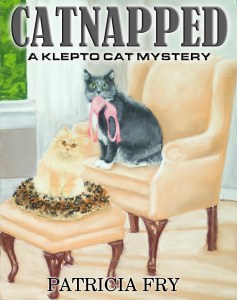
Now that was an exciting concept. Of course, I did some research and discovered that novels were selling like crazy through the Kindle Direct Publishing program—even new, unknown authors were making money on their first attempts at a novel. But what type of novel would I write?Catnapped-finalcover

I knew early on that I wanted to write what I enjoyed reading—light mysteries (which I later learned are called Cozy Mysteries). My, my, how the world of genres has exploded with dozens and dozens of sub-genres popping up every time an author writes something outside an established box.

After additional research into some of the books I’d read, as well as what else was out there within the light (cozy) mystery realm, and based on my own interests, I made another decision. My stories would feature a cat. I have a cat who carries things around in her mouth—brings me my slipper socks, drops her toy bunny, hedgehog, lion, bear, etc. at my feet every morning while I work. I’ve always been fascinated by stories of true kleptomaniac cats. So I decided that, while my stories would be human-based, they would include a kleptomaniac cat whose treasures would sometimes be clues to the current mystery. Thus, the Klepto Cat Mystery series was created.

The main cat character is Rags—a part ragdoll cat who looks nothing like a ragdoll. I patterned him after my mother’s cat, Smokey. Why didn’t I use my own little klepto cat? Oh, she has various roles in the stories—but she wasn’t quite right for the lead. Rags is a large cat with a lot of confidence and an overdose of determination. Neither Rags nor his feline friends have speaking parts. They’re all ordinary cats—some of them having some extraordinary habits and, certainly, some unique and interesting experiences.

The first in the series is Catnapped—based loosely on a true story that happened in my daughter’s neighborhood. This is followed by fifteen additional stories, each taking Rags and his feline and human friends on some harrowing, surprising, precarious, and always mysterious adventures.

When I took inventory of my career a few months ago, and asked myself, “Am I still having fun?” I responded with a huge, “YES.” I don’t want to say I’ve finally found my niche. I don’t think that’s accurate. I believe that I’ve always been right where I should be at this time. Currently, my purpose is rolling out fun, cozy mysteries one right after the other, racking up excellent reviews, and collecting the many rewards for my efforts. Further, I believe that if I’d launched out in this direction earlier in my career, I would not be experiencing the success and recognition I’m enjoying.

Why? I believe my timing is purrfect—the market is right for these books. And, because of my prior work and experiences, I know how to promote them. Even an excellent book will not be noticed if it has no exposure. So my perfect life now consists of approximately one-third writing and one-third promotion with a little leftover for the other joys in life.

Patricia Fry and LilyOn that note, let me invite you to subscribe to my Catscapades blog where I talk about everything cat and share occasionally what’s going on in the Klepto Cat Mystery factory. http://www.matilijapress.com/catscapades. Learn more about me, my career path and my books here: http://www.matilijapress.com. Visit the Klepto Cat Mystery Amazon pages here: http://amzn.to/1kAI8I2 Follow us on Twitter, like us on Facebook. All sixteen books are formatted for Kindle. The first thirteen are also in print.


Thanks for reading…

On another topic…Just a little reminder DESCENT and BLAZE are on sale this week for $0.99 US.

Mystery Mondays: Teagan Riordain Geneviene on What’s In A Name?

With a name as beautiful as Teagan Riordain Geneviene, you may well ask, what’s in a name? Well Teagan, author of ATONEMENT TENNESEE,  is here on Mystery Mondays to tell you.

At the bottom of the post, Teagan has some interesting questions for you, so keep reading…

What’s in a Name?

Hi Kristina. Thanks for inviting me to your Mystery Mondays.

Brain-NamesWhat do you think about names – generally? Or do you think about them? Most people don’t. I however, could really enjoy a big metaphysical discussion about names, but that’s not where I’m headed here. When I started this blog, I promised myself I’d stick to things related to writing or my books.

Names are incredibly important in life and in fiction. The names of my pets were something I chose very carefully, to suit them.

I’m just as meticulous in choosing the names of my characters. The right name can pull you into the mystery of the story, or lend a dramatic tone. When I write a classic type of fantasy, I go all out – researching name meanings and origins, and making sure they fit the traits of the character.

For stories located in the real world (fantasy or not), such as Atonement, Tennessee, I don’t always go to such lengths. Even so, each name speaks strongly to me about the who, what, and where of the character. Right now, I’m showing installments of my novel The Guitar Mancer at my blog. The name-meaning of the heroine is carefully interwoven into the story.atonement-video-cover-copy

There are a lot of cool sites about names and their meanings and origins. Yeah, I know — I’m a total research geek… but check out a few of the websites sometime. You already know that you can find an Internet site for just about anything. There are sites that list names of various myth figures, gods and goddesses, and summaries of the myths. Also, I’m sure you’ve seen at least one of the “baby name” sites. I even found one that list names by their popularity, by state, per year. It’s actually a cool resource if you want to find a character name that’s typical, or common for a given area and time, to help enhance the story in a subtle way.

I’ve used so many of these sites, I won’t try to list them all here. However, I liked this one (below), and thought it was general enough for other people to find it interesting. It’s divided by state. For the most recent years, it lists names for each year, but if you scroll down it gives an average over a five-year range. I liked that because it gave me a wide-ranging picture of what characters might populate my story. I used it for Atonement, Tennessee since the research for that National Novel Writing Month (NaNoWriMo) novel had to be done in such a hurry. http://pregnancy.about.com/od/localbabynames/a/statebabynames.htm

Okay, now I’m putting you to work. It’s time for a quick imagining of a story. Pick a state for the setting. Then choose the average age for most of the people there (even go to a “city data” page if you want to get the mean age in your chosen location), and figure out in what year they would have been born. Then click on the closest year listed. Now look at those names and tell me what images came to your mind. What did you see? Didn’t you see a group of people when you looked at the names? What were they doing? Where did they go when they headed out their separate ways?

Have fun,

Teagan

Mystery Mondays: James M. Jackson On Is Your Manuscript Ready

Welcome to Mystery Mondays. I’m a huge fan of the Seamus McCree novels, so it’s a great honor to have James M. Jackson share his writing advice today. I first met James when he agree to have me guest blog on his site in August 2015. James was helping me spread the word about my first novel, Descent. Over the last year, I’ve learned what generous people authors are, and here he is again being generous with his time and sharing some advice.

Is it Soup Yet? by James M. Jackson

Well, no. When I agreed with Kristina to write this blog, (thank you so much for the invitation), I was confident I would have published the next book in the Seamus McCree series. It hasn’t happened, and I’m quite happy with that because the decision was mine.

By today’s standards, I am a slow writer. There are several reasons for this. Probably the most important is that writing is only one of the things I enjoy doing. I spend considerable time each year teaching the game of bridge at my local bridge club. [In fact my first published book was One Trick at a Time: How to start winning at bridge.] I also teach an online class on self-editing/revision, and I am the president of the 600-member Guppy Chapter of Sisters in Crime.

But none of those other interests or commitments are why you can’t buy Doubtful Relations today. You can’t buy it because I don’t think it’s ready.

Readers clamor for authors they enjoy to write more books more quickly. Publishers echo the demand, even writing faster deadlines into contracts. The once-a-year-release timetable has been replaced by a nine-month regimen. Many authors now produce two books a year, and many independent authors produce three or more books a year.

This pressure for more words, more quickly, comes at a time when publishers have pulled back on the amount of sales and marketing support they provide most of their authors. Now, most published authors spend a significant amount of time performing tasks that do not directly relate to writing their next book.

Some authors have always been prolific, producing great quality writing with everything (or nearly everything) they publish. For these authors, nothing has changed. I read eighty to a hundred books a year, mostly fiction, and over the past few years, I have discovered many authors who I once loved cannot produce high-quality manuscripts with these shorter timeframes.

Storylines become flat, characters become caricatures, plot holes appear. Editors in the past would have jumped all over these problems, but shortened production schedules don’t leave enough time for major fixes. Problems are papered over. For big names, this isn’t really much of a problem: a number one bestseller will obtain huge sales with a mediocre book, or two, or three. For a less-known author, it could be a death knell.

I teach my students that in revising a manuscript, it is important to give space between the writing and the rewriting. As a first step, they should try to read their manuscript as if they were a discerning reader. When I did that with Doubtful Relations, I realized the manuscript contained two major problems: new readers to the series required a deeper understanding of prior relationships than I had provided, and I had not given the reader sufficient understanding of the motivation of the primary antagonist.

Each problem had a straightforward solution, and had I been forced to turn in a manuscript to meet an approaching deadline, I could have applied those bandages to an otherwise decent manuscript. But in thinking about those issues, I realized I could significantly improve the novel if I tore it apart and addressed certain aspects using a different approach.

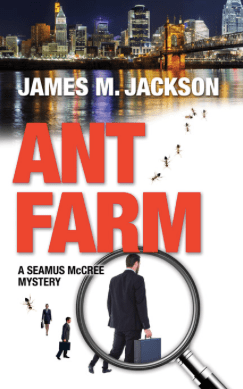
I attended a week-long workshop in 2015 run by Donald Maas, and one of the takeaways I have treasured is that sometimes the best way to fix something is to tear it down to its foundation and build it back up again. That’s what I am doing with Doubtful Relations. That’s also the approach I took with my most recent publication, Ant Farm. It started life as my first written novel. It attracted an agent’s attention and went nowhere. Frankly, it had good bones, but my writing was not yet mature. The flawed writing should not have earned an agent’s contract, and I am glad it was not published back in 2010. [I would now be very embarrassed if it had.] After being consigned to a drawer, I reread it in 2014, tore it down and built it up through a series of rewrites. When I was done, it won a contract through the Kindle Scout program.

I’m now in the process of building Doubtful Relations back up. I expect it will be available later this year. You can follow its progress (and the next two in the series that are also in the works) on my website, http://jamesmjackson.com or follow me on Facebook https://www.facebook.com/James-M-Jackson-388804844542707/ or on my Amazon page http://www.amazon.com/James-Montgomery-Jackson/e/B004U7FRP2 .

Ant Farm

Screen Shot 2016-04-03 at 7.24.14 AMIn this thrilling prequel to Bad Policy and Cabin Fever, when thirty-eight retirees meet a gruesome end at a picnic meant to celebrate their achievements, financial crimes consultant Seamus McCree comes in to uncover the evil behind the botulism murders.

But the deadly picnic outside Chillicothe, Ohio, isn’t the only treacherous investigation facing Seamus; he also worms his way into a Cincinnati murder investigation when the victim turns out to be a church friend’s fiancé.

While police speculate this killing may have been the mistake of a dyslexic hit man, Seamus uncovers disturbing information of financial chicanery, and by doing so, puts his son in danger and places a target on his own back. Can Seamus bring the truth to light, or will those who have already killed to keep their secrets succeed in silencing a threat once more?

author-photoJames M. Jackson authors the Seamus McCree mystery series. ANT FARM, BAD POLICY, CABIN FEVER, and DOUBTFUL RELATIONS (2016). Jim also published an acclaimed book on contract bridge, ONE TRICK AT A TIME: How to start winning at bridge, as well as numerous short stories and essays. He splits his time between the deep woods of Michigan’s Upper Peninsula and the open spaces of Georgia’s Lowcountry.

Mystery Mondays: Michael Phillips On Writing Goals

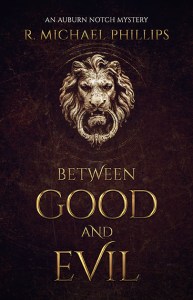
Between_Good_And_EvilMystery Mondays welcomes Michael Phillips, Author of: Between Good And Evil, first book in the Auburn Notch Mysteries Published by Sunbury Press.

It’s amazing to me that each week an author generously shares wisdom about writing and the writing industry and this week is no exception.

If you’ve been needing a plan to get your work published, read on…

Writing Goals by Michael Phillips

Any time I do a book-signing event one of the first questions I get is, “What is the toughest part about being a writer?” Some would say finding an agent or a publisher. Others might say dealing with all the rejections that go along with finding an agent or a publisher. But my usual response is—formulating a plan and sticking to it no matter what. Doing this can make those other two things much easier and achievable.

So what do I mean about a plan? Well, I mean setting achievable goals and attacking them one at a time. One completed goal should lead to the next, and the next, and so on until you have a complete manuscript in hand and a stop-them-in-the-aisle query to go along with it.

Before I break these goals down for you, let me mention a few things to help this process along. First, you should treat your writing like a job. Our lives are crazy, but if you are serious about writing you should carve out a time to write and try to stick to it. Some folks write an hour or so early in the morning before the day really starts, others write at night after the family has gone to bed. I write 8-10 hours one day a week. Whether it’s one paragraph, three chapters, or just reference, I stay at it for 8-10 hours. One day a week doesn’t sound like much, but I get a lot done in that one day. For example, my Ernie Bisquets Mysteries are English cozies, so they are quirky and enjoyable to write and I can complete an 80k word manuscript in 6-8 months. The Auburn Notch Mysteries are a little darker and have much more research involved, so an 84k+ manuscript may take up to a year. Whatever your preference, stake your claim and stick to it.

Second, you really need to know your characters. Character mapping is incredibly important and something you should invest time in before you get too far along in the process. Think of this as filling out an on-line dating questionnaire, adding in as much detail as you can. This is also a living document, so you can adjust as needed as your story progresses. I take this one step further and map each character’s relationship with all the other characters. There are a number of character mapping apps out there. I use one more suited to screenwriting because I like the character-to-character relationship aspect.

Third, try working from an outline. Even if it is just a few sentences for each chapter describing what’s going on, I find doing this helps me plan out the whole book and keep track of what’s next.

Now, onto those goals.

First Goal: Write your story. I don’t mean labor over every word, or second guess the affect of your foreshadowing, or wondering if your protagonist still has the same color hair in chapter seven as she does in chapter one, etc. What I mean is right your story. It’s a first draft. It’s going to be short and it’s going to be terrible, but that’s ok. Just get the whole idea out of your head and onto your laptop. Someone told me a long time ago that 90% of writers never get their work published for one reason alone—they give up. They get so bogged down in the details while they’re writing the first draft, or worrying if their work is good enough, that they just give up. Some would see this as a daunting statistic, figuring if 90% give up what chance do I have? If you’re like me, I figured I just eliminated 90% of my competition. I was quite sure my writing skills were as good as or better than ½ of the remaining 10%, so I just got to work and finished writing my story. Check off Goal #1.

Second Goal: Walk away. Put the completed first draft aside for a month. This is important. You need to look at the story with fresh eyes before you start the editing process, and the best way to do that is to walk away from it. Spend this time researching potential agents/publishers for your book. Get a complete list together, so when you’ve finished the book completely you’re ready to start the query process. And do not start the query process until the book is polished. Check off Goal #2.

Third Goal: The editing process. With a hot cup of whatever, you sit down and start back at the beginning and read what you’ve written. Read through the whole story a few times making notes along the way. This is the time when you take that rough first draft and turn it into a compelling story. Define the characters, establish the conflict, and embellish the details. Add weight to your writing. My favorite part of this goal comes at the end of the second draft and I go back to the beginning and start the “was” edit. This is the time to sift out the passiveness from the story and increase the word count. Do a word search for “was” and start the edit. For example:

My original sentence: It was just after 4:30 when Promise returned to the office and found Hank waiting for her.

The edited version: The long shadows of the cool, late afternoon stretched across the busy Main Street leading Promise into her office, the very tip of the shadow resting beneath the tapping foot of her deputy, Hank.

No “was” any more, and you’ve done a little show don’t tell in the process. We’ve also gone from 17 words to 34 words. It’s amazing what you can do with a single word when you try.

I’ve written a couple books requiring only 2 drafts, but three other books took a third and forth until I was happy. Everyone is different; so take as long as you need to get it right.

Forth Goal: Hire an editor. Most new writers don’t want to hear this one, but it is incredibly important. Look at it as an investment in yourself and your work. Do a little research, find a reputable editor, and turn over the manuscript once you get to your final draft. For the few hundred dollars it will cost you, the return on investment will be worth it. Together you will polish the manuscript and get it ready for submission.

Fifth Goal: The Query. To some extent this is more important than the entire book. On one 8.5”x11” piece of paper you are going to dazzle an agent with your hook, and then draw them into your story with a brief paragraph or two describing your characters and the conflict they’re struggling with to reach the resolution. Writing the query is a post in itself, so I’ll just leave you with the knowledge of how important it is and leave the how-to for another post.

Thank you so much for inviting me to share my writing experience with your readers. It’s been a delight being here.

Cheers,

Mike


RMPhillips_Profile_12ACCLAIMED MYSTERY NOVELIST R. MICHAEL PHILLIPS RELEASES FIRST BOOK IN NEW SERIES

CARLISLE, PA. – Sunbury Press has released Between Good and Evil by R. Michael Phillips, the first in the Auburn Notch Mystery series.

About the Book:

Promise Flynn was an overly impulsive Metro Detective whose disregard for procedure finally resulted in her being shot and left for dead during an investigation.

To repair her bruised ego and splintered confidence she abandons the dark alleys of Chicago to patrol the quiet, birch-lined streets of Auburn Notch.

For two years everything was idyllic, until the body of a young girl found in the abandoned asylum outside of town awakens the insecurities she thought her new life would insulate her from.

As the new Sheriff she begins her investigation, oblivious to being unexpectedly recognized and penciled in at the top of a clever murderer’sTo- Do list.

Her internal struggle intensifies when a discredited crime reporter from the past arrives in town to resurrect his

reputation, along with an FBI agent chasing down a lead in a cold case.

Both men quickly become entangled in Flynn’s investigation and her attempts to finally put her past to rest.

Praise for Between Good and Evil:

“It’s such a treat to start a new Phillips mystery…He gracefully brings new people into our lives, giving us time to get to know who is who. The dark yet very real worlds of his characters are so clearly defined that you are sucked inside and grabbed along in a slow-building rise of anxiety and danger…”

—The Editing Pen

“R. Michael Phillips has an incredible hand at descriptive detail: clothing, rooms, scenery. It leaves a flavor for you to sample and settings you can envision stepping into…”

— June Lorraine Roberts, Murder In Common About the Author:

Michael is a classically trained artist turned mystery writer. He has written three books in his first series, The Ernie Bisquets Mysteries, and has released the first book in his Auburn Notch Mystery series, Between Good and Evil.

When he’s not painting or writing Michael is an avid antique collector, filling his home—an 1894 Queen Ann Victorian he, his wife, and son are restoring—with antiques from around the world. Michael also enjoys cooking, working in the garden, and playing in the yard with their two rescues, Beau and Pup.


Mystery Mondays: Carol Balawyder on Subplots

Welcome once again to Mystery Mondays.

I first connected with Carol Balawyder when she graciously agreed to have me guest blog on her series HOW I GOT PUBLISHED.  DESCENT had been published less than a month previously, and I was nervous about guest blogging. Carol’s generous nature made it easy for me, and now I feel very lucky to have her guest blogging on my series.

Carol writes the The Getting To Mr. Right series.

Screen Shot 2016-03-20 at 8.14.27 AM

THE PURPOSE OF SUBPLOTS by Carol Balawyder

Thank you so much Kristina for inviting me as a guest on your Mystery Monday series. It’s a true honor for me to be in the midst of so many flourishing writers.

In my writing, whether it is women’s contemporary fiction or crime genre they both have in common a subplot which deals with the complexity of domestic relationships – specifically, relationships between an adult and his/her parent and the dysfunctional behaviors they can get tied up in.

For example, Getting To Mr. Right looks at how a daughter’s relationship as an adult is influenced by an emotionally or physically absent father. While researching this subplot I found a number of clinical studies to be of a valuable resource on the consequences of an absent daddy which I have used as foundation for the subplot.

Adding a subplot to the main plot gives depth to the character; the reader gets to know him/her more intimately.

This, I found to be especially true for a series. How many of us have wanted to read book 2, 3 or 8 of a series not only for the thrill of the story or mystery but also for wanting to know more about the protagonist’s personal life? Through the intricacies of the subplot readers become hooked on a series.

Subplots can enrich a novel and add tension. They give insight into a character’s personality and value system. They propose ground upon which a reader begins to build trust and sympathy for the character because s/he has a deeper understanding of him/her.

Subplots create a link from one series to the next and, as readers learn more about the characters’ personal life they begin to care more about them. To treat them as literary friends and sometimes even become their fans.

In some cases subplots help speed up the pace while in other cases they might serve to provide a breather to the action of the main plot.

Perhaps most importantly, subplots add to the suspension of disbelief.

I’ll give you an example drawn from my crime novel in progress. The protagonist, a nineteen year old girl, develops an intense and obsessive relationship with a man she meets on a train; she is ready to do anything to keep him even if it means leaving her distressed mother, turning her back on a career opportunity and murder.

Not such a nice girl, you might think, and rightfully so. But the subplot of addiction and its effects on the entourage supplies a different outlook.

Our nineteen year old protagonist, since very young, has been forced into the role of being caretaker to her heroin addicted mother. Research has shown that children who are flung into this kind of role grow up with a warped sense of self, lack of confidence and mounting frustration. Thus, the subplot adds credibility to the protagonist’s actions and irrational behavior. Although we might not condone some of her behavior we can understand. We believe that the protagonist is capable of doing what she does because of the world she lives in. We willingly suspend our disbelief.

Finally, as writers we need to make our characters come alive on the pages of our novels. Subplots are perfect opportunities to do just that.

My Getting To Mr. Right Series:

Carol Books

Carol’s BIO
CarolCarol Balawyder has taught criminology in both Police Technology and Corrections Programs for 18 years. Her area of expertise is in drug addiction and she worked in a methadone clinic with heroin addicts. She is very much interested in the link between drugs and crime and the devastating effects addiction has on the addict’s entourage. She has published short stories in The Anthology of Canadian Authors Association, Room Magazine, Entre Les Lignes, Mindful.org. and Carte Blanche. She regularly writes book reviews on Amazon and Goodreads.

LINKS:

Amazon – http://www.amazon.com/Carol-Balawyder/e/B00HVETKWM

Goodreads – http://www.goodreads.com/author/show/7704883.Carol_Balawyder

Smashwords – https://www.smashwords.com/profile/view/cbala

Website – http://carolbalawyder.com/

Blog- http://carolbalawyder.com/blog/