Guest Blogging

If you want guest bloggers, can you make it easier for them to write  for your blog? #writetip

I’ve been asked twice now and feeling very flattered. Blogging keeps me writing daily. Yup – great practice. Now I’m thinking about what to write for other blogs.

One of the bloggers sent me a list of questions, specified length of article, and asked for photos. I found this helpful in focusing what I wrote.

The other blog asked if I would guest blog. To get an idea of what they want,  I’ve been reading for a while and getting a feel for what is appropriate for the site.

I found receiving a list of questions made writing the blog much easier and less time consuming. Even though I was asked later, I got that blog written first.

Cruising, Writing and Spreadsheets

Provisioning

Do we really need to eat this much? #sailing #writetip

I think I’ve turned into a spreadsheet junky.

I have just reached a first draft of my third novel. Now I study the spreadsheet I created as I was writing the novel, decide at the best order of scenes, where the chapter breaks should be, do I have enough scenes with the main characters, etc.

As if my head wasn’t exploding with details,  but I was feeling so productive and decided it was time to do some provisioning.  So out came spreadsheet number two. After two years of updating this spreadsheet, I know exactly how much food we eat.

Every season, I write down when we run out of food or if we have left overs at the end of the season. It’s getting pretty accurate. During the season I add lines if there is something we were missing. Last year, I didn’t bring enough honey. One little bottle. What was I thinking? I love honey.

Today it’s back to my writing spreadsheet and the hard work of editing that first draft.

Related links:

Keeping Track of Details

Repeated Words

How do you know if you are using a word to many times? #writetip Check out Wordle. I’m probably the last to know about this, but it’s cool. Wordle creates a word cloud in which your words get bigger the more often they appear in the text.

I uploaded my first chapter of my third novel and what I got back was a visual of the words. I found out that my protagonists names was used the most – it was the largest. The names of characters got smaller as their importance in the story reduced.

This is just one more way to validate you are doing the right thing. How fun is this writing business? I learn something new every day.

One Chapter, Two Experts

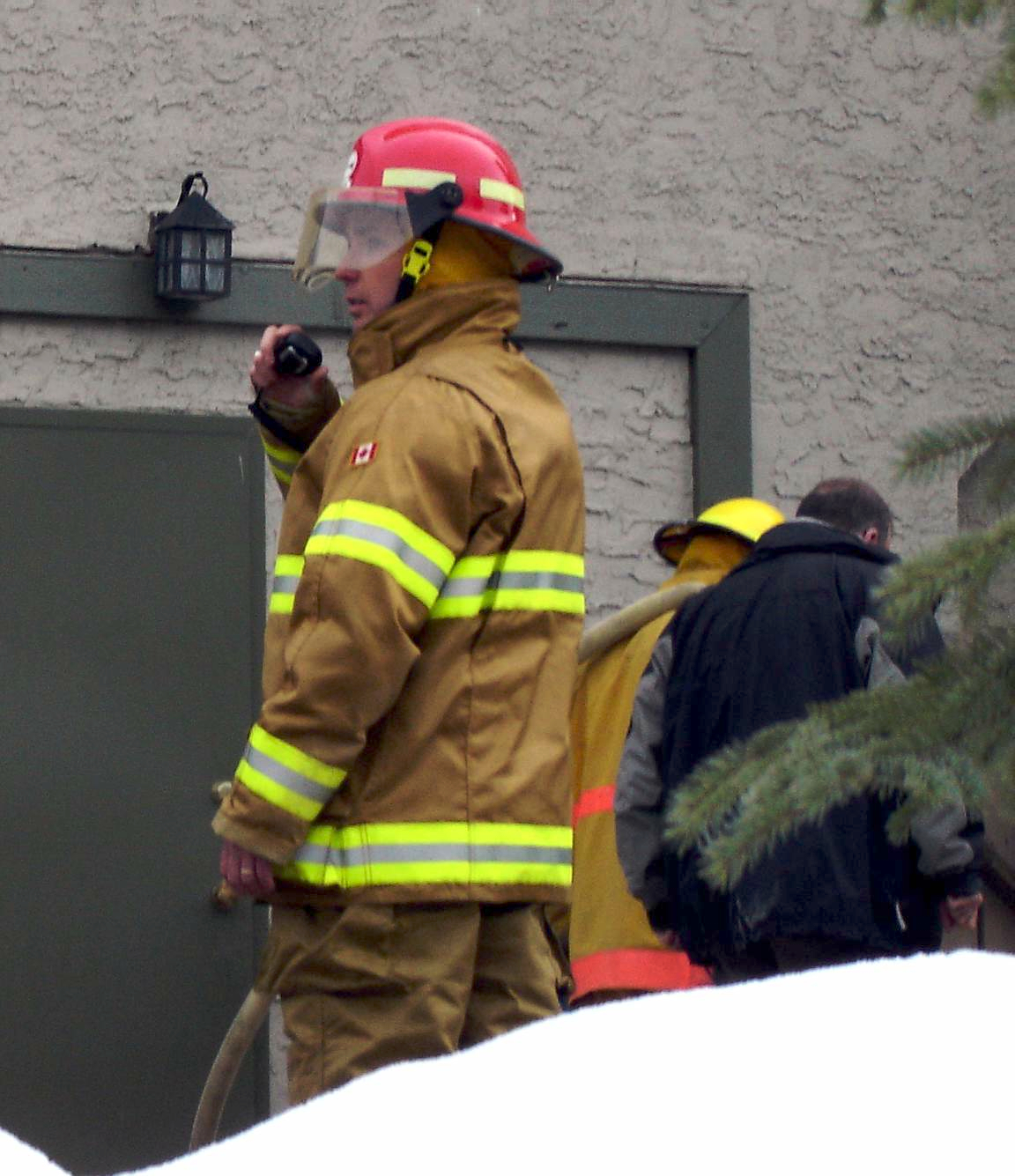
Billy on duty with the Panorama Fire Department - the years before Calgary

One family, two experts. #writetip I find myself writing a chapter about a woman having a baby while trapped by a forest fire. So what do I need? A new mom and a firefighter. Lucky for me Billy Stewart, Firefighter with the Calgary Fire Department and Adrienne Stewart, new mom to a handsome boy, Noah, not only answered my questions but are going to read the chapter and critique it.

Making a scene believable depends on the details a writer provides and experts help a writer get the details correct.

How could I know how firefighters puts on their uniforms or what gear they carry in different situations or what they worry about when surrounded by flames?

Only a new mom could tell what they might be thinking if they were trapped by a fire and having their baby.

These little details bring reality to a scene.

But when is the right time to ask for help? I wait until I have a scene written before I ask too many questions. This way, I’m as certain as I can be about the direction of the scene, I know where my knowledge is weak, and I won’t waste the experts time.

This is a big shout out to Billy and Adrienne for helping me create a better story.

Is your novel too long?

Has your agent/publisher asked you to shorten your novel by thousands of words? #writetip

Here’s what I did when my agent, Margaret Hart, suggested I pick up the pacing near the end of my first novel. I ended up cutting 6,000 words, but this technique will work for more/less words.

I re-read each scene and asked myself why I wrote it? Was is critical to the story? In no, I removed it. If yes, what was in the scene that I needed? In one scene I was revealing a piece of critical information. I added that information to another scene and cut the original scene. Poof, there went 1,000 words.

Next I analyzed each minor character. Could I combine two characters into one? This worked for cutting about 500 words.

Following that, I re-read the narrative and made notes on how I described characters or setting. By making notes, it enabled me to see where I had repeated myself. Another 500 words gone.

You can see I started big and worked my way to the little cuts. I think it made my novel a better story.

Any suggestions on how you do this?

Can you see every mark on the page?

It’s harder than I thought. #writetip. I like to use tools of the trade to help me perfect my work. I happen to use pages, but any good word processing program will help you check all marks on your page.

When you are checking details during a final proofread, turn on the “show invisibles” function of your software. I view the document at 200% or larger, set the colour of “invisibles” to a dark red (assuming your text is black), and then look at each character.

At this phase I’m looking for:

– one space only after each period.

– no spaces after an opening quote or before an end quote.

– no spaces after a paragraph or page break.

– no double spacing between words.

– etc.

This might seem like I’ve gone too far but I think it makes a manuscript a professional product. It takes time and makes your eyes tired, but in the end, it’s worth it.

What sense do you use to punctuate?

Some people hear a comma, some see it, and others follow the rules. #writetip What’s right for you?

For me, it’s a combination of all three. When I write my first draft, I like to hear the punctuation. Somehow it makes writing flow easier. I don’t worry about whether it’s right or wrong at this stage. I think this lets my natural style come out.

When I review the first draft, I pay attention to how punctuation looks. Does the page look too cluttered? Is my eye distracted by the noise? If it is, I check to see if I’ve overused any punctuation marks.

During my final proofread, before sending the novel to anyone, I check whether my punctuation follows the grammatical and syntactical units of my style guide. If it doesn’t, then I decide if I want to break a rule or follow it. I want my voice to come out, not that of the rules. I also don’t want to make glaring errors.

Like most things in life, punctuating a novel is a balance.

Editing Online

Pages or Word have functions that allow you to edit a manuscript online. #writetip I’m working on a friend’s manuscript and am doing it over the internet. Since I’ll be traveling for the winter, it’s not practical for me to work on a hard copy. Yesterday I started reading the manuscript and decided to use two methods for editing online.

The “comments” functions allows me to  insert comments on the margin of the document. This is where I put things like, “Where did the garbage bags come from?” I made this comment on a scene where a group is on the run and they are about to jump off a train and into a lake. They packed their things in garbage bags before jumping. There had been no mention of garbage bags to this point. I use this function to mention anything that doesn’t make sense.

This is also where I mention what I like. It’s just as important to tell an author what you do like. They need to hear what’s working in their novel.

The “track changes” function allows me to correct typos, and punctuation or grammar mistakes. The author can then accept or reject the changes without too much effort.

On a side note, if you like my blog, you might also like to read Jennifer Eaton’s. She has some interesting things to say about what to look for in a manuscript.

Milestones

Mattina Getting Launched

It’s time to celebrate! #sailing Big moments in life shouldn’t go unrecognized. Mattina, our Lagoon 380, is in the water. We keep her on the hard for the summer and then, after a lot of hard work each fall, she goes back in the water for a winter of cruising.

Waking up this morning, I was too excited to write. The sun is up, coffee is ready and it’s time to put the sails up. Not literally. Before that can happen, we clean the sails, check and maintain the rigging, wait for a calm morning, and then up they go.

What does this have to do with writing? Well, aren’t all milestones important. Like the day you wrote your first page, finished your first draft, had your first reader, or sent your work to an agent. Every one of these moments should be acknowledged. Tomorrow, I’ll settle down and get some writing done.

Copyeditor or Proofreader

Have you ever been confused about responsibilities? #writetip I think I’ve figured out the difference between a copyeditor and a proofreader, but if I’m wrong, please let me know.

So here is my understanding.

Copyeditors should find typographical errors. This means checking grammar, diction and usage. They should point out structural problems or inconsistencies, awkward sentences or paragraphs (but not rewrite them), but are not responsible for decision-making.

Proofreaders should find errors in the final manuscript. They look for formatting errors. (extra spaces, missing spaces, incorrect tabs, etc.) and point out errors not caught in the copyediting phase. These are the people who look at every character on the page to make sure it’s correct.

I’d love to get feedback on this one.