Animals as characters?

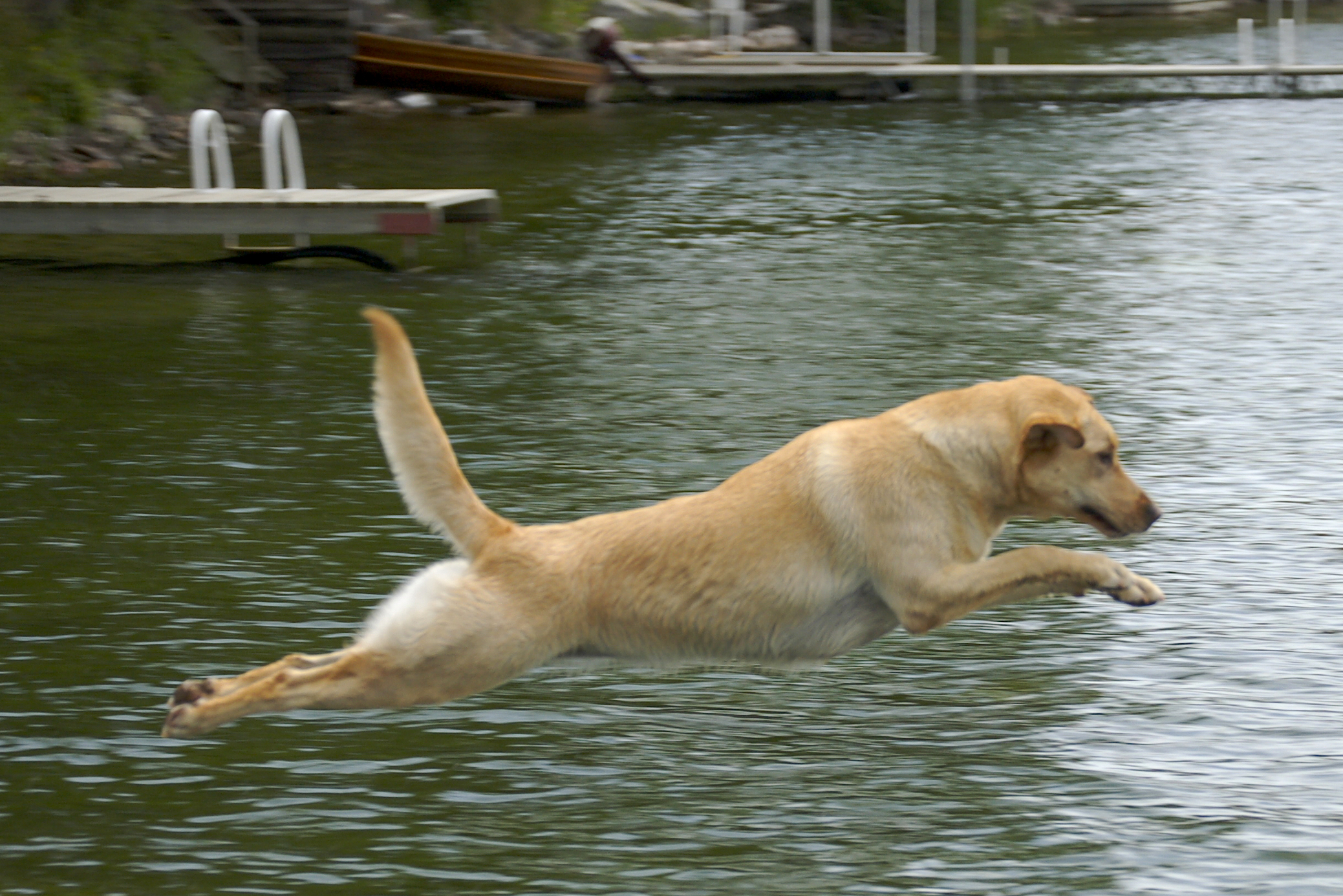
Chica - The Diving Dog

The great part about having an animal in your novel is you don’t have to worry that you will insult them. #writetip. I became interested in including a dog in my novels when I read a Dean Koontz novel. I think it was Tick Tock. A scary novel where the dog provided comic relief. I thought is was a good way to break tension in a scene when it was needed.

Dogs can provide an infinite source of distractions and difficulties for any of your characters. If you need a situation to be unpredictable, add a dog to the scene.

Chica – my yellow lab – has a place in my first novel Fracture Line. Chica is no longer with us, but she still provides me with story ideas.

Farley – my wheaten terrier, has a place in my third novel (yet to be named).

Preparation for Writing

Farley - safe on deck

Writing, like cruising, takes a lot of preparation. #writetip  It took me many hours to install the netting behind Farley on my catamaran. First I had to research the product, then order it, figure out how to install it, and finally install the netting. Was it worth the effort? You bet. Farley is safe when we are underway.

To me writing a good novel is similar. It takes a lot of preparation too. I wanted to mention Mary Lou Dickinson’s blog about “So you want to write: Some questions to ask yourself.” Mary Lou gives you a good list of questions to ask yourself if you are thinking of writing a novel.

Writing my first novel was the hardest. I had to figure out what my story was, what genre I was writing in, figure out the rules of the genre, and then take the big leap and start writing. The first words on the page were the most intimidating. Hard work will get you a long way. Just keep at it.

Was it worth the effort? You bet. I have two completed manuscripts and a third one at the first draft stage. I have an agent willing to represent me. And best of all, I have the satisfaction of working hard at something and being proud of it.

Chapter Headings

There are many formats for chapter headings, but one thing that can’t be wrong is the numbering. #writetip If you’re self editing, and I would guess lots of authors are, at least before submitting to an agent or publisher, check your numbers carefully.

By the time an author completes a novel, I suspect scenes, if not whole chapters, have been reorganized. You might move a scene to an earlier spot in your novel. You might remove a chapter. Infinite changes are possible.

In the end, don’t forget to check the chapter numbers are in right. It’s easy to re-use a chapter number or skip one all together. I print my manuscript and spread is chapter by chapter across the floor.

Other small things I check:

– Are the headings a consistent font and character size?

– Are the headings positioned at the same spot on the page? By this I mean, check the number of lines before  and after the chapter heading. Are all the heading centred, left aligned, or right aligned?

– Do the headings start on a new page?

This many seem small, but it will enhance the professionalism of your submission.

Writing tools to keep you productive

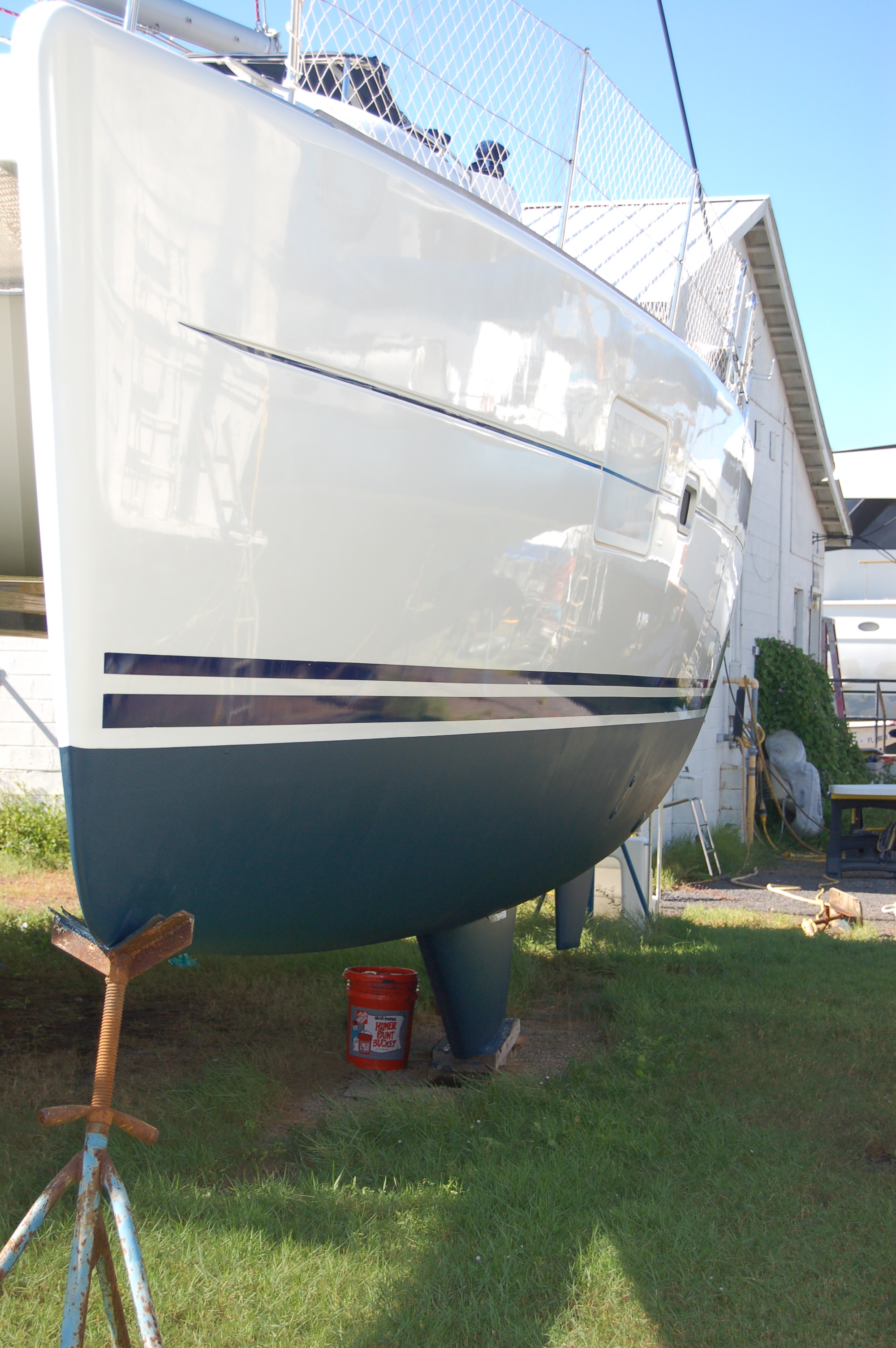
A digital recorder is the solution for me. #writetip I happen to be getting my Lagoon 380 ready for the winter season. My recorder is small enough to keep in a pocket. As I shine up Mattina (her hull is pictured here), I often think of plot ideas. It’s amazing how often a plot issue gets solved while working on something other than writing, especially physical labour.

I used to think I’d remember ideas, but I rarely do if I don’t write it down. Sometimes it’s not convenient having a pen a paper handy, so I use the recorder.

I also use the recorder while jogging or walking my dog. I hate to lose a good idea just because I thought of it when I was doing something other than writing.


The Oxford Comma


Should you use it or not? #writetip That depends on how you write. I’m a believer in consistency. I do believe a writer should learn how to use a comma properly.  Wasn’t I surprised when I took the correspondence course at Humber School for Writers and my mentor, Joan Barfoot, pointed out numerous comma errors.


So what did I do? I read the entire grammar section in the Chicago Manual of Style and made sure I knew not only how to use the comma but the rest of the punctuation marks. Sound like a lot of work? It was but worth it. When my work is edited now, I rarely get commented on a misuse of a comma. I can focus on writing instead of the fundamentals.


Back to the Oxford Comma. Up to you, but be consistent.


On a side note. Today is the day I get to see my Lagoon 380 for the first time this season. She’s up on the hard and waiting for us to get her ready. This has nothing to do with a comma, but she’ll be my writing platform for the upcoming months.


Unauthorized ad on my blog

Today I opened my “Should a writer blog” post and found an ad for Lasic surgery. Does anyone know how to disallow ads on a WordPress blog?

My blog is family friendly, and I have to say it worried me that an ad showed up in the middle of my page. What if it had been something not suitable? Yikes.

Any help would be greatly appreciated. Thanks.

Writing and the Cruising Lifestyle

The cruising part of my life has begun in full force. #writetip It’s been a whirlwind of travel through the north-east of the United States, and today I’m writing from Severna Park, MD. I’m looking at the Chesapeake and feeling rather spoiled. It’s only two days now until we reach our sailboat. She’s up on the hard and we’re about to begin our preseason maintenance on our Lagoon 380. Somewhere in the midst of that, I have to find time to write.

So my question today is: what’s the difference between a journalist and a fiction writer? A novelist is not restricted by facts. I think a journalist can report and still keep themselves separate from the person they are writing about. It might be hard to do sometimes, but possible.

To me, when writing a novel, the author must put themselves in another person’s place. Understanding a character’s motivation can only be done, if you as the writer can switch places with the character. A scene comes to life when the writer controls the events, decides what will happen when, who it will happen to and so on. Sometimes writing a scene is an emotional roller coaster for the writer, but then, I think , it’s probably an emotional scene that’s worth reading.

How much of you is in your character?

I was asked this question last night and it got me thinking. #writetip

A character comes from your imagination or your life experience. To me, that means anywhere from none to 100% of the writer is in the character. Since a novel is fiction and not journalism or a biography, I like to think not much of me is in there. Especially when the character is nasty.

A character’s origins may come from the writer, but I bet it’s more interesting to write and read if he/she grows into someone else; although, a person could have a very exciting life, and then maybe a memoir is the way to go.

I can’t imagine doing or saying some of the things my characters do or say. My biases must influence how I describe a character, but in the end they are who they are and not me.

If too much of the writer is in the character, then I think too many restrictions on what the character can or can’t do come into play. Let the character breathe and see what exciting things happen.

Should a writer blog?

There are many reasons blogging will help you improve your writing. #writetip While driving through Quebec, Vermont, New Hampshire and Maine the other day, I had plenty of time to muse, and what I thought about was blogging.

I try to blog 5 days a week and doing this forces me to focus on grammar and syntax. It lets me work in my prose, making it clear and precise.

Blogging connects me to other writers. There are so many generous authors out there that share their secrets on how to write.  It seems the more I share, the more I get back.

There is a view that blogging takes the author away from writing their novel and maybe even dampens the creative ideas. I don’t subscribe to this. Blogging keeps me motivated and connected.

Is writing lonely?

Not for me. #writetip Writing does require many hours working alone, but that does not mean it’s a lonely profession.

Let’s face it, social networking keeps a writer from being isolated. An awesome writing community is available at the touch of your keyboard. The trick is not to spend so much time networking that you don’t to write.

Then there is the research. Interviewing experts in any area is always enlightening. When you find an expert passionate about their subject, the excitement follows.

How about all the hours spent talking with friends, family, and other writers about your manuscript? That’s definitely not lonely.

It’s a wonder any of us find the time to get words on a page, and when we do, we get to spent time with our characters.

So who has time to be lonely?