Farley’s Friday: A Wheaten Terrier At An Irish Pub

Farley Here,

I gotta tell ya, I’m loving Flagler Country in Florida with its dog friendly beaches and dog friendly restaurants.

Farley’s is an Irish Pub that allows dogs. Just to prove it to you, I had the server take my photo with Kristina and Matt.
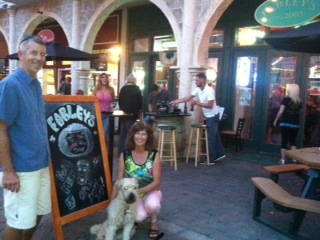
Farley at Farley s

Amazing that I can go out and have dinner. I didn’t get to eat anything, and Kristina expects me to sit quietly underneath the table and not disturb anyone. I’m not even allowed to talk to other dogs. Kristina explained that I have to have good table manners or I’d have to stay at home.

I’d rather go out and behave then stay alone waiting for my humans to come home. I get a little lonely if I’m alone to long, but then who doesn’t? Why oh why don’t all restaurants allow dogs? Then I’d never have to stay home just because my humans feel like having dinner out.

A dog can dream, can’t he?

Woof Woof

Tips For Ordering Scenes In A Novel

Have you ever had trouble deciding the best order to put your scenes in?

Once you have a first draft written do you try different combinations to see what works best?

If you’ve been reading my blog, you might have guessed I’ve added a new row to my spreadsheet. I call it Scene Dependency.

First, I was just using it to list what scenes had to come before the scene I was reviewing. Then I discovered something even better.

Was it possible to link the end of one scene to the beginning of the next?

You bet. There are different ways to achieve this. For example:

  • Have one character end a scene. Have the next scene start with another character thinking of the previous character.
  • Put an object important to the story at the end of one scene and beginning of the next.
  • Use the same location at the end of one scene and the beginning of the next.
  • End a scene at night, start the next scene the following morning.
  • Reference the same weather in both scenes.
  • Reference the same sight. Maybe the moon setting or an avalanche at the end of one scene and the beginning of the next.
  • Use emotions to link the scenes.

In the end, have it all listed in your spreadsheet. You might be surprised how it changes the order of your scenes and gives you a fluid motion throughout your novel. The reader will feel more connected to your story if one scene links to the next even if the scenes are about different events.

Can you add to this list? Do you have any tips to ordering scenes? I’d love to hear them.

Thanks for reading . . .

Farley’s Friday: How does a dog beat the heat?

Farley here.

Well I’m in Florida, and it’s hot.

Early this morning I hear my humans talk about going for a run. They don’t think I’ve been getting enough exercise lately. Well, whose fault is that I ask you? And who wants to exercise in  this heat?

I’m not the kind of dog who likes to get up early, but oh, oh! I see Kristina putting on her running gear. It’s not even seven yet. Is she crazy?

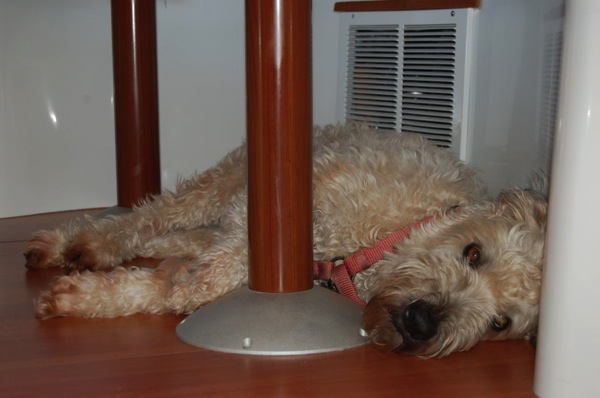
Farley by the air

She crawls under the salon table and pulls my legs. I make my body go all floppy so she can’t get ahold of me.

“Let me sleep,” I whine.

“Come on, lazy bones,” she says.

“Lazy,” I bark quietly. “I’m not lazy. Do you see where I am?” I wag my tail making it thump the air conditioning vent. I’m trying to give her the hint I want to stay near the cold air, but she’s having none of it. She takes hold of my two front paws and slides me across the floor. Now she thinks I’m a mop.

I may want to stay in the comfort of my air-conditioned salon, but it’s not going to happen. I give in and follow her out the door.

Now, I know you’re all feeling sorry for me and my tough life, but don’t worry.

We run along a road and at the end of the road we find a beach on the Atlantic ocean.

There’s a sign, which usually means no dogs allowed, but I pull Kristina to it, and bark, “Dogs allowed. Must be leashed. Do you see? Do you see? Let’s go.” Flagler county is dog friendly. This place is great.

I want to hit the surf. I spring forward, dragging Kristina, and get my paws in the ocean for the first time this season.

If I wasn’t a dog, I would be laughing out loud. That lol for you humans. It feels unbelievably good to run in the surf.

Woof woof.

Lagoon 380s2 Window Covering

The fall season is here and it’s time to start blogging about cruising. During the winter months, I post every Wednesday about our cruising lifestyle, so here we go. . .

The time of year is upon us where we go through our commissioning list and launch Mattina, our Lagoon 380 S2. We usually spend about 8 days on the hard, working on areas that need to be done with the boat out of the water.

Then Mattina gets launched, and we proceed to part two of the commissioning process. I won’t rewrite what we did in the fall of 2012 for commissioning,  but here are the links if you are interested.

A Week on the Hard

A Week at the Dock

This year, I thought I’d write about some of the things we do that aren’t on our regular commissioning list but have to be one for us to keep Mattina in mint condition.

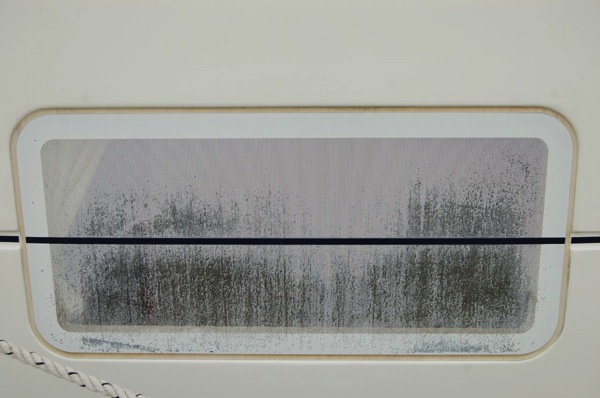
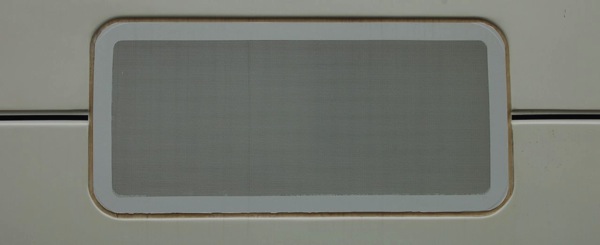
I love before and after photos. We decided Mattina needed new window coverings. The large windows on the cabins and showers provide ample light below decks and spectacular views. We all want to see out, but that doesn’t mean we want others seeing in. The winder covering on Mattina started to wear and so . . . new window coverings.

This might seem easy, but getting paint off windows is hard work and certainly takes time.

WIndow Before

WIndow After


But the result was worth the effort.

Now tell me the second photo doesn’t look better!

Thanks for reading . . .

Crime Writers Of Canada Mentorship Program

Two years have passes since I participated in the CWC mentorship program. I can’t stress enough what a valuable experience having Garry Ryan (writer for the Detective Lane Mysteries and at the time  President of the CWC) work with me on my manuscript.

Here are the rules  from the CWC newsletter.

If you’re an Associate Member with two or more years in good standing with the Crime Writers of Canada and you’re interested in partnering with one of our wonderful volunteers, please contact the CWC (Address in newsletter). They’ll send you all the information you need to get started, and when you agree to the guidelines, they’ll match you up with the mentor best able to help you out. 

If you’re not a member and are Canadian, why not join?  I think I’m a better writer because of it.

Thanks for reading . . .


Farley’s Friday: A Five Dog Weekend

Farley here.

How does a Wheaten Terrier cope in a small space with four other dogs?

Nomada Dogs

I’m the wheaten in the photo. The dogs with me are a lab/springer mix, and two Australian Shepherd/Poodles mixes. Callie, the Jack Russell is below. She refused to have her photo taken with us because she was too busy napping in the pillows.

Cali Sleeping

So we were on a boat but who invited the thunder storm? Smudge (Lab/Springer) and I don’t like them. The other dogs didn’t care.

Five dogs and only a couple of snapping incidents – not by me because, as you know, I’m perfect. One of the Australian Shepherd’s snapped at Smudge. Smudge, being a lab, just ignored the dog. I hid behind Kristina’s legs. I don’t like conflict. The humans all talked about how to stop aggression in dogs. The conclusion. Someone has to the be the alpha and take control. I didn’t get whether that meant a dog alpha or a human alpha. All I know is I’m not the alpha. It’s all so confusing.

We swam, we ran, we got wet, then we had to stay on the back deck until we were dry. All the human’s got to go inside and warm up. but not us. Oh, except the spoilt one. Callie gets cold, so she got to join in side and bury herself on the couch. And you thought all this time, I was the spoilt one.

Woof, woof.

How to Keep Track of Time in a Novel

Time and dates can be straight forward or complicated.

  • Are you writing a novel that happens in order of events?
  • Do you jump back and forth in time?
  • Are you writing a time travel novel?

The farther down the list you go, the more complicated keeping track of timing becomes. My novels are in the order the events occur, and I can’t imagine how difficult it is to keep track of a time travel novel.

On a basic level, I use a calendar on my computer. I put key events on a day. This helps me make sure I didn’t make an error.

Things I check include:

  • day of week in a scene
  • scenes are in order
  • an event isn’t happening on a day off, a statutory holiday etc. when a person wouldn’t be at work
  • clues aren’t referenced before they happen
  • when villain is introduced
I also use a spreadsheet to keep track of the details of a scene and combined with the calendar I hope I find any errors in timing before the novel goes to my literary agent.
As an added bonus, when you complete the calendar, you should have the key elements you need to write a synopsis. Anything that helps write the dreaded synopsis has to be good. Right?

What tools to you use?

I made a calendar in Excel but is there anything better out there. I’d really like to know.

Thanks for reading . . .

Farley’s Friday: A Wheaten Terrier and Thunderstorms

Farley here.

I like to think I’m brave, but I get the shakes when the skies are shaking. I don’t understand the booming that penetrates my body or the flashes of light that make me squint. I tried to hide, but there was no where to go.

My human, Kristina, has endless patient. I signal to her to follow me, and she does. I check out every room at the cottage. To my amazement the thunder is in every room. I thought if I hid in the back bedroom, I could get away from it. Not such luck.

My peeps won’t coddle me when I’m afraid, but Kristina’s so smart. She grooms me. She thinks she’s tricking me by performing a mundane task to distract me. I know what she’s doing and yet, it works. She pulls the brush gently down my back in repetitive motions and I find myself calming down.

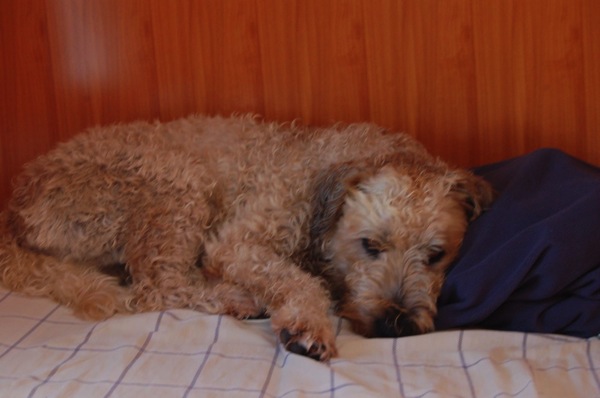
When the storm finally passes, I crash. I get so tired when I’m stressed. Sometimes a dog just needs a nap and to dry out.

Farley Napping After Storm

Woof Woof.

Leaving a job? How To Get a Dream Reference Letter

When leaving a job on good terms, you’ll want a reference letter in hand. Ask your employer for a letter. If they agree, offer to write a draft for them.

While working as the Director of Human Resources for five and half years, I was asked regularly for a reference letter.  From an employer’s point of view, I found it easiest when the employee prepared a draft letter for me.

In a busy job, with my own deadlines, I found it difficult to make time to write a reference letter from scratch. That meant I had to look up employment dates and main job responsibilities, and I had to think of the person’s best characteristics. All easy to do,but time consuming.

Employees were sometimes shy about writing the letter, maybe thinking it was presumptuous, but what it really is, is helpful.

But what do you put in your letter?

  • Job title
  • Start and end dates
  • Main job responsibilities
  • Qualifications required and held for position
  • What you were good at. This is important. Don’t be shy about saying what you did well.

End the letter with some form of the following sentence: Given the opportunity, I would happily rehire – insert your name here.

The last sentence means the company was pleased with your work and is code within the HR circles that the reference is good.

Next, print two copies with room for a signature. Put one copy on a storage device. Present both to your employer. Thank them for giving you a reference, and state that you have prepared a draft for them as a starting point.

In many cases, I signed the letters as they were presented to me. In some cases, I felt the person under sold themselves and added a few things, and only rarely did I think the person went overboard and I took a few things out.

I hope this helps you get the reference letter you need.

Thanks for reading . . .

Nicknames for Characters

It is okay to refer to a character using more than one name?

In life, we’re often referred to by a nick name, a family name or a full name depending on who is talking to us.

I call my niece, MoMo. She calls me TiTi. She’s the only person who does that.

At work or formal situations, I go by Kristina.

My family and close friends call me Tina.

But no one calls me Kris. It’s not a short form of my name I like. If a person uses it, my brain doesn’t even register I’m being addressed.

But in a novel, is all this fair game?

I think it depends on the writing.

In the last case, a character could refer to another by a name they don’t like. This would tell you something about the character. Maybe he is socially inept. Maybe he is trying to be irritating.

Short forms make characters close to each other. There is an intimating between them that wouldn’t be there without the endearing name.

A character insisting that others use her full name could be giving a message. Maybe she doesn’t like the person she’s talking to so insists that person be formal and kept at a distance. Or maybe she is  trying to appear professional.

My only caution is the nickname must be clear. The reader needs to know who is speaking or being spoken too. If too many forms are used too often, the reader may become confused or annoyed and stop reading.

And none of us want that.

Do you have any tips on using more than one name for a character and is it worth the risk?

Thanks for reading . . .