Can you see every mark on the page?

It’s harder than I thought. #writetip. I like to use tools of the trade to help me perfect my work. I happen to use pages, but any good word processing program will help you check all marks on your page.

When you are checking details during a final proofread, turn on the “show invisibles” function of your software. I view the document at 200% or larger, set the colour of “invisibles” to a dark red (assuming your text is black), and then look at each character.

At this phase I’m looking for:

– one space only after each period.

– no spaces after an opening quote or before an end quote.

– no spaces after a paragraph or page break.

– no double spacing between words.

– etc.

This might seem like I’ve gone too far but I think it makes a manuscript a professional product. It takes time and makes your eyes tired, but in the end, it’s worth it.

What sense do you use to punctuate?

Some people hear a comma, some see it, and others follow the rules. #writetip What’s right for you?

For me, it’s a combination of all three. When I write my first draft, I like to hear the punctuation. Somehow it makes writing flow easier. I don’t worry about whether it’s right or wrong at this stage. I think this lets my natural style come out.

When I review the first draft, I pay attention to how punctuation looks. Does the page look too cluttered? Is my eye distracted by the noise? If it is, I check to see if I’ve overused any punctuation marks.

During my final proofread, before sending the novel to anyone, I check whether my punctuation follows the grammatical and syntactical units of my style guide. If it doesn’t, then I decide if I want to break a rule or follow it. I want my voice to come out, not that of the rules. I also don’t want to make glaring errors.

Like most things in life, punctuating a novel is a balance.

Editing Online

Pages or Word have functions that allow you to edit a manuscript online. #writetip I’m working on a friend’s manuscript and am doing it over the internet. Since I’ll be traveling for the winter, it’s not practical for me to work on a hard copy. Yesterday I started reading the manuscript and decided to use two methods for editing online.

The “comments” functions allows me to  insert comments on the margin of the document. This is where I put things like, “Where did the garbage bags come from?” I made this comment on a scene where a group is on the run and they are about to jump off a train and into a lake. They packed their things in garbage bags before jumping. There had been no mention of garbage bags to this point. I use this function to mention anything that doesn’t make sense.

This is also where I mention what I like. It’s just as important to tell an author what you do like. They need to hear what’s working in their novel.

The “track changes” function allows me to correct typos, and punctuation or grammar mistakes. The author can then accept or reject the changes without too much effort.

On a side note, if you like my blog, you might also like to read Jennifer Eaton’s. She has some interesting things to say about what to look for in a manuscript.

Genoa Rigged

When don’t you want wind for your Genoa? #cruising This morning we awoke to 3 knots of wind. Perfect for rigging the genoa. She went up without a hitch – literally (and pardon the cliché). Rigging the sail is easy on a catamaran. The wide bow with a trampoline gives us plenty of working space.

Now to rig the mainsail . . . The radar is telling us a rain storm is on they way, so the mainsail has to wait until tomorrow. Maybe we’ll get lucky and wake up to 3 knots of wind again.

Sometimes I love the rain. It gives me an excuse to stay inside and write.

Copyeditor or Proofreader

Have you ever been confused about responsibilities? #writetip I think I’ve figured out the difference between a copyeditor and a proofreader, but if I’m wrong, please let me know.

So here is my understanding.

Copyeditors should find typographical errors. This means checking grammar, diction and usage. They should point out structural problems or inconsistencies, awkward sentences or paragraphs (but not rewrite them), but are not responsible for decision-making.

Proofreaders should find errors in the final manuscript. They look for formatting errors. (extra spaces, missing spaces, incorrect tabs, etc.) and point out errors not caught in the copyediting phase. These are the people who look at every character on the page to make sure it’s correct.

I’d love to get feedback on this one.

Animals as characters?

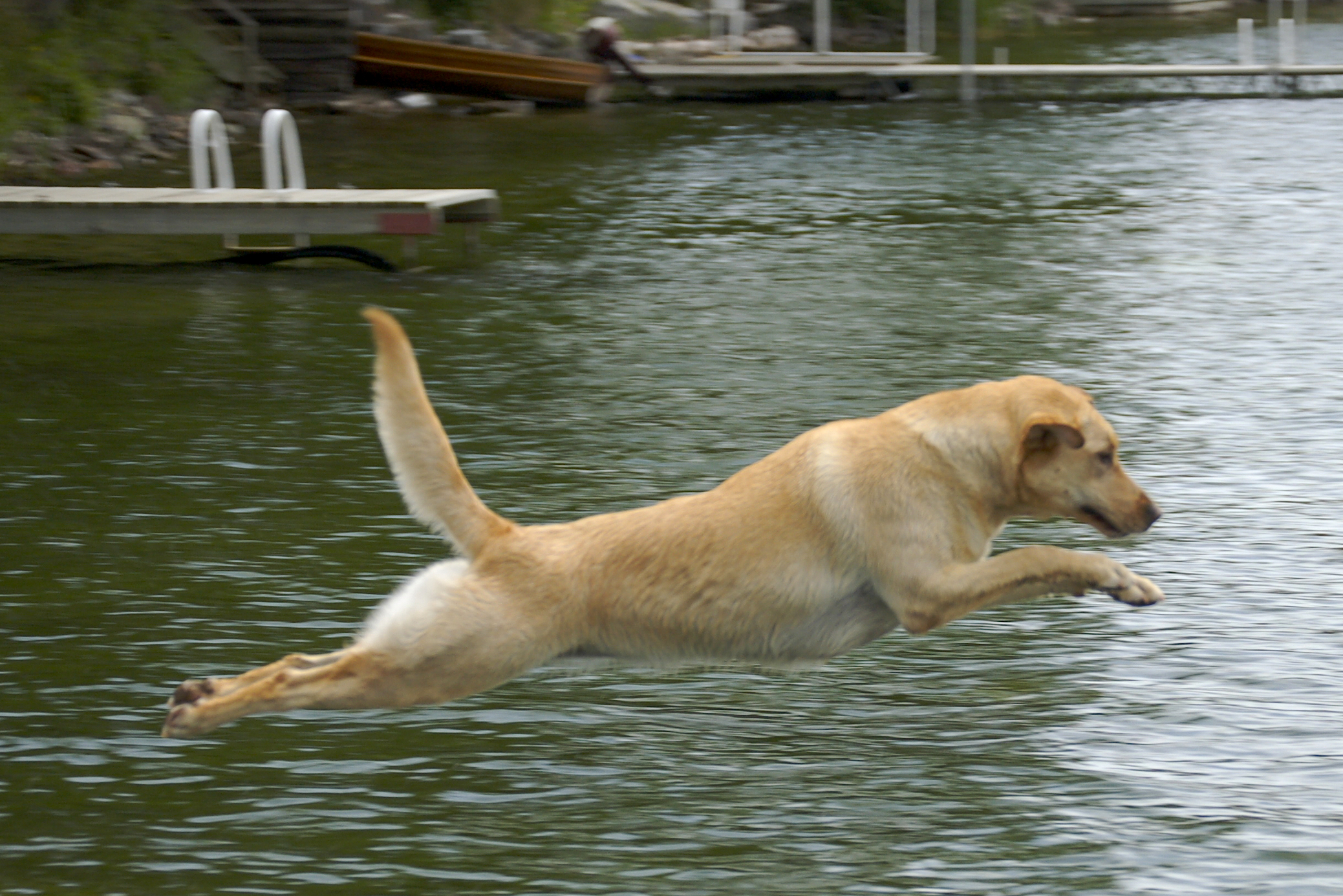
Chica - The Diving Dog

The great part about having an animal in your novel is you don’t have to worry that you will insult them. #writetip. I became interested in including a dog in my novels when I read a Dean Koontz novel. I think it was Tick Tock. A scary novel where the dog provided comic relief. I thought is was a good way to break tension in a scene when it was needed.

Dogs can provide an infinite source of distractions and difficulties for any of your characters. If you need a situation to be unpredictable, add a dog to the scene.

Chica – my yellow lab – has a place in my first novel Fracture Line. Chica is no longer with us, but she still provides me with story ideas.

Farley – my wheaten terrier, has a place in my third novel (yet to be named).

Preparation for Writing

Farley - safe on deck

Writing, like cruising, takes a lot of preparation. #writetip  It took me many hours to install the netting behind Farley on my catamaran. First I had to research the product, then order it, figure out how to install it, and finally install the netting. Was it worth the effort? You bet. Farley is safe when we are underway.

To me writing a good novel is similar. It takes a lot of preparation too. I wanted to mention Mary Lou Dickinson’s blog about “So you want to write: Some questions to ask yourself.” Mary Lou gives you a good list of questions to ask yourself if you are thinking of writing a novel.

Writing my first novel was the hardest. I had to figure out what my story was, what genre I was writing in, figure out the rules of the genre, and then take the big leap and start writing. The first words on the page were the most intimidating. Hard work will get you a long way. Just keep at it.

Was it worth the effort? You bet. I have two completed manuscripts and a third one at the first draft stage. I have an agent willing to represent me. And best of all, I have the satisfaction of working hard at something and being proud of it.

Chapter Headings

There are many formats for chapter headings, but one thing that can’t be wrong is the numbering. #writetip If you’re self editing, and I would guess lots of authors are, at least before submitting to an agent or publisher, check your numbers carefully.

By the time an author completes a novel, I suspect scenes, if not whole chapters, have been reorganized. You might move a scene to an earlier spot in your novel. You might remove a chapter. Infinite changes are possible.

In the end, don’t forget to check the chapter numbers are in right. It’s easy to re-use a chapter number or skip one all together. I print my manuscript and spread is chapter by chapter across the floor.

Other small things I check:

– Are the headings a consistent font and character size?

– Are the headings positioned at the same spot on the page? By this I mean, check the number of lines before  and after the chapter heading. Are all the heading centred, left aligned, or right aligned?

– Do the headings start on a new page?

This many seem small, but it will enhance the professionalism of your submission.

Checking for Errors

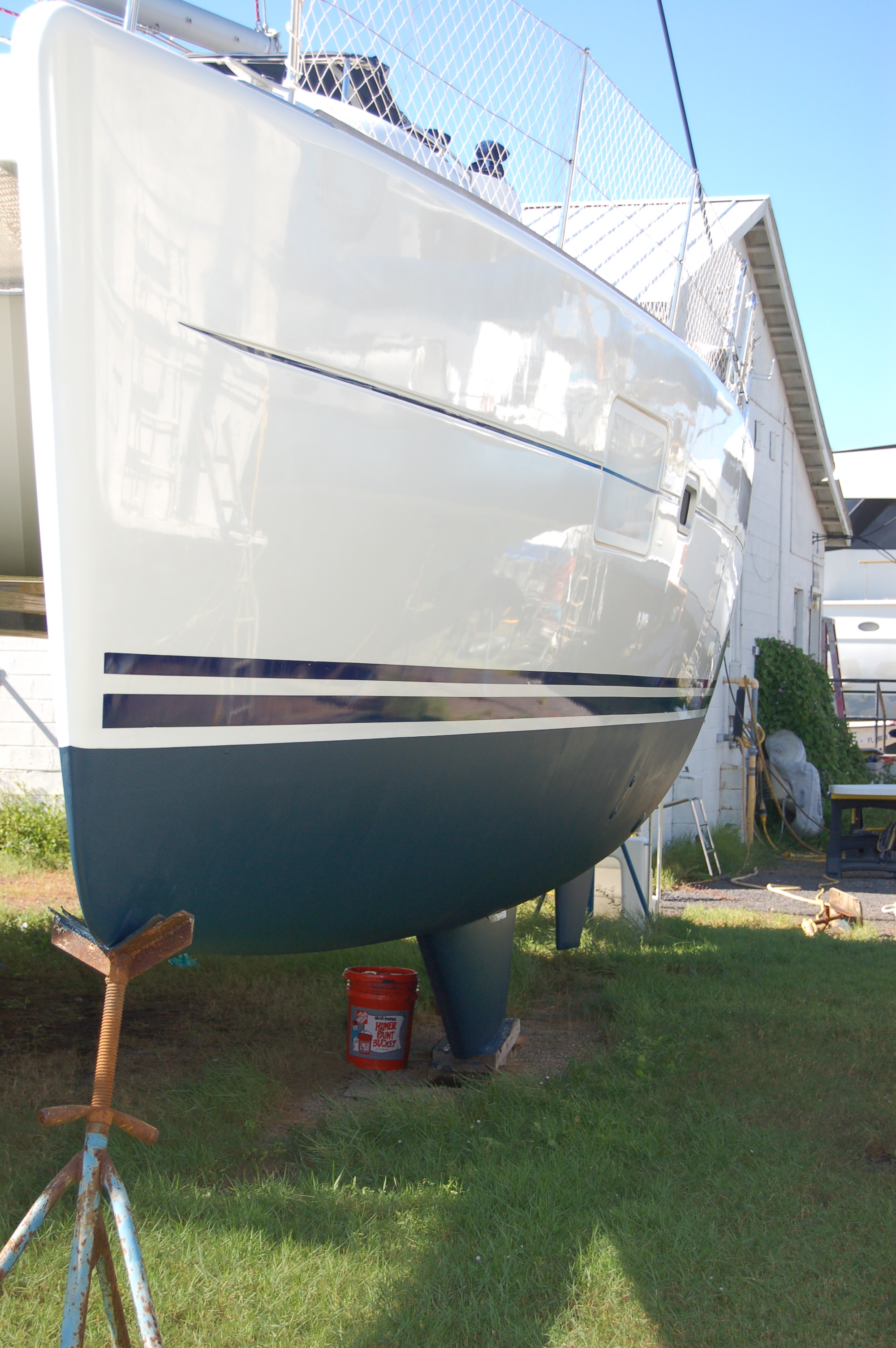
Mattina: Lagoon 380 S2

Getting a boat ready for a season of sailing is like proofreading a novel. #writetip Our catamaran is out of the water, and this gives us the opportunity to check under the water line for any issues. We go over every inch of the boat just like an author should go over every letter and punctuation mark on the page.

I don’t know if it’s just that I read in more detail since I’ve started writing, but I notice more and  more errors in published novels. This goes for both those that go through the traditional publishing houses and those that are self-published.

I understand the occasional typo, but yesterday I found the same sentence written twice. I know the author has spent so much time with the book that is impossible to see it after a while. Here is where I believe an editor is in need.

Whether you hire a professional editor or ask a friend, make sure it’s someone with an eye for detail. It sounds obvious, but you need someone who is tough on you.

Writing tools to keep you productive

A digital recorder is the solution for me. #writetip I happen to be getting my Lagoon 380 ready for the winter season. My recorder is small enough to keep in a pocket. As I shine up Mattina (her hull is pictured here), I often think of plot ideas. It’s amazing how often a plot issue gets solved while working on something other than writing, especially physical labour.

I used to think I’d remember ideas, but I rarely do if I don’t write it down. Sometimes it’s not convenient having a pen a paper handy, so I use the recorder.

I also use the recorder while jogging or walking my dog. I hate to lose a good idea just because I thought of it when I was doing something other than writing.