Switching POVs

#writetip. I find reading novels with multiple POVs entertaining and enjoyable. So what’s the trick to writing multiple POVs. As usual, this is only my opinion, so here’s what I think.

If you’re going to have multiple POVs in your novel, it’s important to let your reader know this early on in the story.

I could be jarring for a reader to get half way through a novel, and the POV is ripped from underneath their feet and a new character steps in.

Changing POVs in the first few chapters will warn the reader this is your style and hopefully they’ll enjoy your book more. They’ll expect different characters to have their say, to drive the novel, and to provide surprises. They won’t get so attached to one POV that they can’t bear the change and toss the novel aside.

Italics for Thoughts?

#writetip Garry Ryan, author of the Detective Lane Mysteries is kindly donating his time to be my mentor. This is part of the CWC mentorship program. We’re working through my third novel, Burnt, and in my humble opinion, the novel getting better.

One thing we’ve discussed is using italics for a characters thoughts. This is something I hadn’t done before. Garry’s advice is that it makes it easier for the reader to jump from narrative to thought.

I’ve been trying this technique, and I have to say it’s rather fun. It’s putting me more into the character’s head. I guess it reduces the distance between author and character, and then hopefully, between reader and character.

Now, we’ll see what kind of feedback I get on this new style (new for me, I mean).

Narrative: It’s all in the details

Do you have too much detail? #writetip I received a very insightful comment on my second novel from an acquiring editor. Here’s what I got out of it.

When describing “something” in a novel, that “something” should be related to the story. For instance, it is the murder weapon? Then perhaps it deserves a lot of attention.

It is “something” used during the novel, but not key to the plot? Then perhaps a little less detail.

It is “something” not related to the story? Then perhaps remove it.

There is so much to remember when editing a novel. Maybe it’s time I started another spreadsheet.

Scenes and Sequels

How do you intermix them? #writetip I don’t think about scenes or sequels when I’m writing my first draft. But when it’s done, I sure do.

After a fast paced scene, sometimes the reader needs a break. This is a good time for a sequel. You can get into your characters heads, share a little about them, and give the reader time to catch their breath.

Too many scenes and the reader loses touch with the character.

Too many sequels and the reader gets bored.

Somewhere in there is a balance, and I guess that’s where the artistic talent comes in.

Today is a big day for us. We are staging to cross the Gulf Stream to the Bahamas. It feels like a scene/sequel scenario. We’ve spent the last month in a fast paced life, getting ready to go. Now we get to hoist the sails and do some sailing. The sequel.

Copyeditor or Proofreader

Have you ever been confused about responsibilities? #writetip I think I’ve figured out the difference between a copyeditor and a proofreader, but if I’m wrong, please let me know.

So here is my understanding.

Copyeditors should find typographical errors. This means checking grammar, diction and usage. They should point out structural problems or inconsistencies, awkward sentences or paragraphs (but not rewrite them), but are not responsible for decision-making.

Proofreaders should find errors in the final manuscript. They look for formatting errors. (extra spaces, missing spaces, incorrect tabs, etc.) and point out errors not caught in the copyediting phase. These are the people who look at every character on the page to make sure it’s correct.

I’d love to get feedback on this one.

Animals as characters?

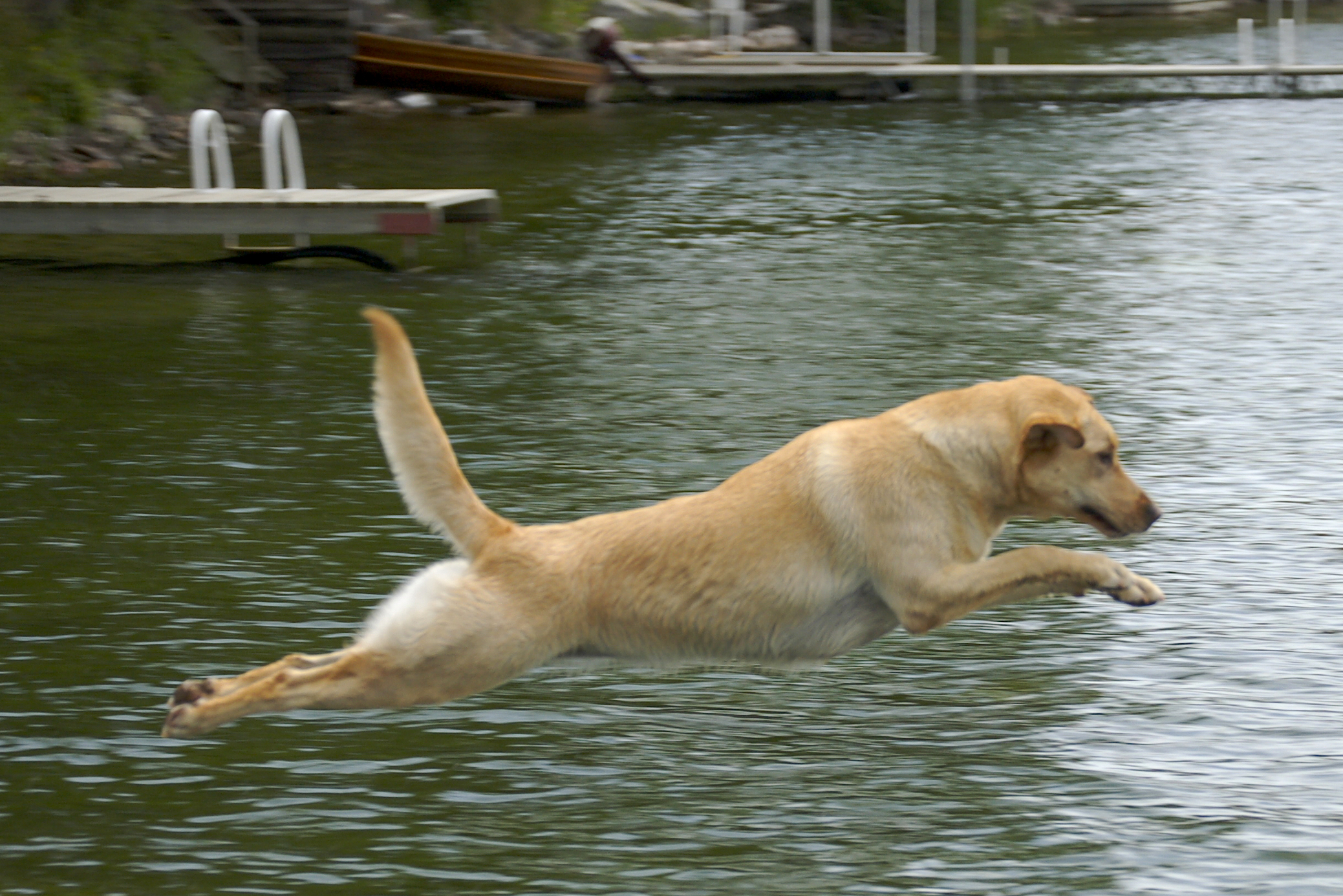
Chica - The Diving Dog

The great part about having an animal in your novel is you don’t have to worry that you will insult them. #writetip. I became interested in including a dog in my novels when I read a Dean Koontz novel. I think it was Tick Tock. A scary novel where the dog provided comic relief. I thought is was a good way to break tension in a scene when it was needed.

Dogs can provide an infinite source of distractions and difficulties for any of your characters. If you need a situation to be unpredictable, add a dog to the scene.

Chica – my yellow lab – has a place in my first novel Fracture Line. Chica is no longer with us, but she still provides me with story ideas.

Farley – my wheaten terrier, has a place in my third novel (yet to be named).

Chapter Headings

There are many formats for chapter headings, but one thing that can’t be wrong is the numbering. #writetip If you’re self editing, and I would guess lots of authors are, at least before submitting to an agent or publisher, check your numbers carefully.

By the time an author completes a novel, I suspect scenes, if not whole chapters, have been reorganized. You might move a scene to an earlier spot in your novel. You might remove a chapter. Infinite changes are possible.

In the end, don’t forget to check the chapter numbers are in right. It’s easy to re-use a chapter number or skip one all together. I print my manuscript and spread is chapter by chapter across the floor.

Other small things I check:

– Are the headings a consistent font and character size?

– Are the headings positioned at the same spot on the page? By this I mean, check the number of lines before  and after the chapter heading. Are all the heading centred, left aligned, or right aligned?

– Do the headings start on a new page?

This many seem small, but it will enhance the professionalism of your submission.

Writing tools to keep you productive

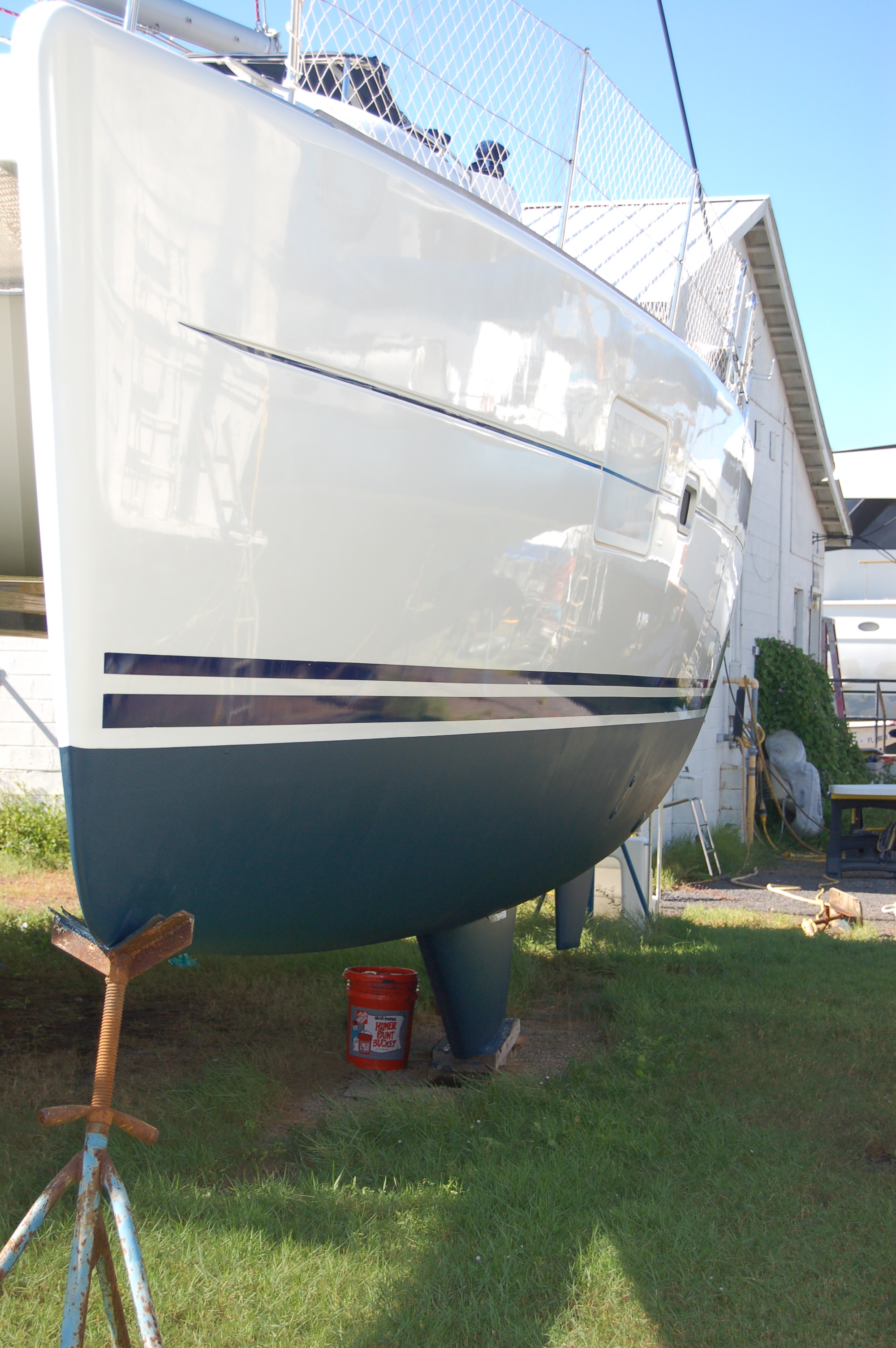
A digital recorder is the solution for me. #writetip I happen to be getting my Lagoon 380 ready for the winter season. My recorder is small enough to keep in a pocket. As I shine up Mattina (her hull is pictured here), I often think of plot ideas. It’s amazing how often a plot issue gets solved while working on something other than writing, especially physical labour.

I used to think I’d remember ideas, but I rarely do if I don’t write it down. Sometimes it’s not convenient having a pen a paper handy, so I use the recorder.

I also use the recorder while jogging or walking my dog. I hate to lose a good idea just because I thought of it when I was doing something other than writing.


The Oxford Comma


Should you use it or not? #writetip That depends on how you write. I’m a believer in consistency. I do believe a writer should learn how to use a comma properly.  Wasn’t I surprised when I took the correspondence course at Humber School for Writers and my mentor, Joan Barfoot, pointed out numerous comma errors.


So what did I do? I read the entire grammar section in the Chicago Manual of Style and made sure I knew not only how to use the comma but the rest of the punctuation marks. Sound like a lot of work? It was but worth it. When my work is edited now, I rarely get commented on a misuse of a comma. I can focus on writing instead of the fundamentals.


Back to the Oxford Comma. Up to you, but be consistent.


On a side note. Today is the day I get to see my Lagoon 380 for the first time this season. She’s up on the hard and waiting for us to get her ready. This has nothing to do with a comma, but she’ll be my writing platform for the upcoming months.


Unauthorized ad on my blog

Today I opened my “Should a writer blog” post and found an ad for Lasic surgery. Does anyone know how to disallow ads on a WordPress blog?

My blog is family friendly, and I have to say it worried me that an ad showed up in the middle of my page. What if it had been something not suitable? Yikes.

Any help would be greatly appreciated. Thanks.